
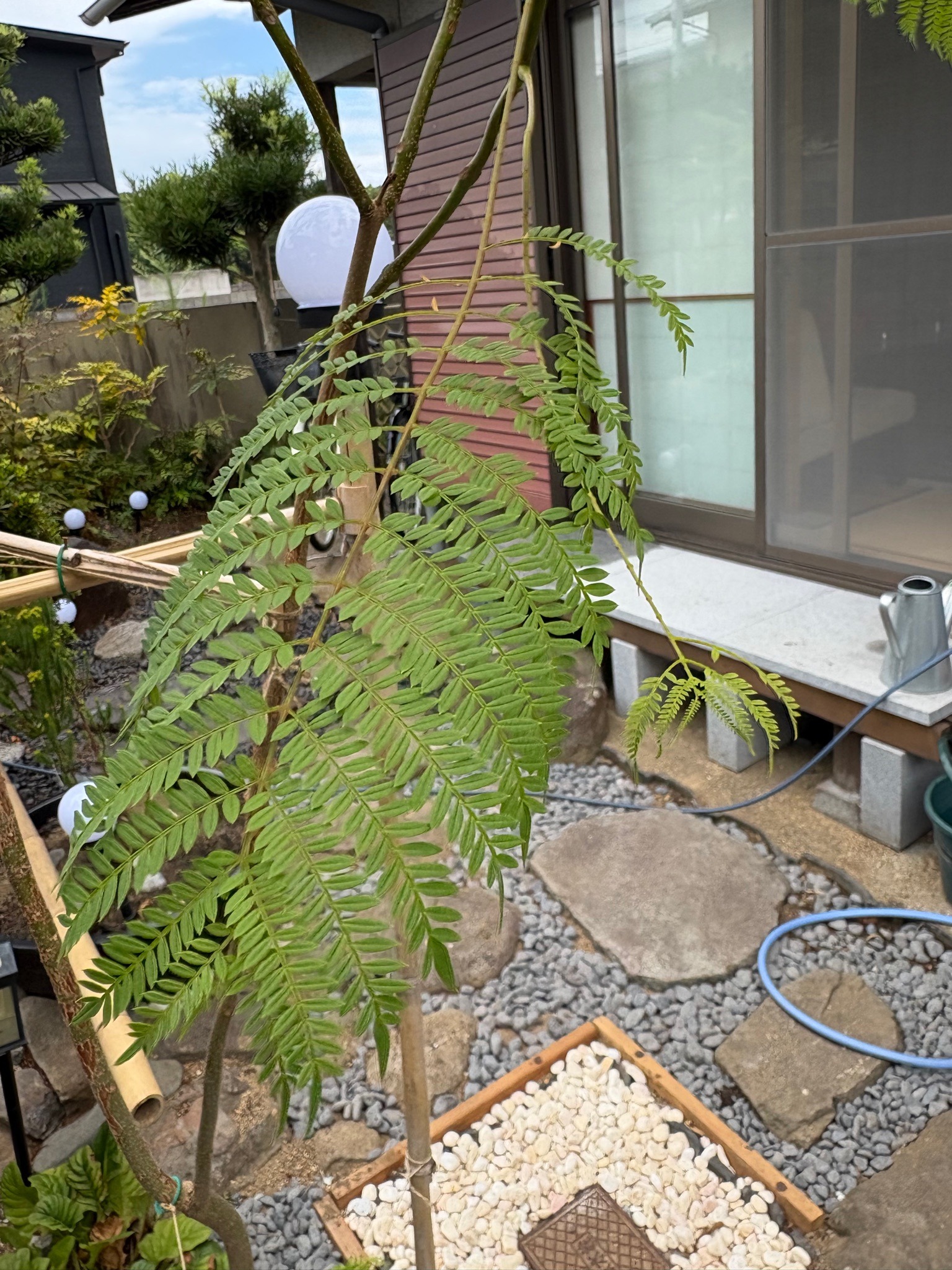
Silk Tree
Albizia julibrissin
A small to medium-sized deciduous tree featuring finely divided, bipinnate leaves that resemble ferns, and a spreading, often umbrella-shaped canopy.
- Light
- Full sun, requiring at least 6 hours of direct sunlight daily
- Water
- Water deeply when the top few inches of soil are dry. Drought tolerant once fully established, but sensitive to prolonged waterlogged soil conditions.
- Growth
- Perennial deciduous tree with a fast growth rate, typically reaching mature heights of 20 to 40 feet with an equally wide or wider spread
Care instructions
Provide full sun exposure and well-draining soil. Water regularly during the first growing season to establish a deep root system, afterwards maintaining moderate drought tolerance. Fertilize lightly in spring if growth is slow.
Growing details
Sunlight
Full sun, requiring at least 6 hours of direct sunlight daily
Watering
Water deeply when the top few inches of soil are dry. Drought tolerant once fully established, but sensitive to prolonged waterlogged soil conditions.
Soil
Adaptable to a wide range of soil types including sandy, loamy, or clay soils, provided they have good drainage; prefers a neutral to slightly alkaline pH range of 6.0 to 7.5
Hardiness zone
USDA hardiness zones 6 through 9
Growth habit
Perennial deciduous tree with a fast growth rate, typically reaching mature heights of 20 to 40 feet with an equally wide or wider spread
Bloom season
Blooms from late spring through mid-summer, producing prominent, fluffy, pink pom-pom-like flower clusters with a delicate fragrance
Propagation
Propagated primarily through scarified seeds sown in spring or via softwood cuttings taken in early summer
Common pests & issues
Susceptible to webworms, psyllids, and vascular wilt diseases; ensure good drainage and air circulation to prevent fungal complications
Similar species
Honey locust (Gleditsia triacanthos) or mountain ebony (Bauhinia variegata), distinguished primarily by leaf structure and distinctively shaped pink powder-puff blooms