
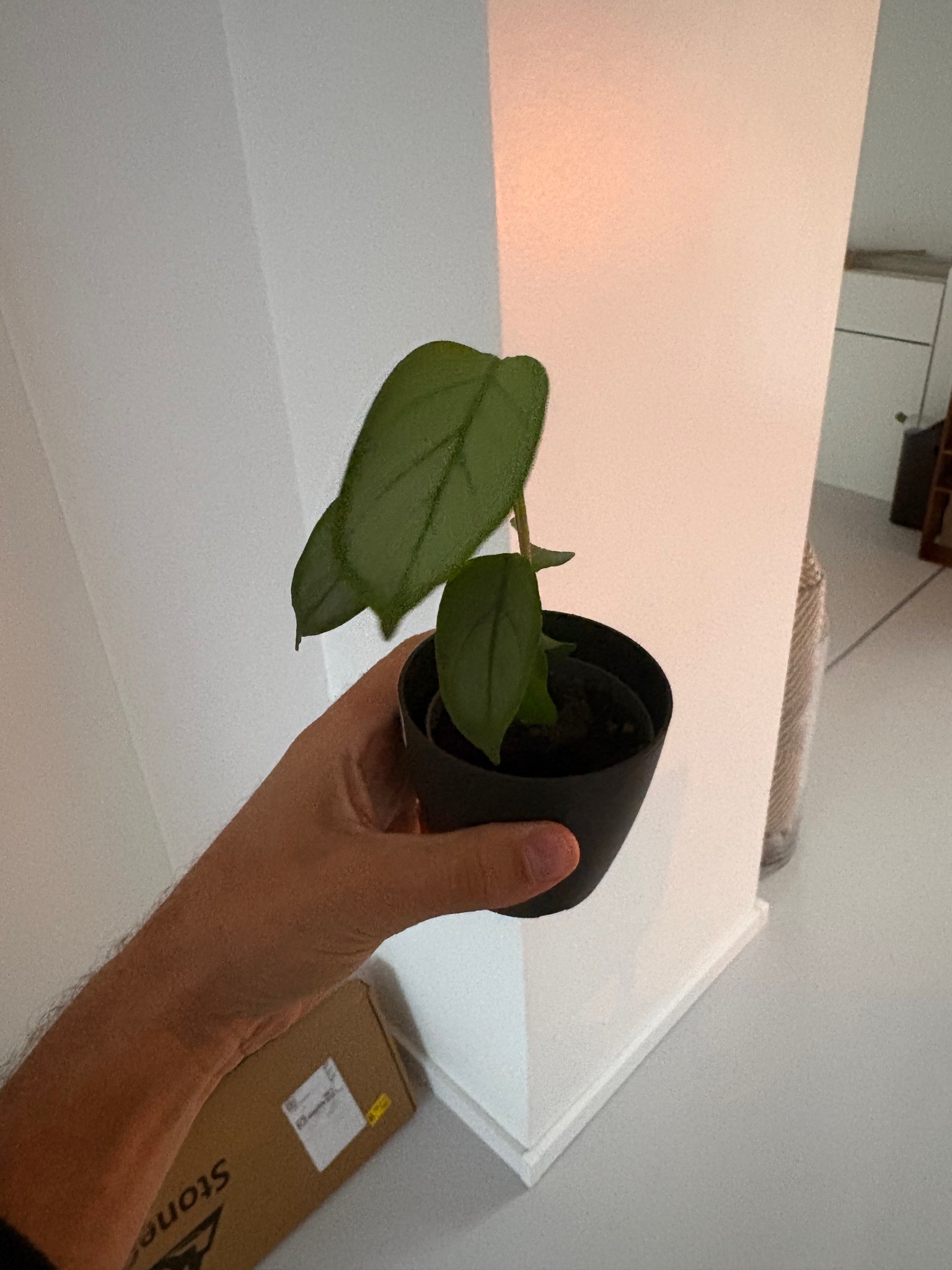
Silver Monstera
Monstera siltepecana
A climbing epiphyte with distinctive juvenile leaves that are lanceolate to ovate, featuring a striking silvery-grey variegation along the veins and a velvety texture.
- Light
- Bright, indirect light for 6 to 8 hours daily; avoid harsh direct sunlight which can scorch the leaves.
- Water
- Water thoroughly when the top two inches of soil feel dry. Reduce watering frequency during the winter months.
- Growth
- Vining or climbing epiphyte with a moderate growth rate, reaching mature indoor heights of 3 to 6 feet when provided with a support structure.
Care instructions
Provide bright, indirect sunlight, allowing the soil to dry out partially between waterings. Use a well-draining, chunky potting mix rich in organic matter, and feed monthly during the growing season with a balanced liquid fertilizer.
Growing details
Sunlight
Bright, indirect light for 6 to 8 hours daily; avoid harsh direct sunlight which can scorch the leaves.
Watering
Water thoroughly when the top two inches of soil feel dry. Reduce watering frequency during the winter months.
Soil
Well-draining, aerated soil mix containing perlite, orchid bark, and peat moss, with a preferred pH between 5.5 and 6.5.
Hardiness zone
USDA zones 10 through 11, grown primarily as an indoor houseplant in cooler climates.
Growth habit
Vining or climbing epiphyte with a moderate growth rate, reaching mature indoor heights of 3 to 6 feet when provided with a support structure.
Bloom season
Rarely blooms indoors; produces typical aroid inflorescences consisting of a spadix and spathe in its natural tropical habitat.
Propagation
Propagated easily through stem cuttings placed in water or directly into moist potting mix, ideally including a node.
Common pests & issues
Susceptible to root rot if overwatered. Common pests include mealybugs, spider mites, and fungus gnats, which can be managed with insecticidal soap or neem oil.
Similar species
Monstera dubia and Scindapsus pictus, distinguished by leaf shape, veining patterns, and juvenile growth characteristics.