
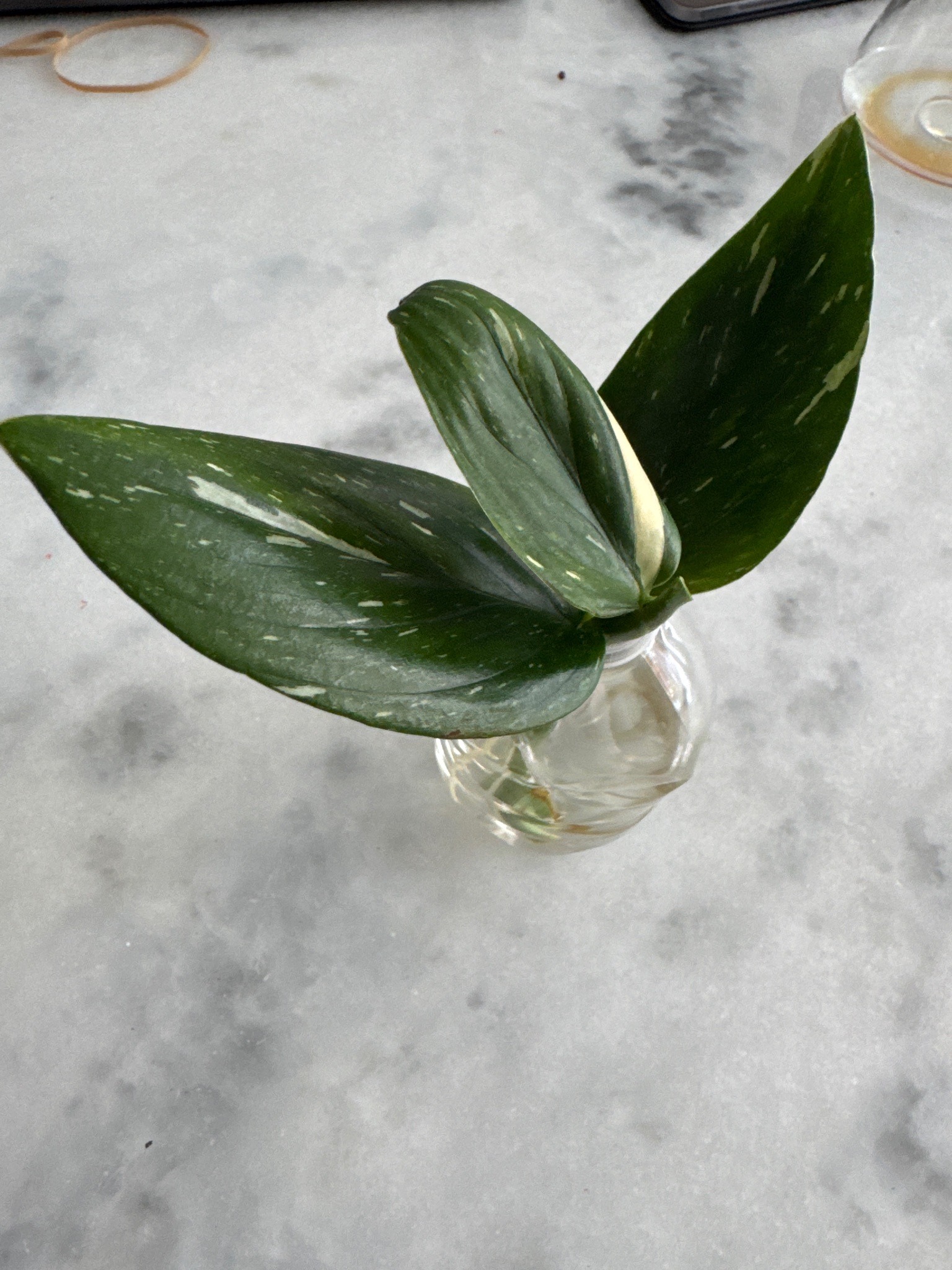
Silver Satin Pothos
Scindapsus pictus
A trailing tropical vine featuring heart-shaped, matte-green leaves marked with distinct, silvery-grey variegation spots and blotches. The leaves are thick and slightly leathery in texture.
- Light
- Bright, indirect light for 6 to 8 hours daily. Avoid direct sun to prevent scorching the leaves.
- Water
- Water thoroughly only when the top few inches of soil are completely dry. Drought tolerant once established, but sensitive to waterlogged conditions.
- Growth
- Trailing or climbing evergreen perennial vine with a moderate growth rate, capable of reaching lengths of 10 feet or more indoors when provided with support or left in hanging baskets.
Care instructions
Provide bright, indirect sunlight, allowing the soil to dry out completely between waterings. Use a well-draining potting medium rich in organic matter and maintain high humidity with warm indoor temperatures.
Growing details
Sunlight
Bright, indirect light for 6 to 8 hours daily. Avoid direct sun to prevent scorching the leaves.
Watering
Water thoroughly only when the top few inches of soil are completely dry. Drought tolerant once established, but sensitive to waterlogged conditions.
Soil
Chunky, well-draining soil mix consisting of peat, perlite, and orchid bark, with a slightly acidic to neutral pH between 6.1 and 6.5.
Hardiness zone
USDA zones 10 through 12, typically grown indoors in cooler temperate regions.
Growth habit
Trailing or climbing evergreen perennial vine with a moderate growth rate, capable of reaching lengths of 10 feet or more indoors when provided with support or left in hanging baskets.
Bloom season
Rarely blooms indoors; produces inconspicuous spadix and spathe flowers in its native tropical habitat.
Propagation
Easily propagated via stem cuttings placed in water or directly into moist potting mix, ensuring each cutting includes at least one node.
Common pests & issues
Susceptible to root rot if overwatered or kept in poorly draining soil. Pests such as mealybugs and spider mites may occasionally appear.
Similar species
Philodendron hederaceum (Heartleaf Philodendron), which has thinner leaves lacking the distinctive metallic silver spotting found on Scindapsus pictus.