
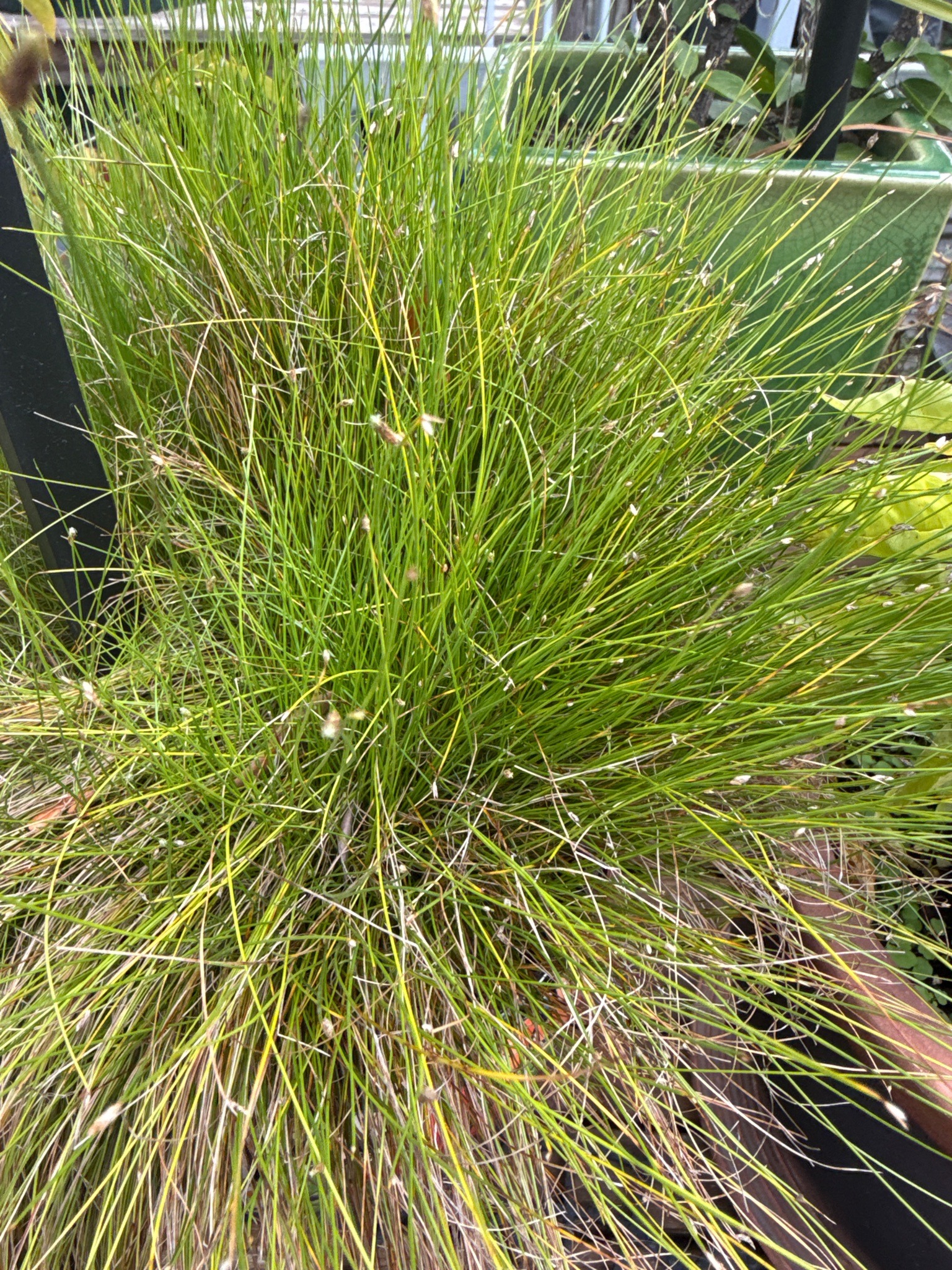
Slender Rush
Juncus tenuis
A dense, tufted perennial grass-like plant with slender, bright green cylindrical stems and tiny inconspicuous flowers clustered along the stems.
- Light
- Full sun to partial shade, requiring at least 6 hours of direct sunlight daily
- Water
- High water requirements; thrives in wet soil, boggy conditions, or standing water. Intolerant of drought and quickly wilts if soil dries out completely.
- Growth
- Clumping perennial forming dense, upright tufts reaching 1 to 2 feet in height with a similar spread, exhibiting a moderate growth rate.
Care instructions
Provide full sun to partial shade, keep soil consistently moist or wet, use well-draining loamy or clay soil, and apply a balanced liquid fertilizer in spring.
Growing details
Sunlight
Full sun to partial shade, requiring at least 6 hours of direct sunlight daily
Watering
High water requirements; thrives in wet soil, boggy conditions, or standing water. Intolerant of drought and quickly wilts if soil dries out completely.
Soil
Prefers heavy clay, loam, or organic-rich soils that retain moisture, with a neutral to slightly acidic pH range of 6.0 to 7.0.
Hardiness zone
USDA Hardiness Zones 3 through 9
Growth habit
Clumping perennial forming dense, upright tufts reaching 1 to 2 feet in height with a similar spread, exhibiting a moderate growth rate.
Bloom season
Blooms from late spring through summer, producing small brownish-green flower clusters positioned slightly below the tips of the stems.
Propagation
Propagated easily by division of established clumps in early spring or through self-seeded spores.
Common pests & issues
Generally resistant to pests and diseases, though occasionally susceptible to root rot in poorly draining, stagnant conditions.
Similar species
Similar to other Juncus species such as Juncus effusus (Soft Rush), but distinguished by its more slender, wiry stems and lower overall height.