
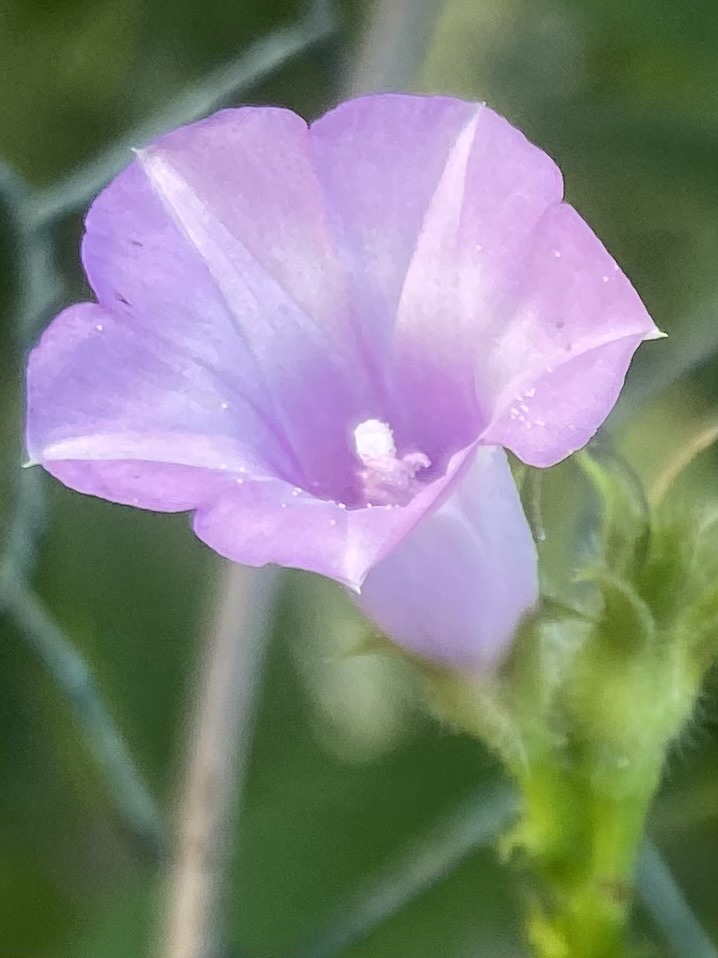
Smallflower Morning Glory
Ipomoea lacunosa
An annual trailing or twining vine featuring small, funnel-shaped flowers ranging from white to pale purple or pink, accompanied by heart-shaped or lobed leaves.
- Light
- Full sun, requiring at least 6 to 8 hours of direct sunlight per day.
- Water
- Moderate watering needs. Allow the top inch of soil to dry out before watering again. Displays moderate drought tolerance once established.
- Growth
- A fast-growing herbaceous annual vine that climbs by twining, reaching mature lengths of 6 to 10 feet with a moderate spread.
Care instructions
Provide full sun exposure for optimal flowering. Water moderately, allowing the soil to dry slightly between waterings. Plant in well-draining soil with an average fertility profile. Fertilization is generally not necessary and may promote excessive vegetative growth over flowering.
Growing details
Sunlight
Full sun, requiring at least 6 to 8 hours of direct sunlight per day.
Watering
Moderate watering needs. Allow the top inch of soil to dry out before watering again. Displays moderate drought tolerance once established.
Soil
Prefers loose, well-draining soils with a neutral pH range between 6.0 and 7.0, though it adapts well to various soil textures.
Hardiness zone
USDA hardiness zones 3 through 10 as an annual or tender perennial.
Growth habit
A fast-growing herbaceous annual vine that climbs by twining, reaching mature lengths of 6 to 10 feet with a moderate spread.
Bloom season
Blooms from mid-summer through early autumn, producing small trumpet-shaped flowers in shades of light purple, pink, or white.
Propagation
Propagated easily from seeds. Scarifying the hard seed coat and soaking in water prior to sowing in spring improves germination rates.
Common pests & issues
Generally resilient, but can occasionally be affected by fungal leaf spots, rusts, or common sap-sucking insects like aphids. Ensure good air circulation to prevent fungal problems.
Similar species
Can be confused with Ivy-leaved Morning Glory (Ipomoea hederacea), which features distinctly three-lobed leaves rather than the predominantly entire or heart-shaped leaves of Ipomoea lacunosa.