
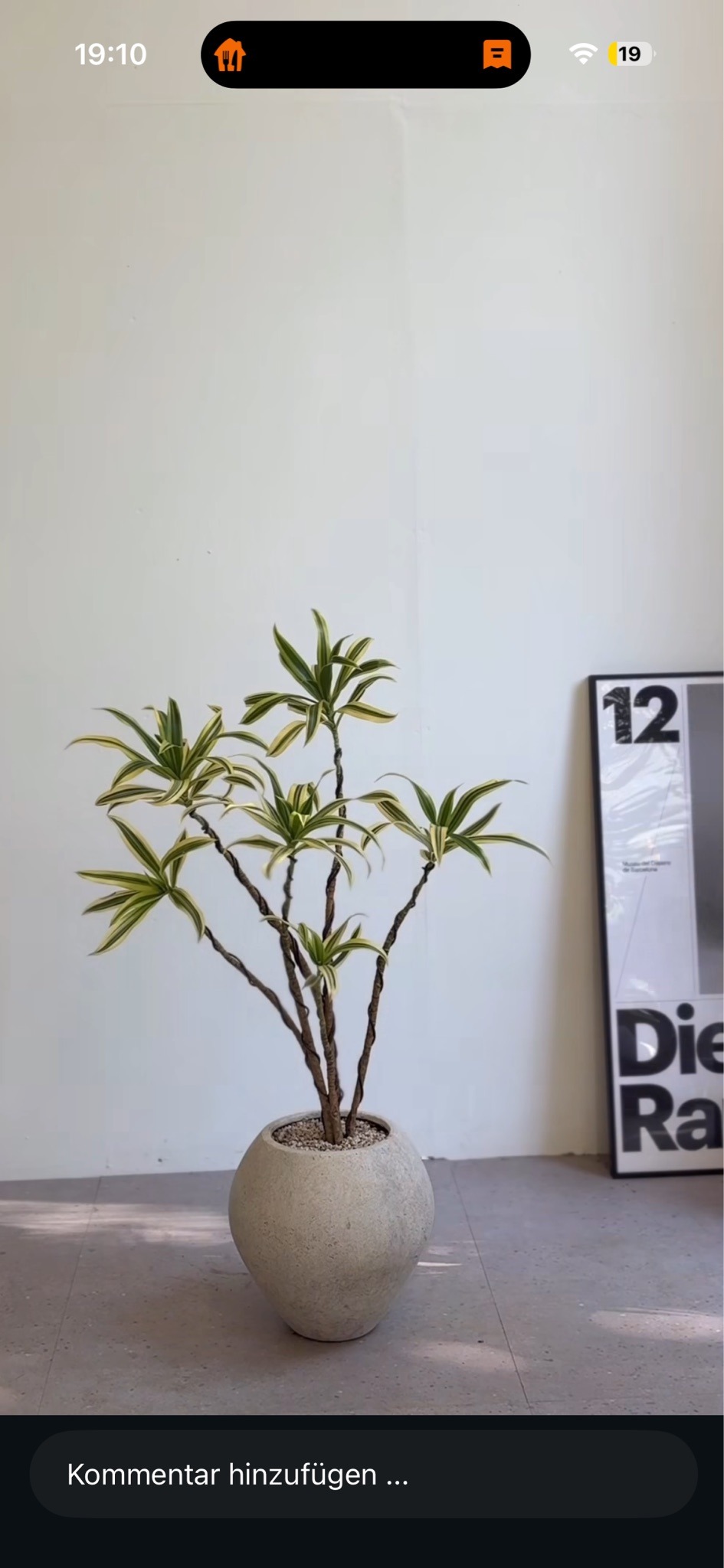
Song of India
Dracaena reflexa
An evergreen shrub featuring slender, branching stems and spirally arranged, lance-shaped leaves with distinct creamy-yellow margins and deep green centers.
- Light
- Bright, indirect light for 6 to 8 hours daily; avoid intense, direct sunlight which can scorch the leaves.
- Water
- Allow the top layer of soil to dry out completely between waterings. Water moderately until drainage occurs, reducing frequency during the cooler months.
- Growth
- Upright, woody perennial shrub or small tree growing up to 3 to 6 feet tall indoors with a slow to moderate growth rate.
Care instructions
Provide bright, indirect sunlight, water when the top two inches of soil feel dry, use well-draining potting media, and apply a balanced liquid fertilizer monthly during the active growing season.
Growing details
Sunlight
Bright, indirect light for 6 to 8 hours daily; avoid intense, direct sunlight which can scorch the leaves.
Watering
Allow the top layer of soil to dry out completely between waterings. Water moderately until drainage occurs, reducing frequency during the cooler months.
Soil
Well-draining, loamy potting soil with a slightly acidic to neutral pH range of 6.0 to 7.0.
Hardiness zone
USDA zones 10 through 11; grown primarily as an indoor container plant in colder climates.
Growth habit
Upright, woody perennial shrub or small tree growing up to 3 to 6 feet tall indoors with a slow to moderate growth rate.
Bloom season
Inconspicuous, small white or pale yellow flowers occasionally appear in clusters, though rare when cultivated indoors.
Propagation
Easily propagated via stem cuttings taken in spring or summer, rooted in water or directly in a moist potting medium.
Common pests & issues
Susceptible to mealybugs and spider mites, which can be managed by wiping leaves or applying insecticidal soap. Root rot may occur if overwatered or kept in poorly draining soil.
Similar species
Dracaena marginata (Red-edged Dracaena), which features much narrower, sword-shaped leaves bordered with thin red lines instead of wide yellow margins.