
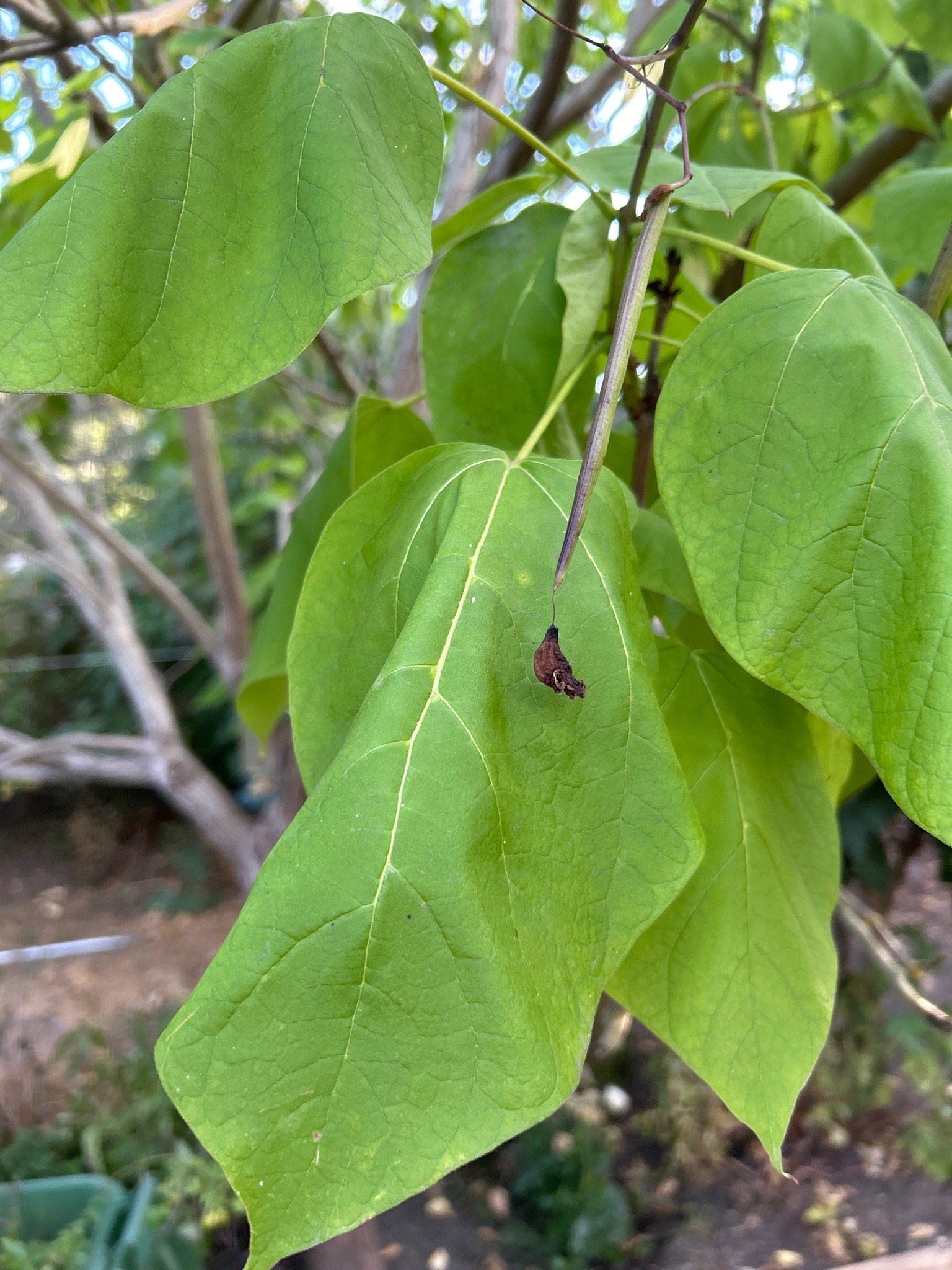
Southern Catalpa
Catalpa bignonioides
A medium-sized deciduous tree featuring very large, heart-shaped leaves arranged in whorls, showy white flowers with purple and yellow markings, and long, slender seed pods.
- Light
- Full sun to partial shade, requiring at least 6 hours of direct sunlight daily for optimal flowering.
- Water
- Requires regular watering when newly planted. Once established, it has moderate drought tolerance, but performs best with consistent moisture during dry periods.
- Growth
- A fast-growing deciduous tree with a spreading, rounded crown, typically reaching mature heights of 40 to 70 feet with a similar spread.
Care instructions
Plant in a location with full sun to partial shade. Provide regular moisture when young, though established trees tolerate occasional dry spells. Apply a balanced fertilizer in spring if growth is sluggish.
Growing details
Sunlight
Full sun to partial shade, requiring at least 6 hours of direct sunlight daily for optimal flowering.
Watering
Requires regular watering when newly planted. Once established, it has moderate drought tolerance, but performs best with consistent moisture during dry periods.
Soil
Adaptable to a wide range of soil types including clay, loam, and sand, provided it has good drainage. Prefers a neutral to slightly acidic pH range between 5.5 and 7.0.
Hardiness zone
USDA zones 5 through 9, demonstrating good cold and heat tolerance within these regions.
Growth habit
A fast-growing deciduous tree with a spreading, rounded crown, typically reaching mature heights of 40 to 70 feet with a similar spread.
Bloom season
Blooms in late spring to early summer, producing large, upright clusters of bell-shaped, white flowers with yellow stripes and purple spots inside.
Propagation
Easily propagated from seeds harvested from the dry pods in autumn, or through softwood cuttings taken in late spring to early summer.
Common pests & issues
Generally resilient, but can occasionally be affected by leaf spot, powdery mildew, and defoliating caterpillars. Prevent issues by ensuring adequate air circulation and good soil drainage.
Similar species
Northern Catalpa (Catalpa speciosa). Southern Catalpa can be distinguished by its smaller stature, slightly smaller leaves, and clusters with more numerous, smaller flowers compared to the Northern species.