
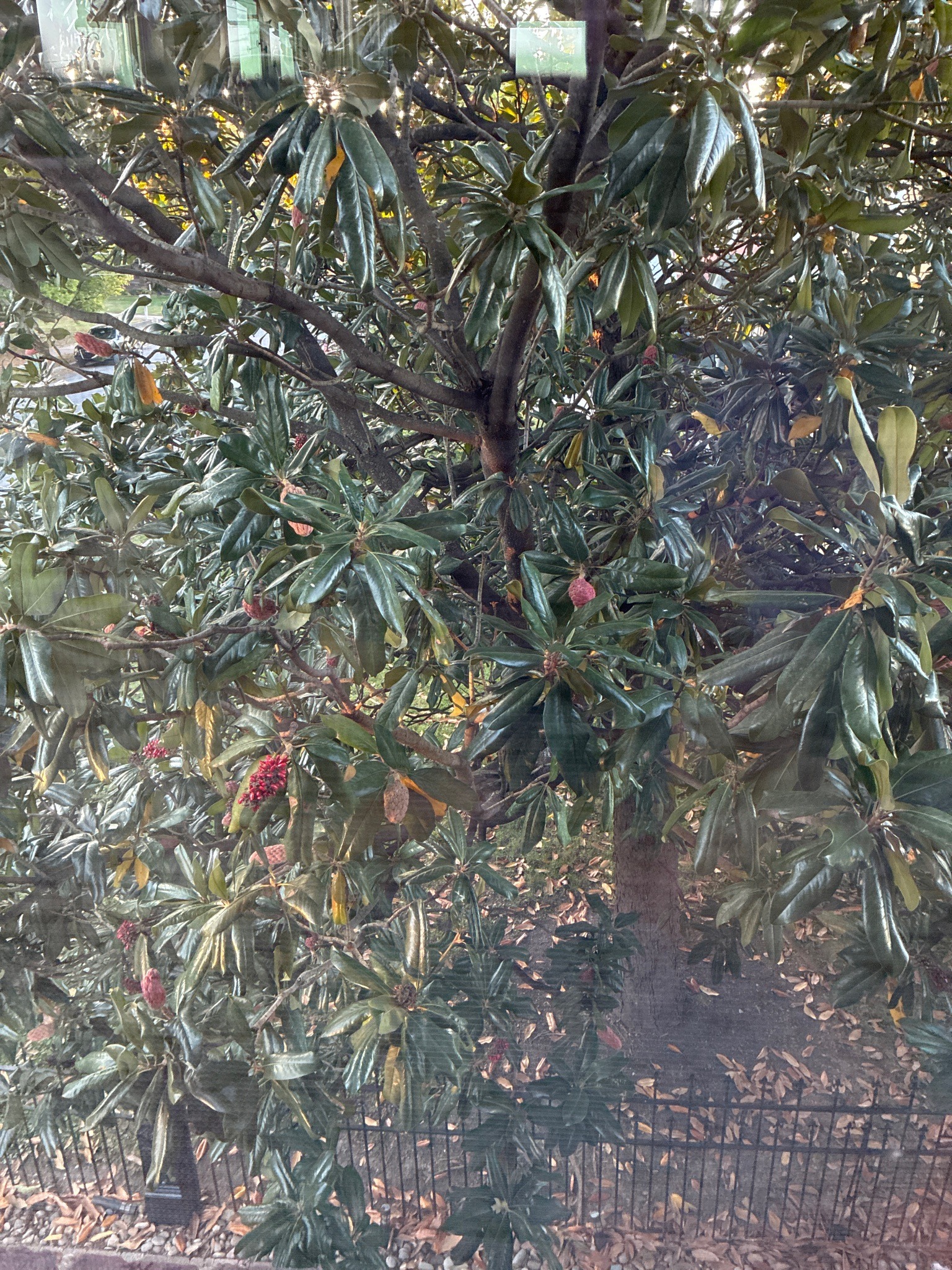
Southern Magnolia
Magnolia grandiflora
A large, evergreen tree featuring glossy, dark green leaves with rusty brown undersides, prominent large fragrant white flowers, and aggregate cone-like fruits containing red seeds.
- Light
- Full sun to partial shade, ideally six or more hours of direct sunlight per day.
- Water
- Requires regular watering when young to establish root systems. Mature trees have moderate drought tolerance but perform best with consistent moisture; avoid waterlogged soil.
- Growth
- Large evergreen tree with an upright, pyramidal to rounded growth habit. Reaches mature heights of 60 to 80 feet with a spread of 30 to 50 feet, growing at a slow to moderate rate.
Care instructions
Provide full sun to partial shade, water regularly to establish a deep root system, and plant in rich, well-draining acidic soil. Apply a balanced fertilizer in early spring.
Growing details
Sunlight
Full sun to partial shade, ideally six or more hours of direct sunlight per day.
Watering
Requires regular watering when young to establish root systems. Mature trees have moderate drought tolerance but perform best with consistent moisture; avoid waterlogged soil.
Soil
Prefers moist, organic-rich, well-drained loamy or sandy soils with an acidic to neutral pH range between 5.0 and 6.5.
Hardiness zone
USDA Hardiness Zones 7 through 9.
Growth habit
Large evergreen tree with an upright, pyramidal to rounded growth habit. Reaches mature heights of 60 to 80 feet with a spread of 30 to 50 feet, growing at a slow to moderate rate.
Bloom season
Late spring through summer, featuring large, cup-shaped, fragrant white flowers up to 12 inches across.
Propagation
Propagated primarily through semi-hardwood cuttings taken in summer, or via seeds cleaned of their fleshy outer coating and stratified before planting.
Common pests & issues
Generally resilient, but may occasionally encounter scale insects, algal leaf spot, or powdery mildew, which can be managed with good cultural practices and appropriate horticultural oils or fungicides.
Similar species
Sweetbay Magnolia (Magnolia virginiana), which has smaller leaves with silvery-white undersides and is semi-evergreen or deciduous depending on the climate.