
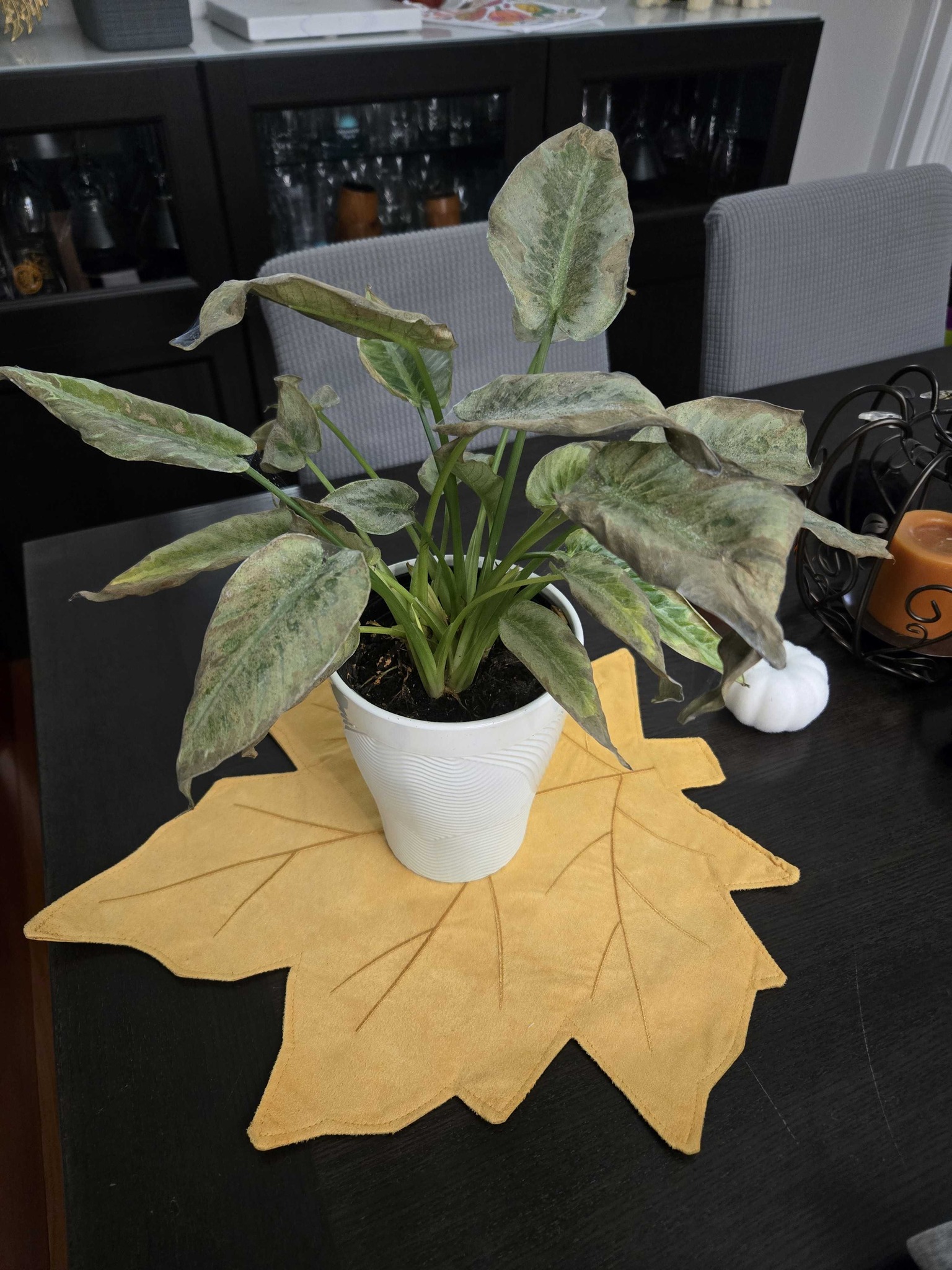
Spathiphyllum (Variegated Peace Lily)
Spathiphyllum wallisii
An evergreen perennial featuring glossy, lance-shaped leaves with unique silver-grey variegation on stalks rising from a central base. Note that the visible foliage shows heavy signs of environmental or pest stress (such as silvering from thrips infestation or cold damage).
- Light
- Bright, indirect light for 6 to 8 hours daily; avoid direct sunlight which can scorch the foliage.
- Water
- Water thoroughly whenever the top inch of soil feels dry. Drought tolerance is very low; underwatering causes drooping leaves, while overwatering leads to root rot.
- Growth
- Clumping perennial houseplant reaching a mature height and spread of 1 to 3 feet with a moderate growth rate.
Care instructions
Provide bright, indirect sunlight, keeping the potting mix consistently moist but never waterlogged. Maintain high ambient humidity and apply a balanced liquid houseplant fertilizer monthly during the spring and summer active growing season.
Growing details
Sunlight
Bright, indirect light for 6 to 8 hours daily; avoid direct sunlight which can scorch the foliage.
Watering
Water thoroughly whenever the top inch of soil feels dry. Drought tolerance is very low; underwatering causes drooping leaves, while overwatering leads to root rot.
Soil
Rich, well-draining organic potting mix with a slightly acidic to neutral pH range of 5.5 to 6.5.
Hardiness zone
USDA hardiness zones 11 to 12; typically grown indoors as a houseplant in cooler temperate regions.
Growth habit
Clumping perennial houseplant reaching a mature height and spread of 1 to 3 feet with a moderate growth rate.
Bloom season
Spring through summer; produces a white or yellowish spadix enclosed in a white or greenish spathe (modified leaf bract).
Propagation
Propagated primarily through root division during repotting in the spring by separating offsets from the main clump.
Common pests & issues
Susceptible to thrips, spider mites, and mealybugs (indicated by the silver stippling on the leaves in the image). Root rot can occur if soil drainage is inadequate.
Similar species
Anthurium species, which have heart-shaped leaves and distinct spathe coloration, and Aglaonema species, which have stiffer stems and more pronounced stem growth.