
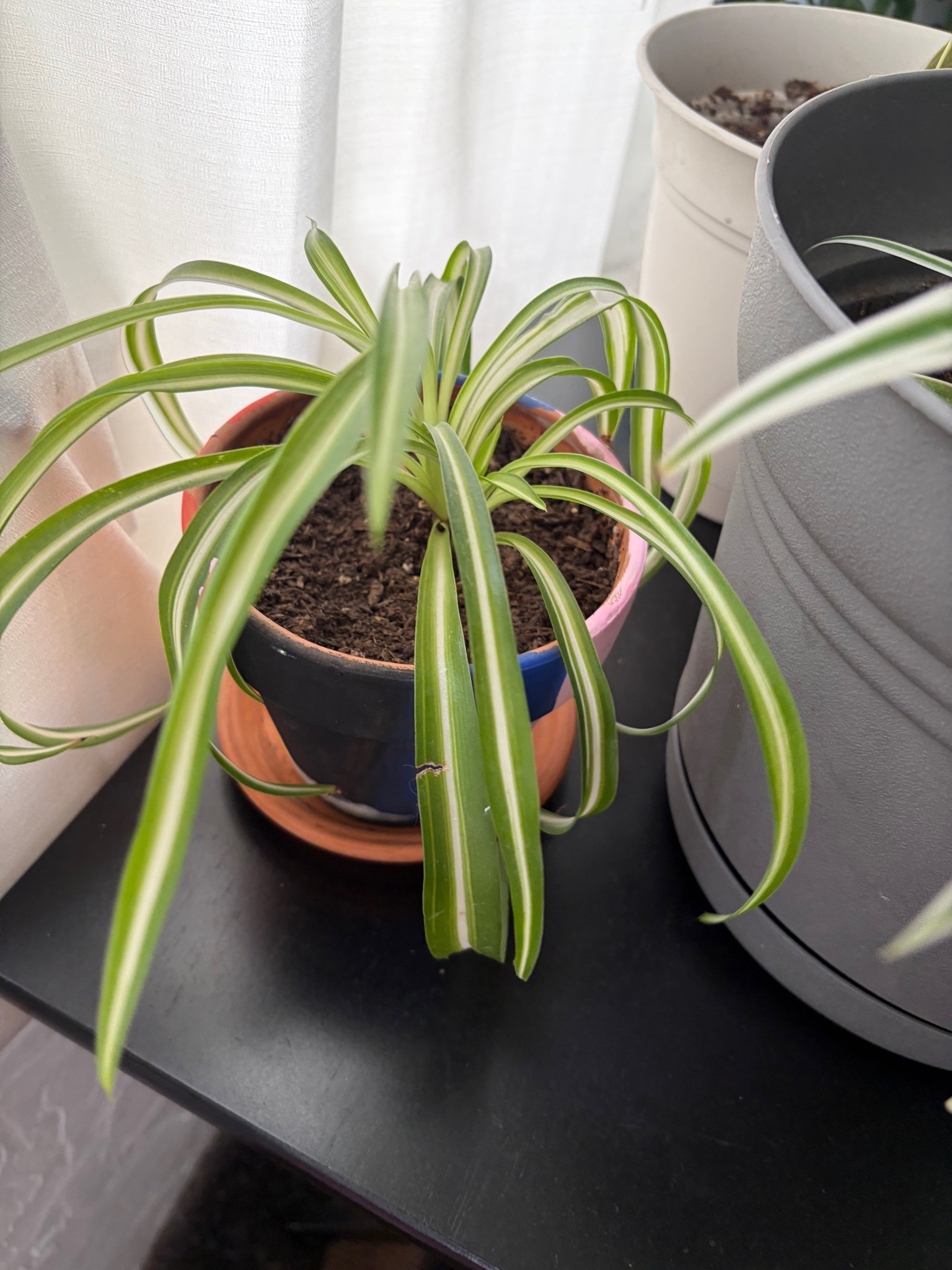
Spider plant
Chlorophytum comosum
A popular indoor houseplant featuring long, narrow, arching green leaves adorned with prominent central white stripes, growing from a central rosette with fleshy tubers.
- Light
- Bright, indirect light for 6 to 8 hours daily; avoid direct midday sun to prevent leaf scorching.
- Water
- Water moderately, allowing the soil to dry out partially between waterings. Drought tolerant to a degree due to water-storing tubers, but sensitive to fluoride and chlorine in tap water which can cause brown leaf tips.
- Growth
- Perennial herbaceous plant with a clumping growth habit, reaching a mature height of 1 to 2 feet and a spread of 1 to 2 feet with a moderate growth rate.
Care instructions
Provide bright, indirect sunlight and water thoroughly when the top two inches of soil feel dry. Use a well-draining potting mix and feed with a balanced, water-soluble fertilizer monthly during the active spring and summer growing seasons.
Growing details
Sunlight
Bright, indirect light for 6 to 8 hours daily; avoid direct midday sun to prevent leaf scorching.
Watering
Water moderately, allowing the soil to dry out partially between waterings. Drought tolerant to a degree due to water-storing tubers, but sensitive to fluoride and chlorine in tap water which can cause brown leaf tips.
Soil
Well-draining, loose, loamy potting soil with a slightly acidic to neutral pH range of 6.0 to 7.0.
Hardiness zone
USDA hardiness zones 9 to 11 when grown outdoors, though most commonly kept indoors in temperate regions.
Growth habit
Perennial herbaceous plant with a clumping growth habit, reaching a mature height of 1 to 2 feet and a spread of 1 to 2 feet with a moderate growth rate.
Bloom season
Spring and summer, producing small, star-shaped white flowers on long arching stems that eventually develop into small plantlets.
Propagation
Easily propagated by detaching the small plantlets (offsets or pups) that form on the flowering stems and potting them in moist soil, or through root division during repotting.
Common pests & issues
Brown leaf tips often result from dry air, underwatering, or chemical sensitivities in tap water. Pests such as spider mites, mealybugs, and scale can occasionally affect indoor specimens and are best treated with insecticidal soap.
Similar species
Ribbon plant (Dracaena sanderiana) or Pandanus, which can look somewhat similar in leaf form, but can be distinguished by their woody stems and distinct floral structures.