
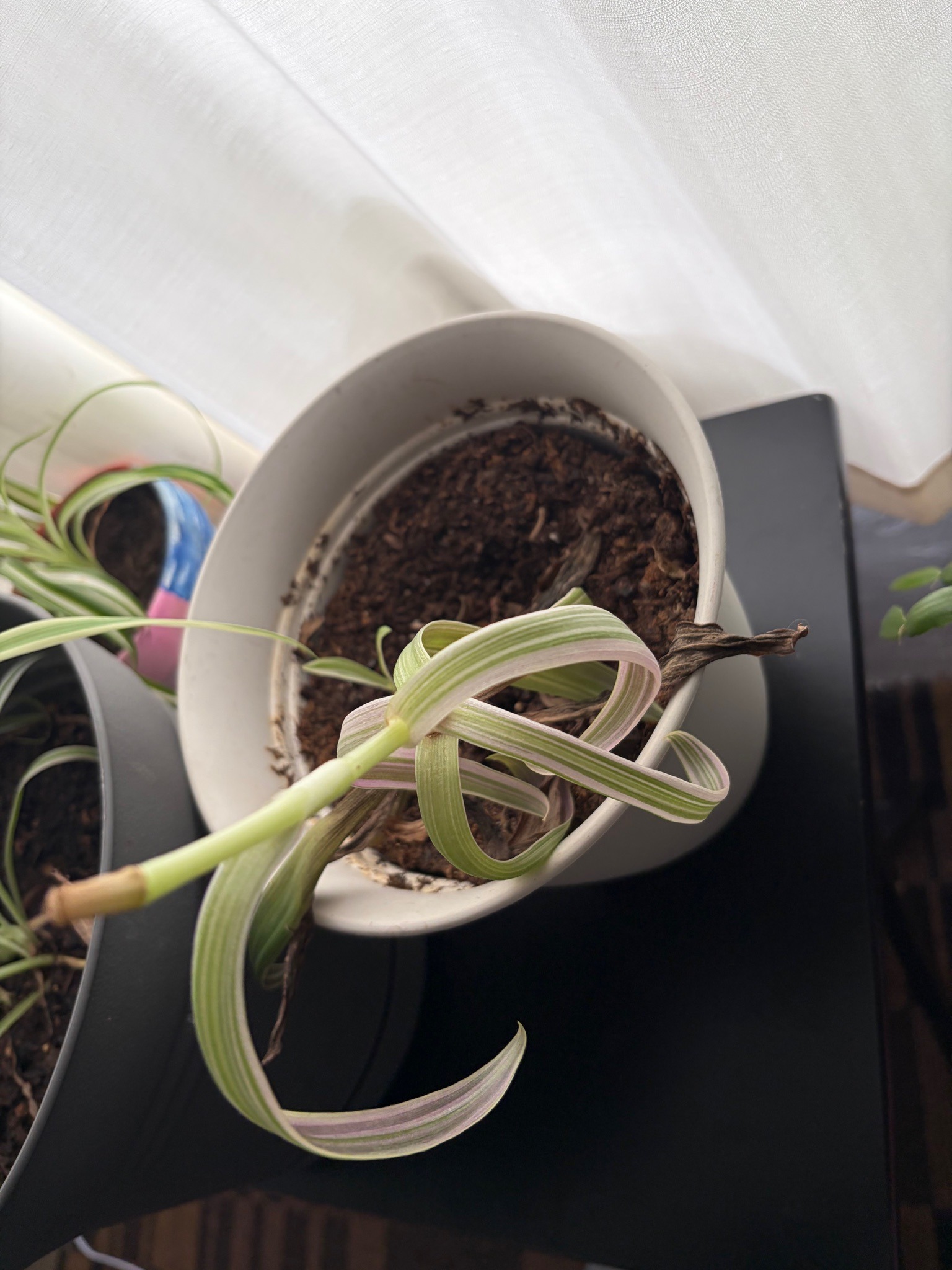
Spider Plant
Chlorophytum comosum
A popular indoor houseplant featuring narrow, arching green leaves with creamy white variegation, known for producing small plantlets on long trailing stems.
- Light
- Bright, indirect light for 6 to 8 hours per day. Avoid direct afternoon sun to prevent leaf scorching.
- Water
- Water thoroughly when the topsoil is dry to the touch. Drought tolerant to a degree, but sensitive to fluoride and chlorine in tap water, which can cause brown leaf tips. Use filtered water if possible.
- Growth
- Herbaceous perennial forming a rosette of leaves, reaching 12 to 24 inches in height and 12 to 24 inches in spread, with a moderate growth rate.
Care instructions
Provide bright, indirect sunlight, water when the top two inches of soil feel dry, use well-draining potting mix, and feed with a balanced liquid fertilizer during the spring and summer growing season.
Growing details
Sunlight
Bright, indirect light for 6 to 8 hours per day. Avoid direct afternoon sun to prevent leaf scorching.
Watering
Water thoroughly when the topsoil is dry to the touch. Drought tolerant to a degree, but sensitive to fluoride and chlorine in tap water, which can cause brown leaf tips. Use filtered water if possible.
Soil
Well-draining, loamy potting soil with a neutral pH ranging from 6.0 to 7.5.
Hardiness zone
USDA hardiness zones 9 to 11 when grown outdoors, primarily grown indoors in cooler regions.
Growth habit
Herbaceous perennial forming a rosette of leaves, reaching 12 to 24 inches in height and 12 to 24 inches in spread, with a moderate growth rate.
Bloom season
Blooms intermittently throughout the year with small, star-shaped white flowers borne on long, slender stalks.
Propagation
Propagated easily by detaching the small plantlets (pups) that form on the runners and rooting them in water or directly in moist potting soil.
Common pests & issues
Common problems include brown leaf tips caused by dry air, underwatering, or chemical buildup from tap water. Pests such as spider mites and mealybugs may occasionally affect indoor specimens.
Similar species
Ribbon grass (Phalaris arundinacea) and Pandanus amaryllifolius, but distinguished by the tuberous root system and characteristic arching rosette form of Chlorophytum comosum.