
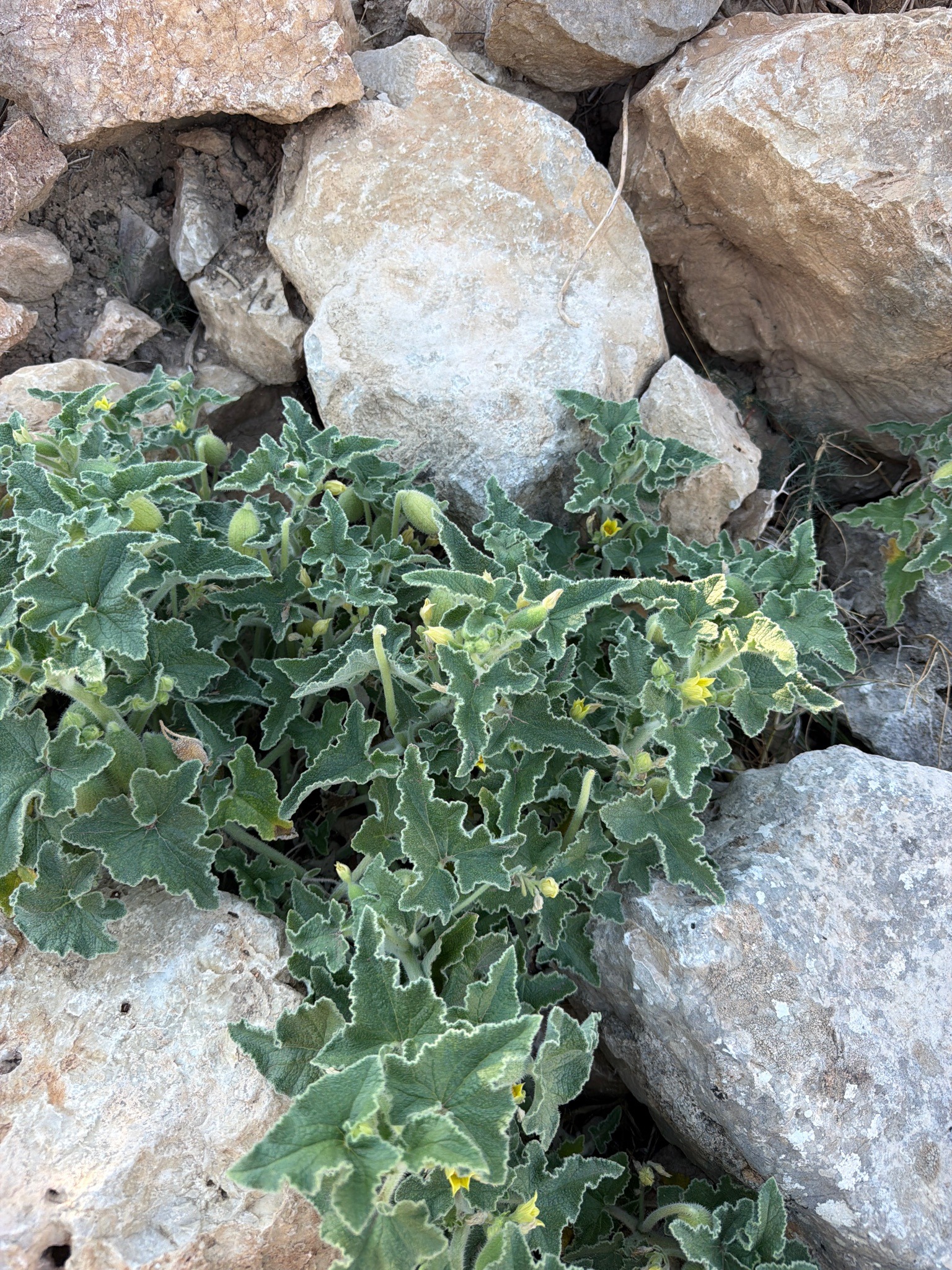
Squirting Cucumber
Ecballium elaterium
A prostrate, rough-hairy perennial herbaceous plant lacking tendrils, featuring lobed, triangular-to-heart-shaped leaves with a distinctive grayish-white margin and bristly texture, bearing small yellow, bell-shaped flowers and oblong, hairy fleshy fruits.
- Light
- Full sun, requiring at least 6 hours of direct sunlight per day.
- Water
- Low water requirements. Highly drought-tolerant once established. Water sparingly and allow the soil to dry thoroughly between waterings to prevent rot.
- Growth
- Prostrate, spreading perennial vine-like herb without tendrils, growing low to the ground reaching heights of 10 to 30 centimeters and spreading up to 1 meter across with a moderate growth rate.
Care instructions
Cultivate in an open, sunny position with very well-draining, sandy or rocky soil. Provide infrequent, deep watering once established, allowing the substrate to dry out completely between irrigation cycles. Avoid high humidity and excessive moisture to prevent root decline.
Growing details
Sunlight
Full sun, requiring at least 6 hours of direct sunlight per day.
Watering
Low water requirements. Highly drought-tolerant once established. Water sparingly and allow the soil to dry thoroughly between waterings to prevent rot.
Soil
Prefers sandy, rocky, or loamy substrates with exceptional drainage and a neutral to alkaline pH range of 6.5 to 8.0.
Hardiness zone
USDA hardiness zones 8 through 10, thriving in warm, arid environments.
Growth habit
Prostrate, spreading perennial vine-like herb without tendrils, growing low to the ground reaching heights of 10 to 30 centimeters and spreading up to 1 meter across with a moderate growth rate.
Bloom season
Blooms from late spring through summer, producing small, pale yellow, funnel-shaped flowers with five petals.
Propagation
Propagated primarily by seed sown in spring in well-draining seed-starting medium, or via careful division of established root crowns.
Common pests & issues
Susceptible to powdery mildew and root rot if exposed to excessive humidity or poorly draining soil conditions. Pests may include aphids and spider mites under dry greenhouse conditions.
Similar species
Other members of the Cucurbitaceae family such as wild cucumber species (Echinocystis or Sicyos), but Ecballium elaterium is readily distinguished by its complete lack of tendrils, rough bristly foliage, and distinctively explosive fruit mechanism.