
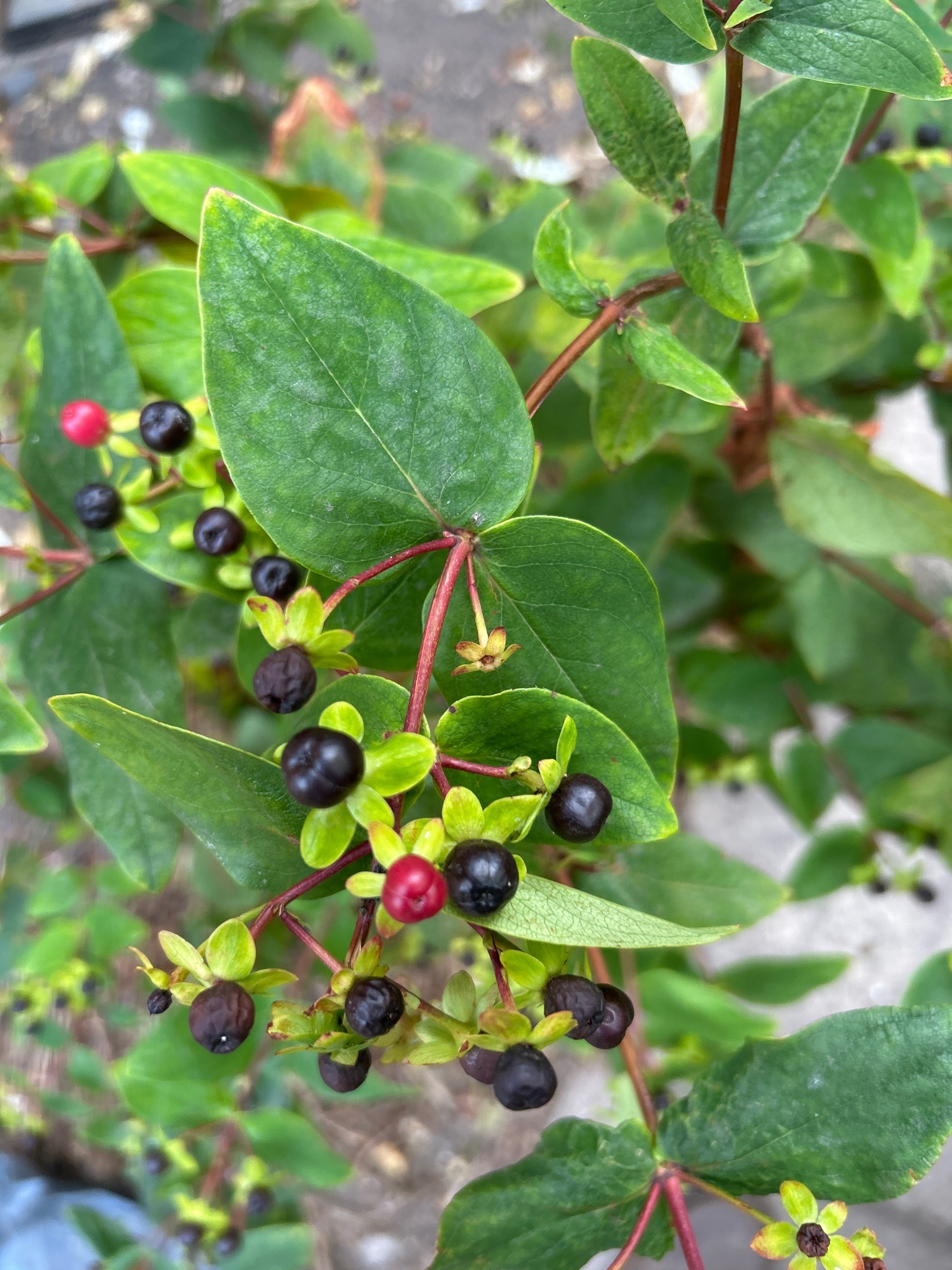
St. John's Wort
Hypericum androsaemum
A semi-evergreen or deciduous shrub featuring opposite, ovate green leaves, reddish stems, small yellow flowers followed by prominent fleshy capsules that mature from red to glossy black-purple.
- Light
- Full sun to partial shade, requiring at least 4 to 6 hours of direct sunlight daily for optimal foliage color and fruit production.
- Water
- Moderate watering requirements. Allow the top inch of soil to dry out between watering sessions. Mature plants tolerate occasional dry periods, but prolonged drought will reduce fruit set.
- Growth
- Perennial shrub with an upright, bushy growth habit. Typically reaches a mature height and spread of 2 to 3 feet with a moderate growth rate.
Care instructions
Provide full sun to partial shade in moderately fertile, well-draining soil. Water regularly during the first growing season to establish a deep root system, after which it exhibits moderate drought tolerance. Apply a balanced, slow-release fertilizer in early spring and prune back old stems in late winter or early spring to encourage vigorous new growth.
Growing details
Sunlight
Full sun to partial shade, requiring at least 4 to 6 hours of direct sunlight daily for optimal foliage color and fruit production.
Watering
Moderate watering requirements. Allow the top inch of soil to dry out between watering sessions. Mature plants tolerate occasional dry periods, but prolonged drought will reduce fruit set.
Soil
Adaptable to a wide range of soil types including loamy, sandy, or clay soils, provided they have good drainage. Prefers a neutral to slightly acidic pH range between 6.0 and 7.0.
Hardiness zone
USDA Hardiness Zones 6 through 9, demonstrating good cold tolerance down to -10 degrees Fahrenheit.
Growth habit
Perennial shrub with an upright, bushy growth habit. Typically reaches a mature height and spread of 2 to 3 feet with a moderate growth rate.
Bloom season
Flowers from late spring through mid-summer, producing small, star-shaped yellow flowers with prominent stamens, followed by decorative capsules.
Propagation
Can be propagated easily from semi-hardwood cuttings taken in mid-to-late summer, or from seeds sown in spring in a cold frame. Division of established root clumps in early spring is also effective.
Common pests & issues
Generally resilient, but may occasionally be affected by rust fungal diseases or root rot in poorly draining soils. Pests such as aphids or thrips can occasionally appear on tender new shoots and are easily managed with standard horticultural practices.
Similar species
Hypericum calycinum (Creeping St. John's Wort), which is a lower-growing ground cover with larger flowers and creeping stems rather than an upright shrub form.