
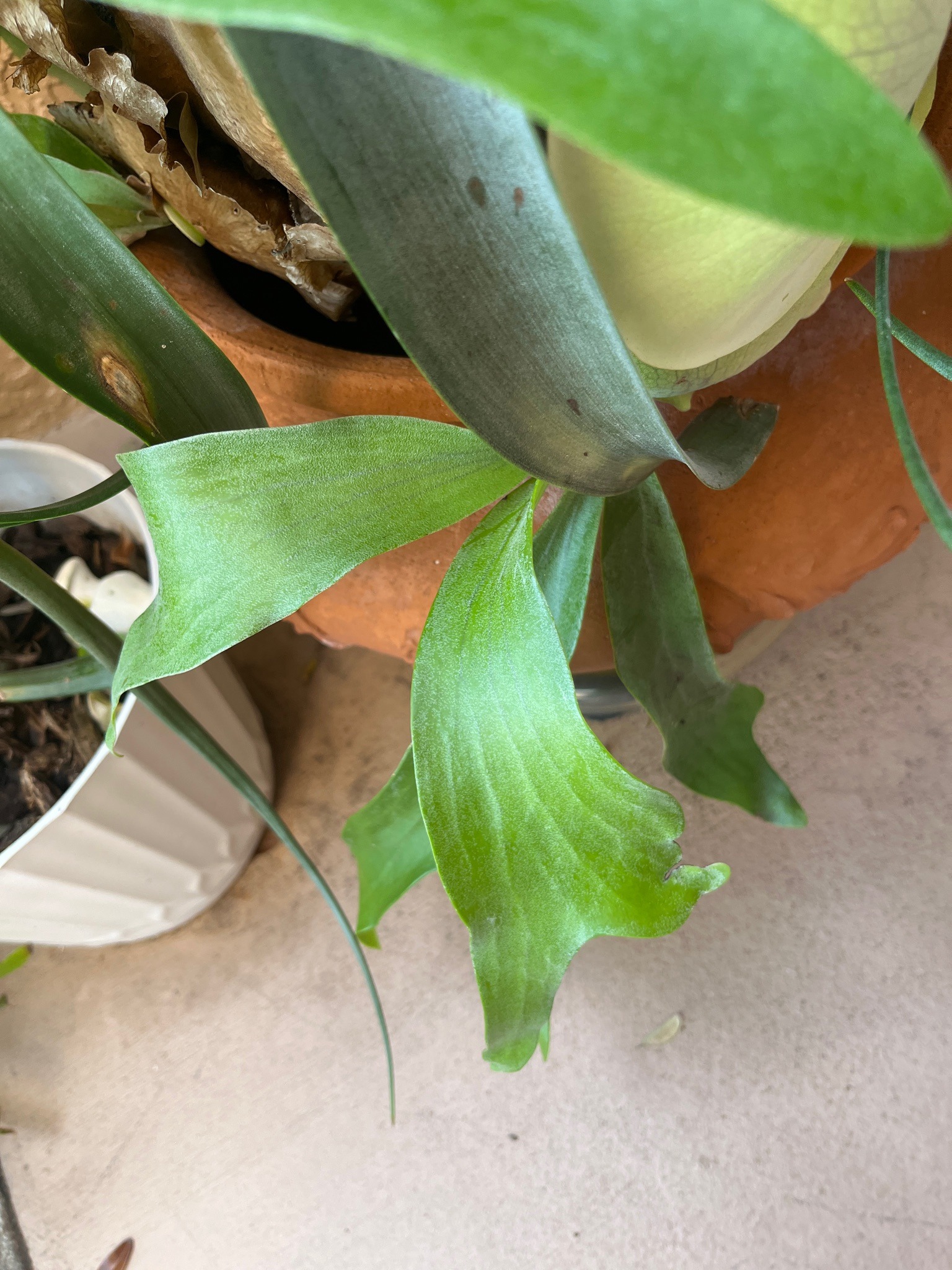
Staghorn Fern
Platycerium bifurcatum
An epiphytic fern featuring two distinct types of fronds: broad, rounded basal shield fronds that cover the roots and cling to surfaces, and long, antler-like fertile fronds that arch outward.
- Light
- Bright, indirect light for 6 to 8 hours daily, avoiding harsh direct sun that can scorch the fronds.
- Water
- Water thoroughly every 1 to 2 weeks by soaking the root ball or mounting medium, allowing it to dry slightly between waterings.
- Growth
- Perennial epiphyte with a slow to moderate growth rate, forming cascading clumps up to 3 feet in length and width.
Care instructions
Provide bright, indirect sunlight and maintain high humidity. Water thoroughly when the root medium approaches dryness, allowing proper drainage. Use an orchid bark mix or mount on wood.
Growing details
Sunlight
Bright, indirect light for 6 to 8 hours daily, avoiding harsh direct sun that can scorch the fronds.
Watering
Water thoroughly every 1 to 2 weeks by soaking the root ball or mounting medium, allowing it to dry slightly between waterings.
Soil
Chunky, well-aerated epiphytic medium such as a mix of orchid bark, peat, and perlite, with a neutral to slightly acidic pH range of 6.0 to 7.5.
Hardiness zone
USDA zones 9 to 12, as it is sensitive to freezing temperatures and frost.
Growth habit
Perennial epiphyte with a slow to moderate growth rate, forming cascading clumps up to 3 feet in length and width.
Bloom season
Non-flowering
Propagation
Propagated by separating basal pups (offsets) from the mother plant during active growth periods.
Common pests & issues
Prceptible to mealybugs and scale insects. Overwatering can lead to root rot, while low humidity may cause brown frond tips.
Similar species
Platycerium grande and Platycerium coronarium, which differ primarily in shield frond shape, spore patch location, and native growing ranges.