
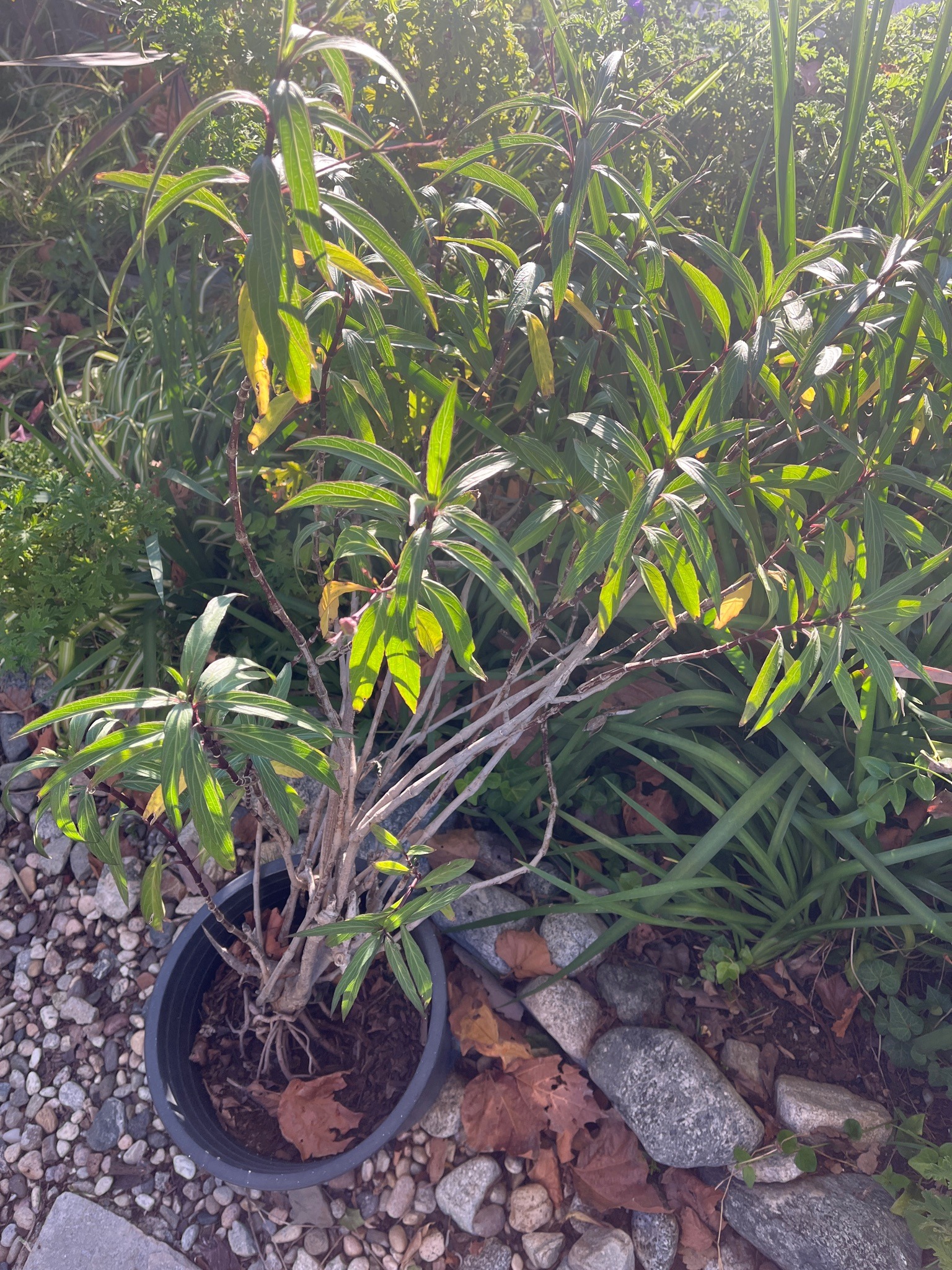
Sticky Monkey Flower
Diplacus aurantiacus
An evergreen subshrub with sticky, glossy green, lance-shaped leaves and slender, branching stems coming from a woody base.
- Light
- Full sun to partial shade, requiring at least 6 hours of direct sunlight daily.
- Water
- Low to moderate water needs. Allow the soil to dry out completely between watering sessions. Avoid waterlogged conditions.
- Growth
- Perennial subshrub with an upright, branching habit, reaching mature heights and spreads of 2 to 4 feet.
Care instructions
Provide full sun to partial shade with well-draining soil. Water deeply but infrequently once established, allowing the soil to dry out between waterings. Prune lightly after blooming to maintain shape.
Growing details
Sunlight
Full sun to partial shade, requiring at least 6 hours of direct sunlight daily.
Watering
Low to moderate water needs. Allow the soil to dry out completely between watering sessions. Avoid waterlogged conditions.
Soil
Prefers sandy, loamy, or rocky soils with excellent drainage and a neutral to slightly acidic pH range of 6.0 to 7.0.
Hardiness zone
USDA Hardiness Zones 8 through 10, with moderate frost tolerance.
Growth habit
Perennial subshrub with an upright, branching habit, reaching mature heights and spreads of 2 to 4 feet.
Bloom season
Blooms from spring through summer with tubular, snapdragon-like flowers in shades of yellow, orange, or peach.
Propagation
Propagated easily through semi-hardwood stem cuttings taken in spring or summer, or by sowing seeds in autumn.
Common pests & issues
Generally trouble-free, but may experience root rot in poorly draining soils. Watch for occasional aphids or powdery mildew in humid conditions.
Similar species
Other Diplacus species, which can be distinguished by specific flower color variations and leaf texture nuances.