
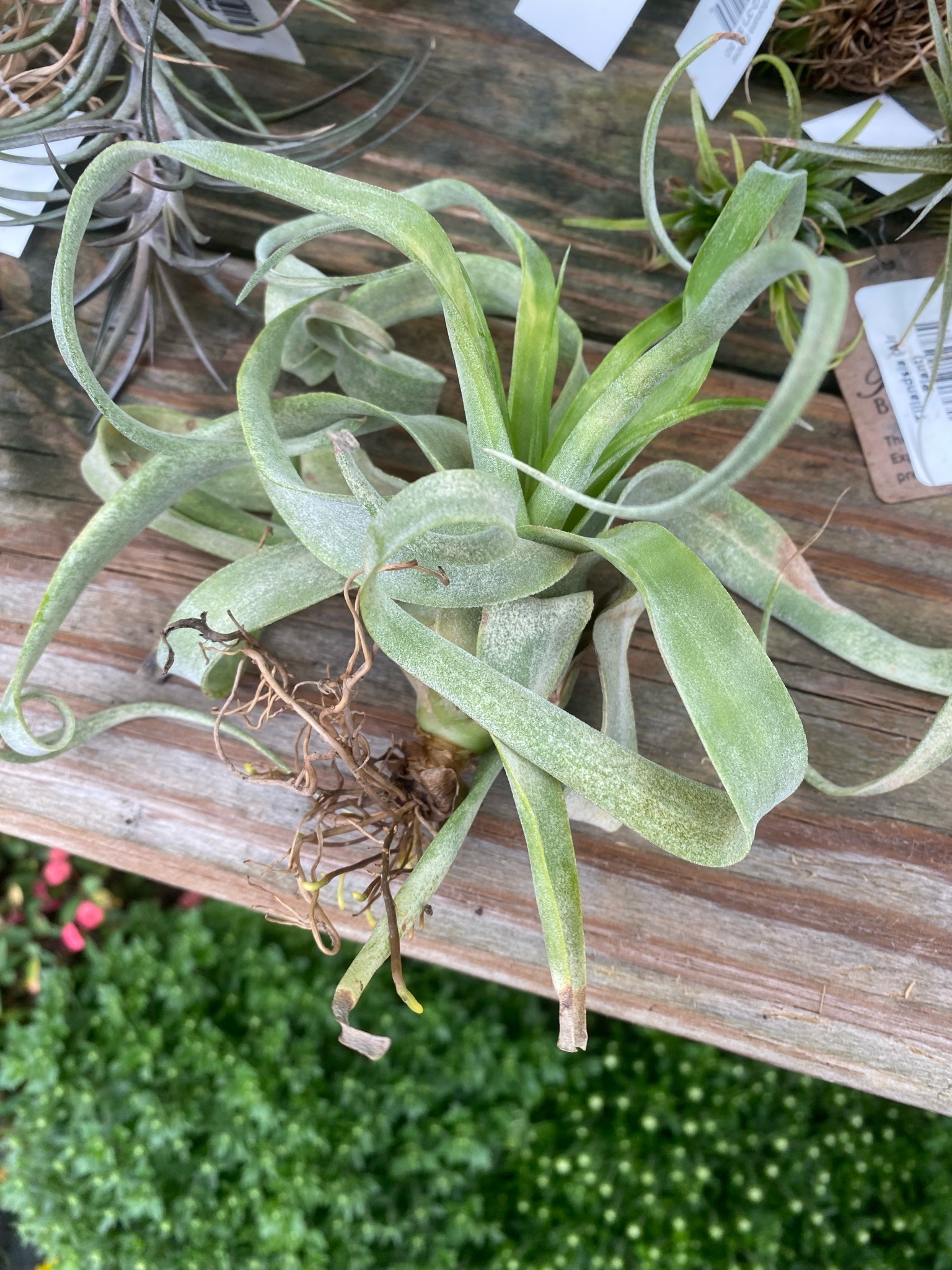
Stramonium Air Plant
Tillandsia streptophylla
An epiphytic bromeliad known for its bulbous base and long, heavily twisted, curling green leaves covered in silvery trichomes.
- Light
- Bright, indirect light for 6 to 8 hours daily, avoiding intense midday direct sun.
- Water
- Submerge completely in water weekly, then shake off excess moisture and dry upside down. Mist occasionally between waterings in dry climates.
- Growth
- Perennial epiphyte with a rosette form, growing slowly to a mature height and spread of about 6 to 12 inches.
Care instructions
Provide bright, indirect sunlight and submerge the plant in water for 20 to 30 minutes every one to two weeks, ensuring it dries completely within a few hours. Mount on wood or keep in well-ventilated containers without traditional soil.
Growing details
Sunlight
Bright, indirect light for 6 to 8 hours daily, avoiding intense midday direct sun.
Watering
Submerge completely in water weekly, then shake off excess moisture and dry upside down. Mist occasionally between waterings in dry climates.
Soil
Grows epiphytically without soil; if attached to mounts, use non-organic materials like nylon or floral wire rather than standard potting mix.
Hardiness zone
USDA Hardiness Zones 9 through 11; grown strictly as a houseplant in colder regions.
Growth habit
Perennial epiphyte with a rosette form, growing slowly to a mature height and spread of about 6 to 12 inches.
Bloom season
Blooms irregularly with a pink or red inflorescence bract producing purple tubular flowers.
Propagation
Propagated by removing offsets or pups that form around the base of the parent plant after flowering once they reach one-third the size of the parent.
Common pests & issues
Susceptible to rot if water gets trapped in the bulbous base for too long. Pests are rare, but mealybugs can occasionally affect the leaves.
Similar species
Tillandsia xerographica, which has a wider rosette and broader leaves, and Tillandsia bulbosa, which has a more pronounced, glossy bulbous base.