
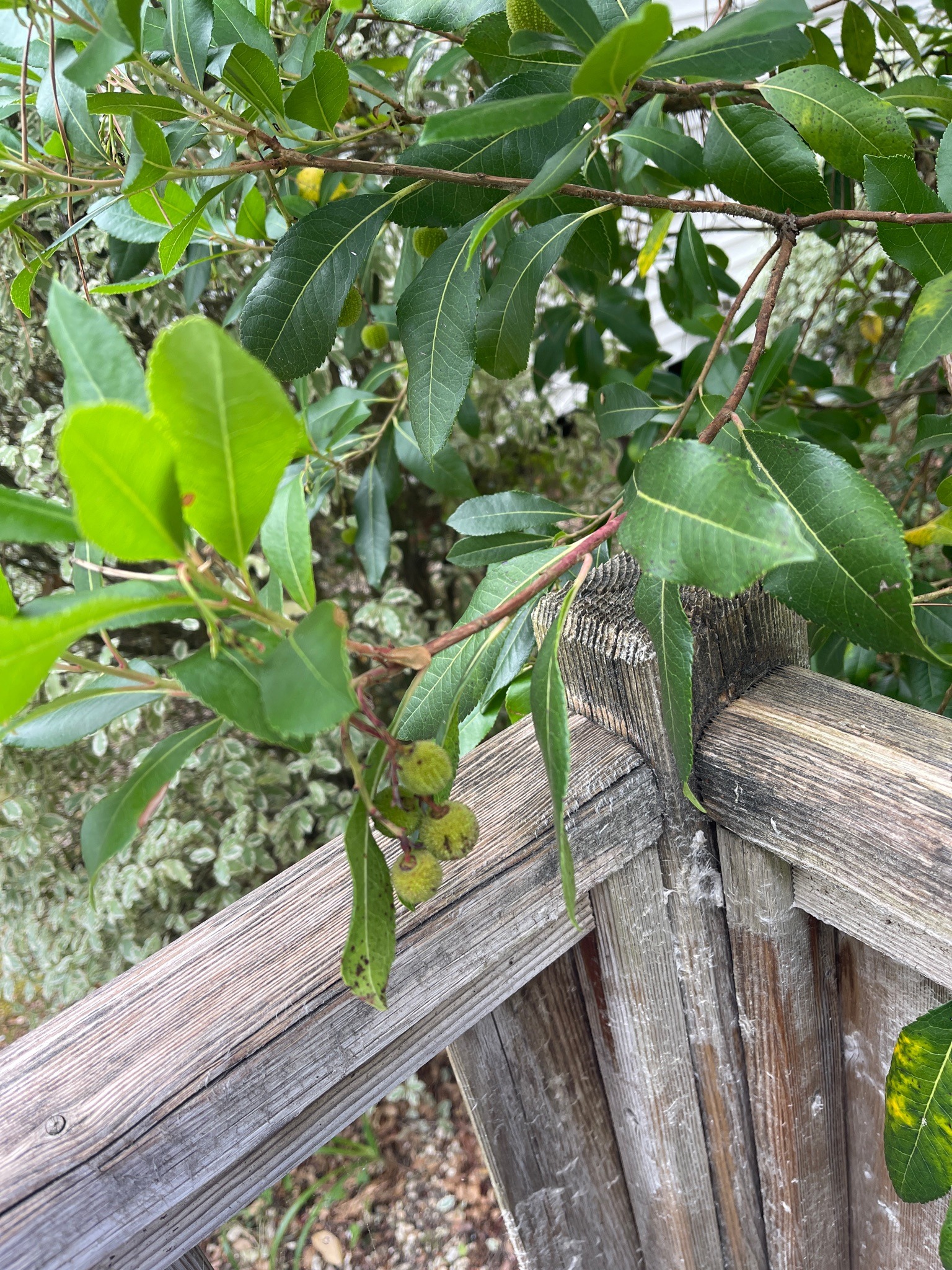
Strawberry Tree
Arbutus unedo
An evergreen shrub or small tree with glossy, dark green, serrated leaves, reddish-brown peeling bark, and round, bumpy fruit that transitions from green to yellow to red.
- Light
- Full sun to partial shade; prefers at least 6 hours of direct sunlight for best fruit production.
- Water
- Moderate watering when young; once established, it is drought-tolerant. Water during prolonged dry spells to prevent leaf drop.
- Growth
- Evergreen perennial shrub or small tree. Typically grows 15-30 feet tall and wide with a rounded, spreading habit. Growth rate is slow to moderate.
Care instructions
This is a hardy, low-maintenance plant. It thrives in well-drained soil and requires full sun to partial shade. Water regularly during establishment, but it is remarkably drought-tolerant once mature. Prune in late winter to maintain shape and remove dead wood.
Growing details
Sunlight
Full sun to partial shade; prefers at least 6 hours of direct sunlight for best fruit production.
Watering
Moderate watering when young; once established, it is drought-tolerant. Water during prolonged dry spells to prevent leaf drop.
Soil
Well-drained acidic to neutral soil (pH 5.5 to 7.0), though it is more lime-tolerant than many other Ericaceae species.
Hardiness zone
USDA zones 7 through 10; heat tolerant and can withstand mild frost.
Growth habit
Evergreen perennial shrub or small tree. Typically grows 15-30 feet tall and wide with a rounded, spreading habit. Growth rate is slow to moderate.
Bloom season
Autumn to mid-winter. Features clusters of small, bell-shaped white or pink-tinged flowers that often appear at the same time as the previous year's ripening fruit.
Propagation
Propagated by seed (requires cold stratification), semi-hardwood cuttings in late summer, or layering.
Common pests & issues
Generally pest-free. Occasionally susceptible to leaf spot (Septoria), aphids, and scale. Root rot may occur if planted in poorly drained soil.
Similar species
Arbutus menziesii (Madrone) has smoother leaves and larger clusters of berries; Myrica californica (Pacific Wax Myrtle) has narrower leaves and much smaller, waxy berries.