
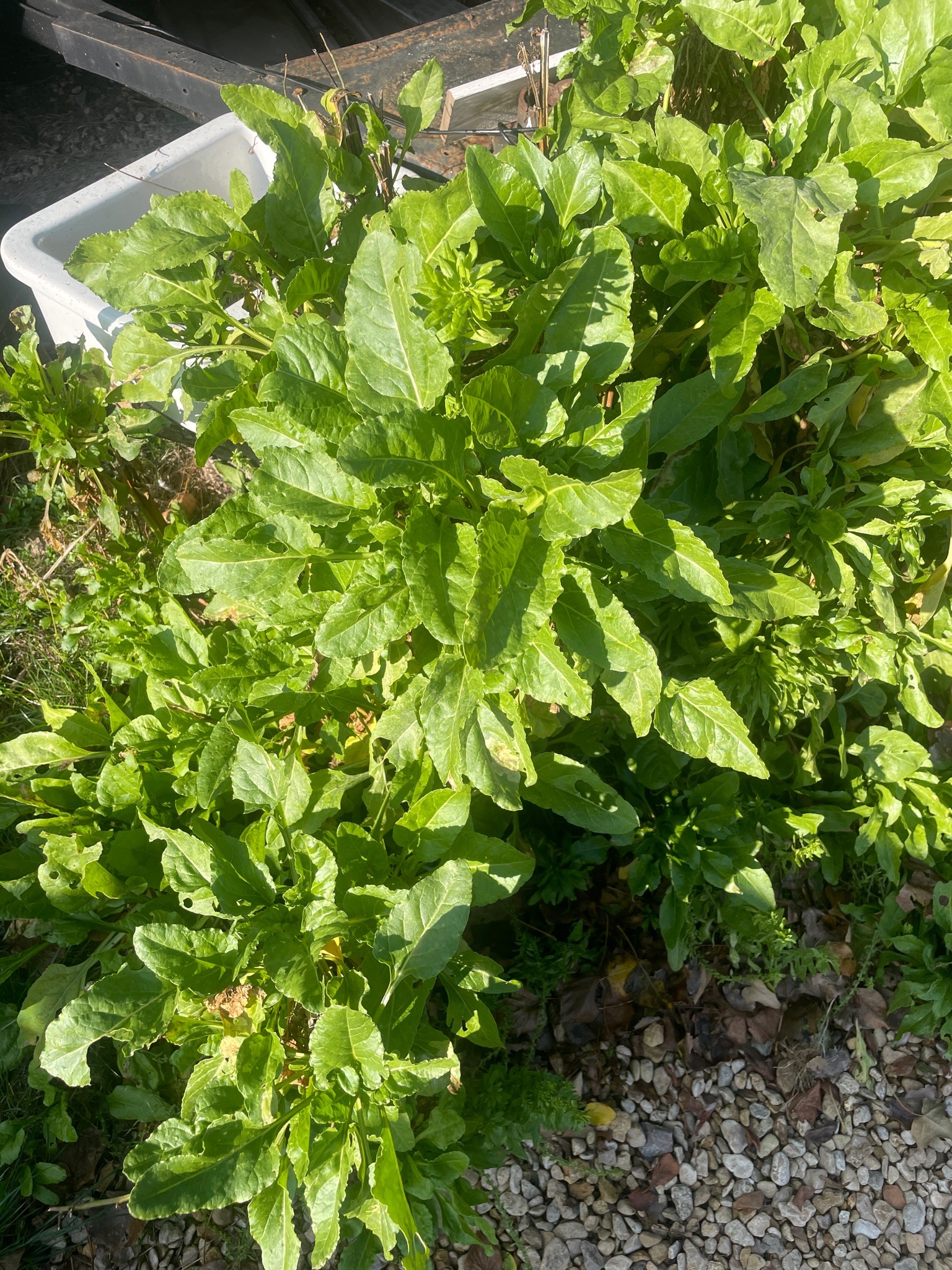
Sugar Beet
Beta vulgaris
A herbaceous biennial plant featuring a dense rosette of large, glossy, bright green leaves with prominent midribs and a swollen, fleshy root system beneath the soil.
- Light
- Full sun, requiring 6 to 8 hours of direct sunlight per day.
- Water
- Requires regular and even watering, approximately 1 inch of water per week through rainfall or irrigation. Drought stress can negatively impact root and leaf development.
- Growth
- Herbaceous biennial grown primarily as an annual, forming a low-lying rosette of foliage reaching 12 to 24 inches in height with a similar spread.
Care instructions
Provide full sun exposure with at least 6 hours of direct light daily. Maintain consistently moist, well-draining soil and apply a balanced fertilizer during early vegetative growth to support root and leaf development.
Growing details
Sunlight
Full sun, requiring 6 to 8 hours of direct sunlight per day.
Watering
Requires regular and even watering, approximately 1 inch of water per week through rainfall or irrigation. Drought stress can negatively impact root and leaf development.
Soil
Prefers loose, deep, fertile, and well-draining loamy soils with a neutral pH range between 6.0 and 7.0.
Hardiness zone
USDA Hardiness Zones 2 through 11, grown primarily as an annual crop in temperate regions.
Growth habit
Herbaceous biennial grown primarily as an annual, forming a low-lying rosette of foliage reaching 12 to 24 inches in height with a similar spread.
Bloom season
Typically behaves as a biennial and does not flower in its first year; in the second year, it produces tall spikes of small, greenish flowers during the summer.
Propagation
Propagated strictly by seeds sown directly into the soil in early spring.
Common pests & issues
Susceptible to fungal leaf spot diseases, root rots in poorly draining soils, and insect pests such as aphids and flea beetles. Prevent through crop rotation and maintaining proper soil drainage.
Similar species
Chard and beetroot, which belong to the same species but are cultivated for different morphological traits such as leaf stalks or swollen taproots.