
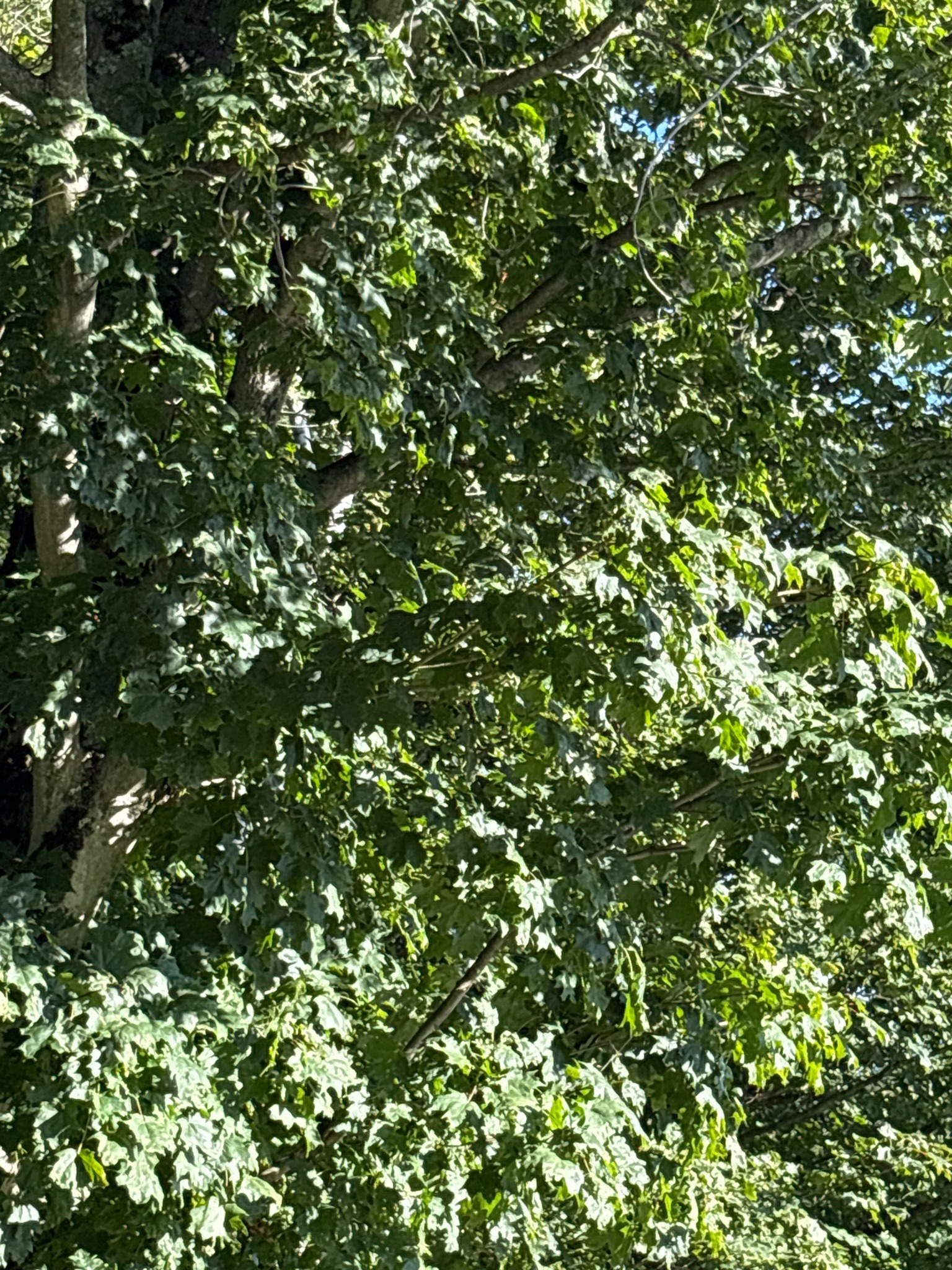
Sugar Maple
Acer saccharum
A large deciduous tree featuring opposite, palmately lobed green leaves that turn vibrant shades of orange, red, and yellow in autumn, with smooth gray bark on young trees becoming deeply furrowed with age.
- Light
- Full sun to partial shade, requiring at least 6 hours of direct sunlight daily.
- Water
- Prefers moderate, consistent moisture. Water deeply when the top few inches of soil feel dry, ensuring soil is never waterlogged as established trees tolerate brief dry periods.
- Growth
- Perennial large deciduous tree with an upright, oval to rounded crown, maturing to heights of 60 to 75 feet and a spread of 45 to 50 feet with a moderate growth rate.
Care instructions
Provide full sun to partial shade with consistently moist, well-draining soil rich in organic matter. Water deeply during dry spells, and apply a balanced fertilizer in early spring if growth is slow.
Growing details
Sunlight
Full sun to partial shade, requiring at least 6 hours of direct sunlight daily.
Watering
Prefers moderate, consistent moisture. Water deeply when the top few inches of soil feel dry, ensuring soil is never waterlogged as established trees tolerate brief dry periods.
Soil
Well-draining, fertile loams, silty loams, or sandy clays with a slightly acidic to neutral pH range of 6.0 to 7.3.
Hardiness zone
USDA Hardiness Zones 3 through 8
Growth habit
Perennial large deciduous tree with an upright, oval to rounded crown, maturing to heights of 60 to 75 feet and a spread of 45 to 50 feet with a moderate growth rate.
Bloom season
Spring; flowers are small, greenish-yellow, dangling in drooping clusters, and non-fragrant.
Propagation
Propagated primarily from seeds sown in autumn requiring cold stratification, or through softwood cuttings taken in early summer using rooting hormone.
Common pests & issues
Susceptible to verticillium wilt, tar spot, anthracnose, and root rots in poorly draining soils. Pests such as aphids, borers, and scale insects may occasionally affect foliage and stems.
Similar species
Norway Maple (Acer platanoides), which can be distinguished by its milky sap exuded from the leaf petiole when broken and broader, sharper leaf lobes.