
Sugar Maple
Acer saccharum
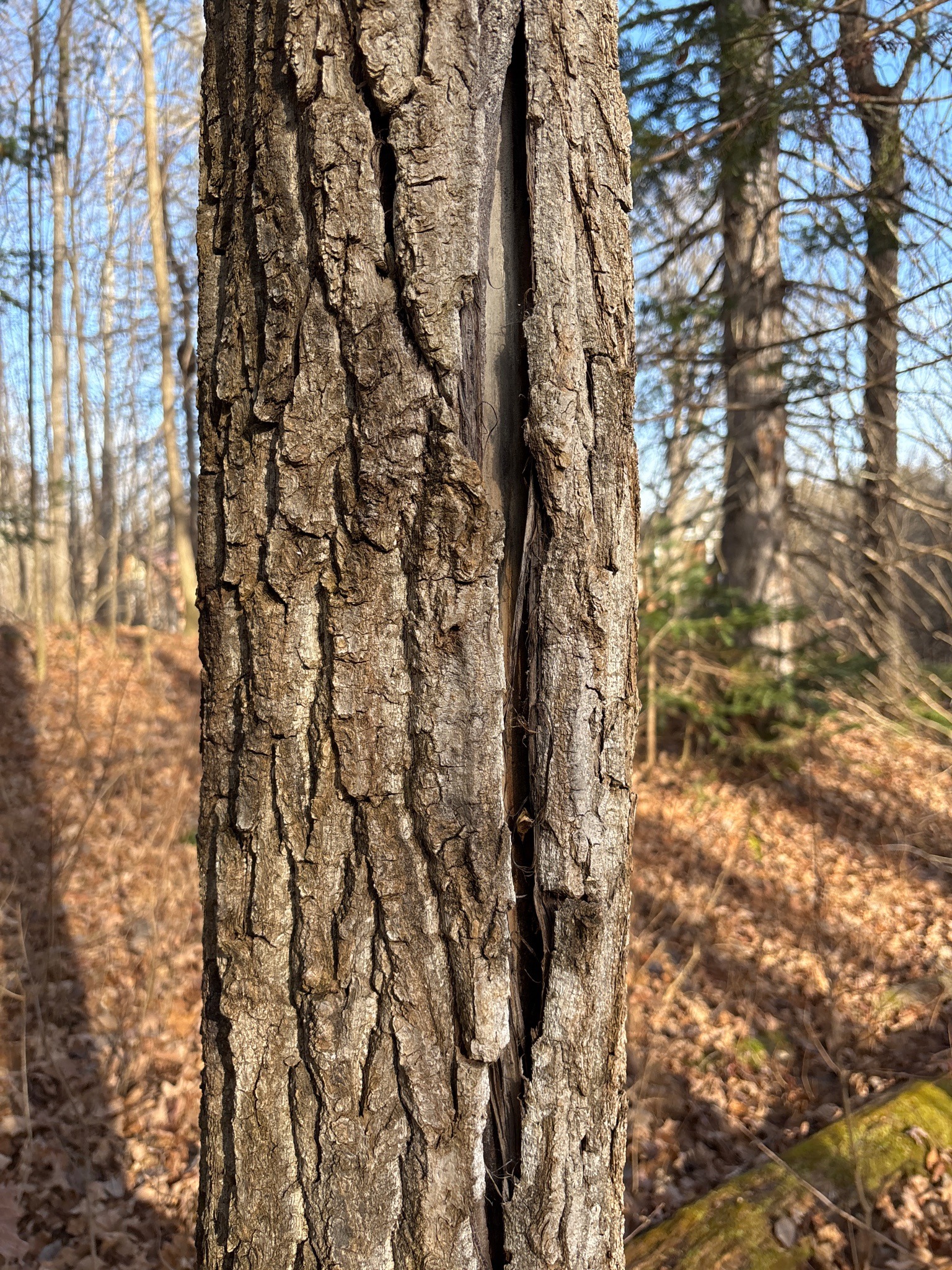
A large deciduous tree featuring rough, furrowed gray bark that often develops vertical plates or strips, displaying prominent vertical structural splitting in this particular specimen, with simple, opposite, palmately lobed leaves.
- Light
- Full sun to partial shade, requiring at least 6 hours of direct sunlight daily
- Water
- Requires moderate watering; keep soil consistently moist but not waterlogged. Established trees have moderate drought tolerance, though prolonged dry conditions can scorch leaf margins.
- Growth
- Perennial large deciduous tree with an upright, oval to rounded crown, reaching mature heights of 60 to 75 feet and spreads of 40 to 50 feet with a moderate growth rate
Care instructions
Grow in full sun to partial shade in moist, organic-rich, well-draining soils. Provide regular watering during dry periods, particularly when young, and apply a balanced fertilizer in early spring if needed.
Growing details
Sunlight
Full sun to partial shade, requiring at least 6 hours of direct sunlight daily
Watering
Requires moderate watering; keep soil consistently moist but not waterlogged. Established trees have moderate drought tolerance, though prolonged dry conditions can scorch leaf margins.
Soil
Prefers deep, fertile, well-draining loams or sandy loams with a slightly acidic to neutral pH range of 6.0 to 7.3
Hardiness zone
USDA Hardiness Zones 3 through 8
Growth habit
Perennial large deciduous tree with an upright, oval to rounded crown, reaching mature heights of 60 to 75 feet and spreads of 40 to 50 feet with a moderate growth rate
Bloom season
Blooms in early spring before leaf emergence, producing small, greenish-yellow flowers in drooping clusters without notable fragrance
Propagation
Propagated primarily from seeds that require cold stratification, or through softwood cuttings taken in late spring
Common pests & issues
Susceptible to verticillium wilt, tar spot, and root rot in poorly draining soils, along with boring insects like the Asian longhorned beetle
Similar species
Red Maple (Acer rubrum), which has smoother bark on younger trunks and smaller, V-shaped leaf sinuses compared to the U-shaped sinuses of Sugar Maple