
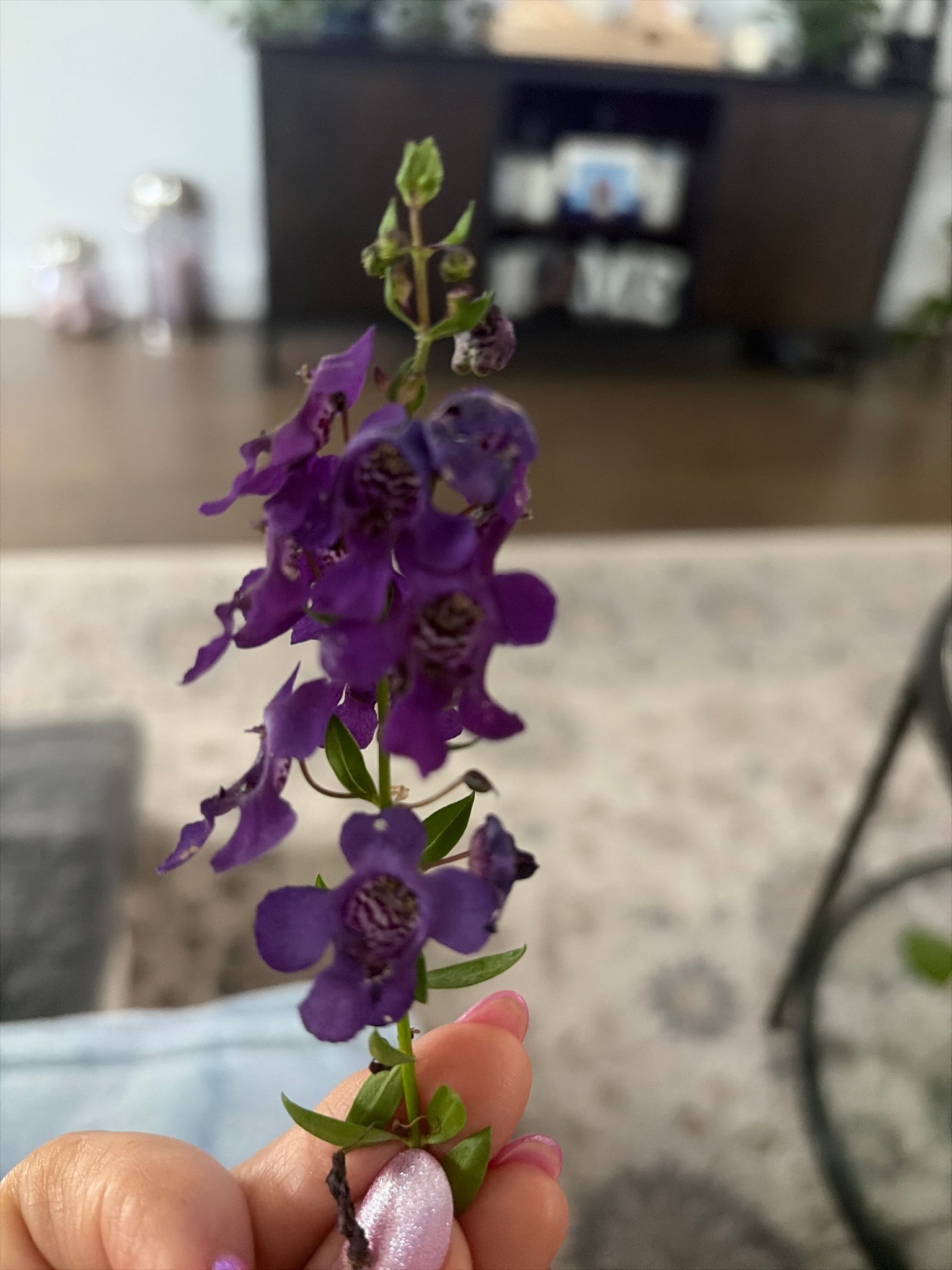
Summer Snapdragon
Angelonia angustifolia
A flowering perennial typically grown as an annual, characterized by upright stems, narrow lance-shaped leaves, and spikes of two-lipped, snapdragon-like flowers.
- Light
- Full sun, at least 6 to 8 hours of direct light per day for optimal blooming.
- Water
- Moderate; water when the top inch of soil feels dry. It is heat-loving and can tolerate some dry periods but performs best with consistent moisture.
- Growth
- Herbaceous perennial; upright, bushy clump-forming habit growing 1 to 3 feet tall and 1 foot wide.
Care instructions
Provide full sun and well-draining soil. Water regularly until established, after which it is moderately drought-tolerant. Apply a balanced fertilizer monthly during the growing season.
Growing details
Sunlight
Full sun, at least 6 to 8 hours of direct light per day for optimal blooming.
Watering
Moderate; water when the top inch of soil feels dry. It is heat-loving and can tolerate some dry periods but performs best with consistent moisture.
Soil
Rich, well-draining soil with a slightly acidic to neutral pH between 5.5 and 6.5.
Hardiness zone
USDA zones 9 through 11 as a perennial; grown as an annual in cooler climates.
Growth habit
Herbaceous perennial; upright, bushy clump-forming habit growing 1 to 3 feet tall and 1 foot wide.
Bloom season
Late spring through fall (late frosts); flowers are typically purple, blue, white, or pink, lacking a top 'lip' found in true snapdragons.
Propagation
Typically propagated via stem cuttings or by seed in late winter or early spring.
Common pests & issues
Generally pest-resistant but can occasionally suffer from aphids, spider mites, or powdery mildew if air circulation is poor.
Similar species
Antirrhinum (True Snapdragon) which prefers cooler weather and has a hinged flower jaw, whereas Angelonia thrives in heat and lacks the hinged mechanism.