
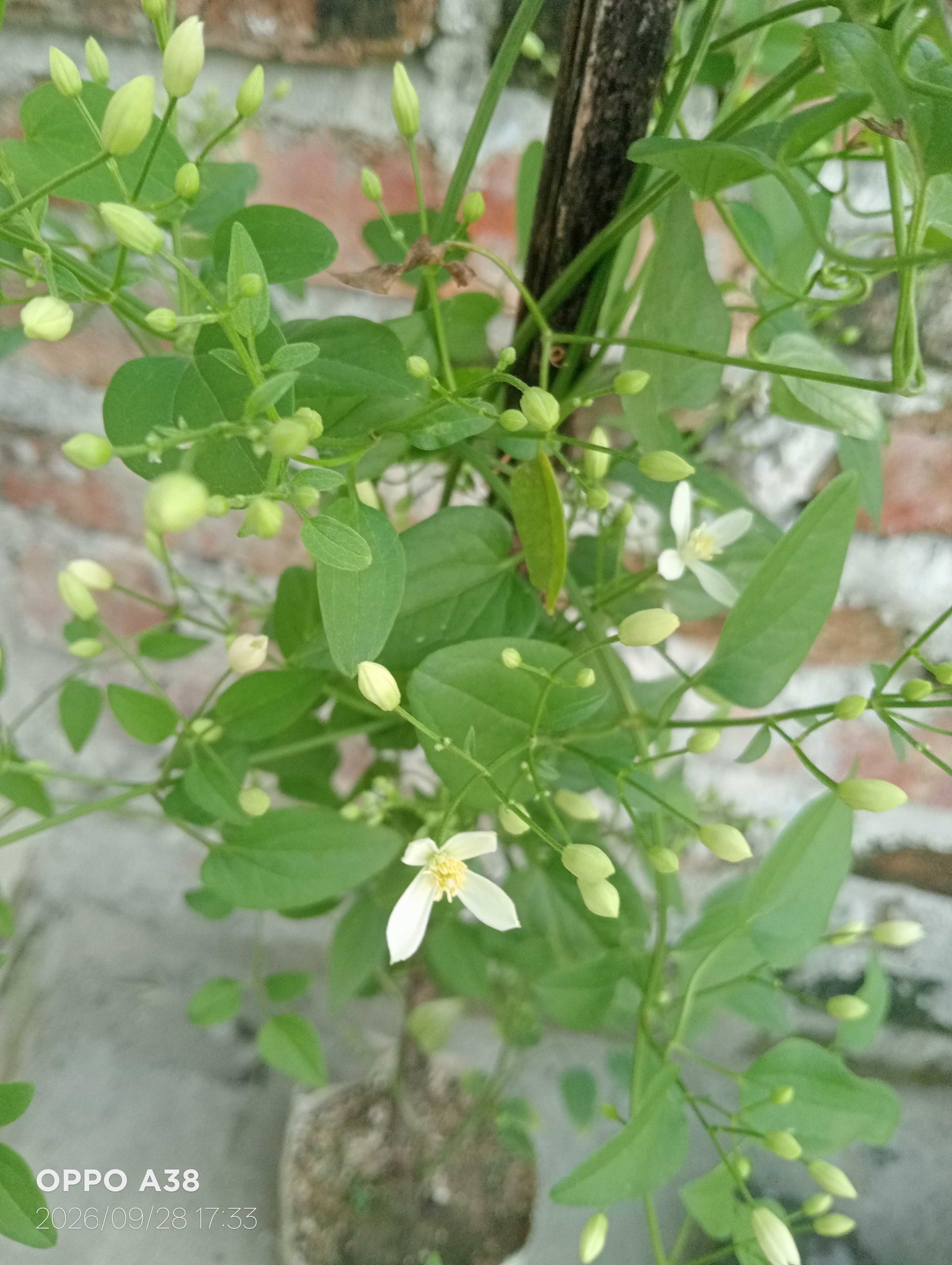
Sweet Autumn Clematis
Clematis terniflora
A vigorous, woody perennial vine featuring abundant glossy green leaves and a profusion of small, fragrant white flowers that bloom in late summer and autumn.
- Light
- Full sun to partial shade, requiring a minimum of 6 hours of direct sunlight per day.
- Water
- Moderate watering needs. Water consistently to establish a deep root system, allowing the topsoil to dry slightly between waterings. Drought tolerant once fully established.
- Growth
- Deciduous perennial woody vine growing rapidly to mature lengths of 10 to 30 feet with a dense, climbing spread.
Care instructions
Provide full sun to partial shade with at least six hours of direct sunlight daily. Water deeply when the top inch of soil feels dry, ensuring good drainage. Plant in rich, well-draining soil and apply a balanced slow-release fertilizer in early spring.
Growing details
Sunlight
Full sun to partial shade, requiring a minimum of 6 hours of direct sunlight per day.
Watering
Moderate watering needs. Water consistently to establish a deep root system, allowing the topsoil to dry slightly between waterings. Drought tolerant once fully established.
Soil
Prefers rich, loamy, highly organic soil with excellent drainage and a neutral to slightly alkaline pH range between 6.5 and 7.5.
Hardiness zone
USDA Hardiness Zones 4 through 9
Growth habit
Deciduous perennial woody vine growing rapidly to mature lengths of 10 to 30 feet with a dense, climbing spread.
Bloom season
Late summer through autumn, producing masses of small, star-shaped, pure white flowers with a sweet fragrance.
Propagation
Propagated easily through semi-hardwood cuttings taken in summer, division of established root clumps in early spring, or by sowing seeds in autumn.
Common pests & issues
Generally resilient, but can occasionally be affected by powdery mildew, stem rot in poorly draining soils, and occasional attacks by aphids or spider mites.
Similar species
Clematis virginiana (Virgin's Bower), which features similar white flowers but is native to North America and typically has wider, serrated leaflets.