
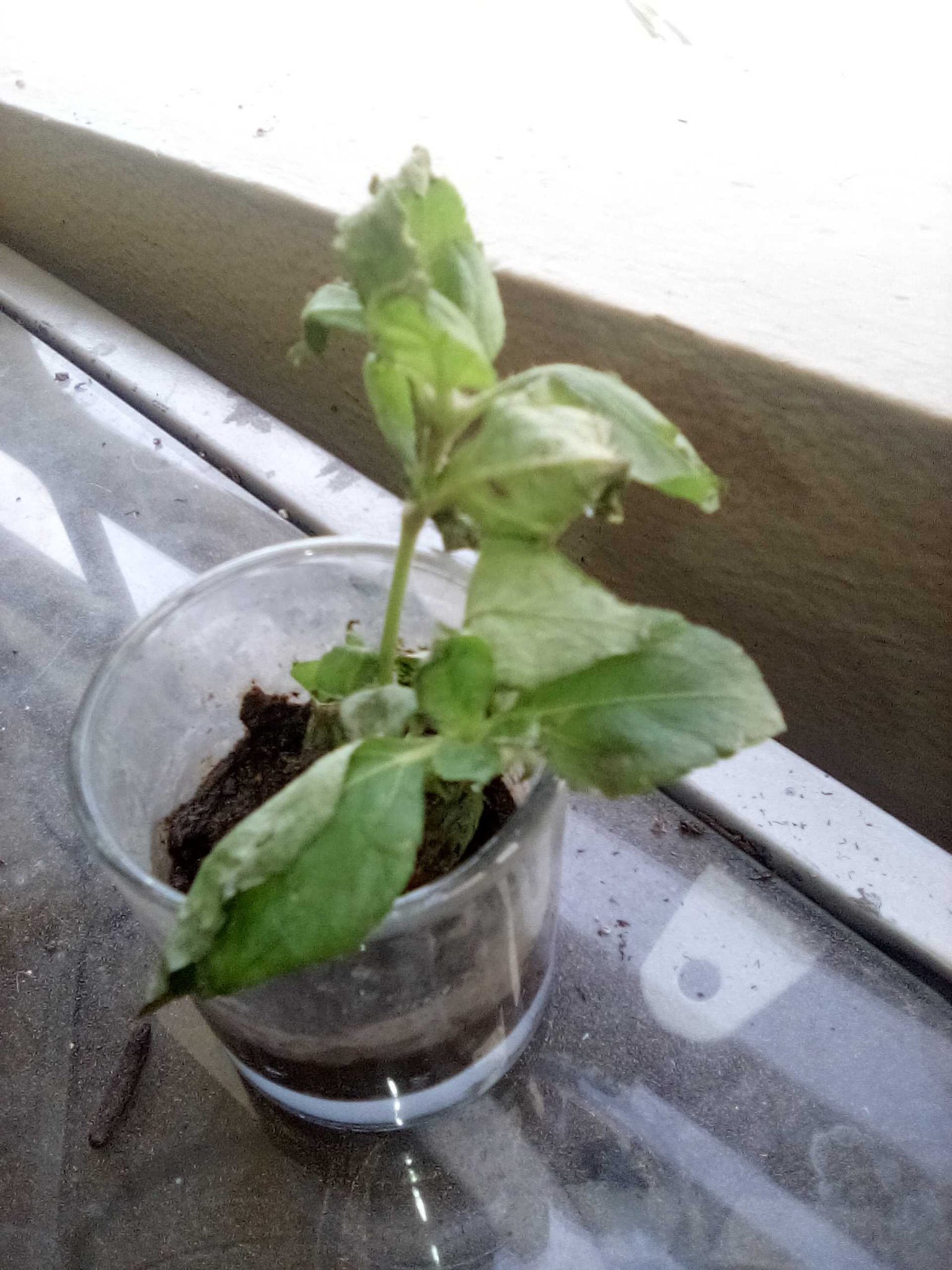
Sweet Basil
Ocimum basilicum
An herbaceous plant characterized by opposite, oval to lanceolate bright green leaves with smooth or slightly toothed margins, and square stems typical of the mint family.
- Light
- Full sun, requiring 6 to 8 hours of direct sunlight per day.
- Water
- Water thoroughly when the top inch of soil feels dry to the touch. Avoid drought stress and prevent root rot by ensuring adequate drainage.
- Growth
- Herbaceous annual or short-lived perennial with an upright, branching growth form, reaching a mature height of 1 to 2 feet and a spread of 1 foot, with a moderately fast growth rate.
Care instructions
Provide full sun exposure for at least six to eight hours daily. Water consistently to keep the soil evenly moist but never waterlogged. Utilize rich, well-draining soil and apply a balanced liquid fertilizer every four to six weeks during the active growing season.
Growing details
Sunlight
Full sun, requiring 6 to 8 hours of direct sunlight per day.
Watering
Water thoroughly when the top inch of soil feels dry to the touch. Avoid drought stress and prevent root rot by ensuring adequate drainage.
Soil
Rich, fertile, well-draining loam with a preferred pH range between 6.0 and 7.0.
Hardiness zone
USDA hardiness zones 10 to 11 when grown as a perennial, typically cultivated as an annual in cooler climates.
Growth habit
Herbaceous annual or short-lived perennial with an upright, branching growth form, reaching a mature height of 1 to 2 feet and a spread of 1 foot, with a moderately fast growth rate.
Bloom season
Flowers in mid to late summer, producing small, tubular white or pale pink flowers arranged in terminal spikes.
Propagation
Propagated primarily through seeds sown in spring or stem cuttings rooted in water or moist potting mix.
Common pests & issues
Prone to fungal issues such as fusarium wilt and downy mildew, as well as pests like aphids and Japanese beetles, managed by ensuring good air circulation and avoiding overhead watering.
Similar species
Thai basil (Ocimum basilicum var. hispida) and Holy basil (Ocimum tenuiflorum), distinguished by leaf shape, purple-tinted stems, and distinct floral characteristics.