
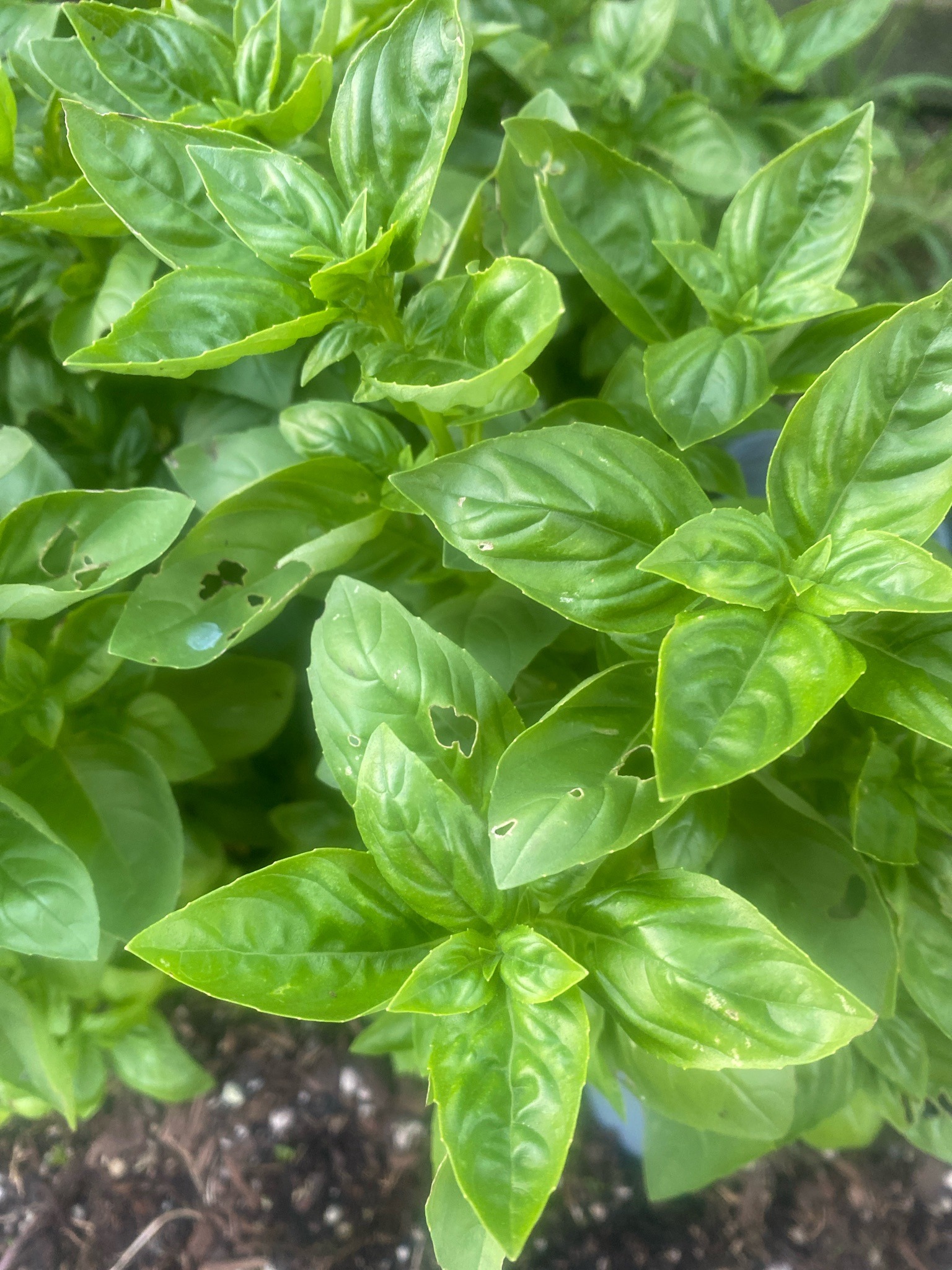
Sweet Basil
Ocimum basilicum
An aromatic herbaceous plant featuring glossy, vibrant green oval leaves with slight pointed tips and smooth or slightly toothed margins, arranged oppositely along square stems.
- Light
- Full sun, requiring 6 to 8 hours of direct sunlight per day.
- Water
- Moderate water needs; keep the soil evenly moist but never waterlogged. Allow the top inch of soil to dry out between waterings. Avoid overhead watering to prevent fungal issues.
- Growth
- An upright, branching herbaceous annual (or short-lived tender perennial) growing to a mature height and spread of 12 to 24 inches with a fast growth rate.
Care instructions
Provide full sun with at least six to eight hours of direct light daily. Maintain consistently moist, well-draining soil and water at the base when the top inch of soil feels dry. Fertilize lightly every four to six weeks during the active growing season with a balanced water-soluble fertilizer.
Growing details
Sunlight
Full sun, requiring 6 to 8 hours of direct sunlight per day.
Watering
Moderate water needs; keep the soil evenly moist but never waterlogged. Allow the top inch of soil to dry out between waterings. Avoid overhead watering to prevent fungal issues.
Soil
Rich, fertile, well-draining loam with a slightly acidic to neutral pH range of 6.0 to 7.5.
Hardiness zone
USDA hardiness zones 10 through 11 as a tender perennial, typically grown as an annual in cooler climates.
Growth habit
An upright, branching herbaceous annual (or short-lived tender perennial) growing to a mature height and spread of 12 to 24 inches with a fast growth rate.
Bloom season
Flowers in mid to late summer, producing small, two-lipped white or pale pink tubular flowers clustered in terminal spikes.
Propagation
Easily propagated from seeds sown indoors 6 weeks before the last frost, or through stem cuttings placed in water or moist potting mix until roots develop.
Common pests & issues
Susceptible to fungal leaf spots, root rot in poorly draining soils, and insect pests such as aphids, Japanese beetles, and slugs. Prevent issues by ensuring adequate spacing for air circulation and avoiding excess moisture.
Similar species
Thai basil (Ocimum basilicum var. hispidum) features smaller, darker green leaves with purple stems and distinct purple flower bracts, whereas Holy basil (Ocimum tenuiflorum) has hairy stems and serrated leaves.