
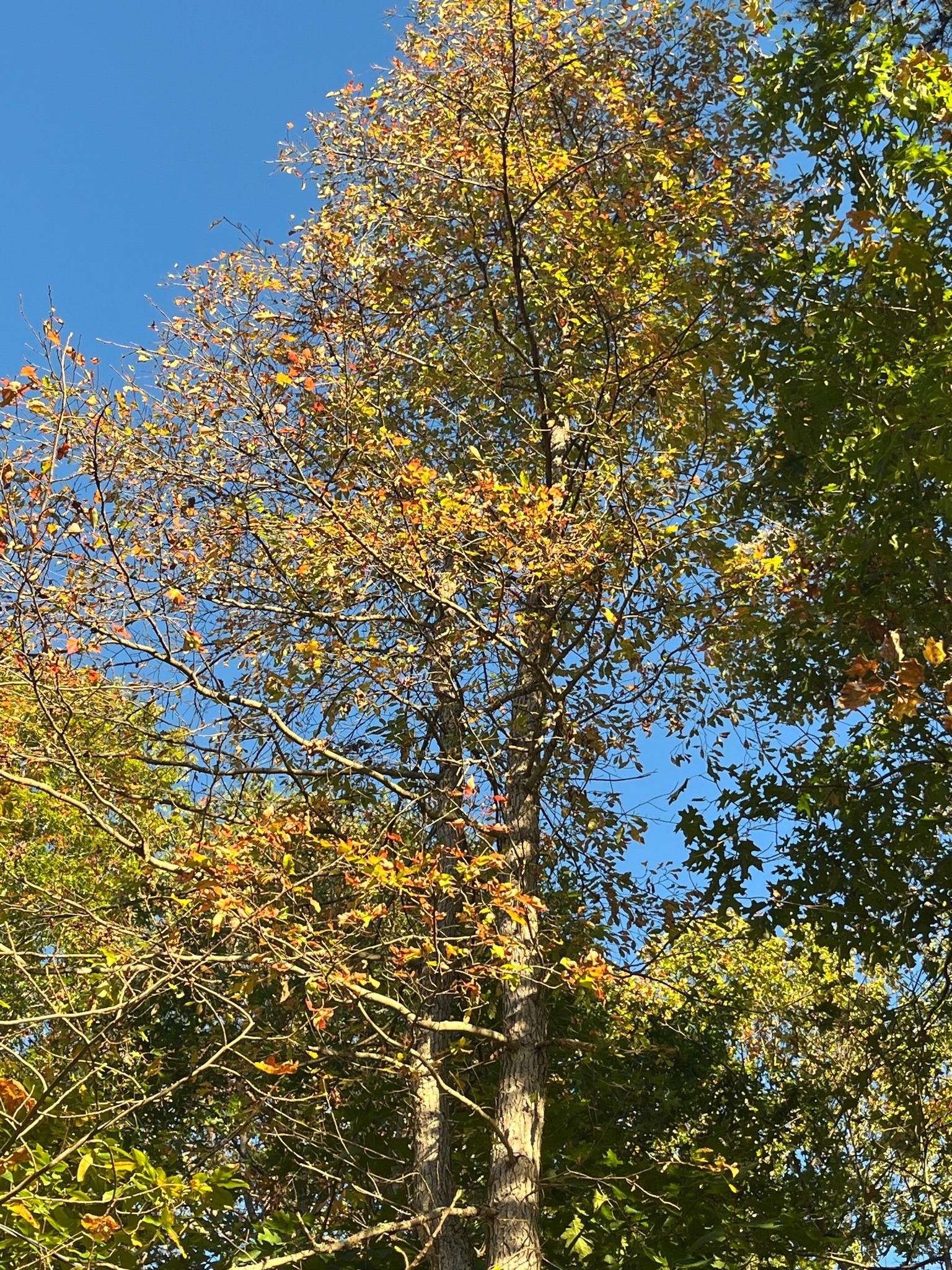
Sweetgum
Liquidambar styraciflua
A large deciduous tree featuring star-shaped leaves with five to seven lobes, distinctive corky ridges on its branches, and vibrant autumn foliage displaying shades of yellow, orange, red, and purple.
- Light
- Full sun to partial shade, requiring at least six hours of direct sunlight daily for optimal autumn color.
- Water
- Prefers consistently moist soil; moderately drought-tolerant once established but performs best with regular watering during dry spells.
- Growth
- A large, upright, pyramidal deciduous tree when young, maturing into a more rounded or oval crown with a height of 60 to 80 feet and a spread of 40 to 60 feet.
Care instructions
Plant in full sun to partial shade in moist, well-draining soil. Provide regular watering during establishment and periods of extended drought. Apply a balanced slow-release fertilizer in early spring if growth is slow.
Growing details
Sunlight
Full sun to partial shade, requiring at least six hours of direct sunlight daily for optimal autumn color.
Watering
Prefers consistently moist soil; moderately drought-tolerant once established but performs best with regular watering during dry spells.
Soil
Thrives in deep, rich, loamy, or clay soils with good moisture retention and a slightly acidic to neutral pH range of 5.5 to 7.0.
Hardiness zone
USDA zones 5 through 9, demonstrating good cold tolerance and adaptability to varied southern heat.
Growth habit
A large, upright, pyramidal deciduous tree when young, maturing into a more rounded or oval crown with a height of 60 to 80 feet and a spread of 40 to 60 feet.
Bloom season
Spring, producing inconspicuous greenish-yellow flowers grouped in spherical clusters without prominent petals.
Propagation
Propagated primarily through seed sown in autumn or stratified in cold storage, as well as root cuttings and softwood cuttings taken in early summer.
Common pests & issues
Susceptible to cankers, leaf spots, and chlorosis in alkaline soils. Pests such as webworms and tent caterpillars may occasionally affect foliage.
Similar species
Maples (Acer species) also feature lobed leaves, but can be distinguished by their opposite leaf arrangement compared to the alternate arrangement of the sweetgum.