
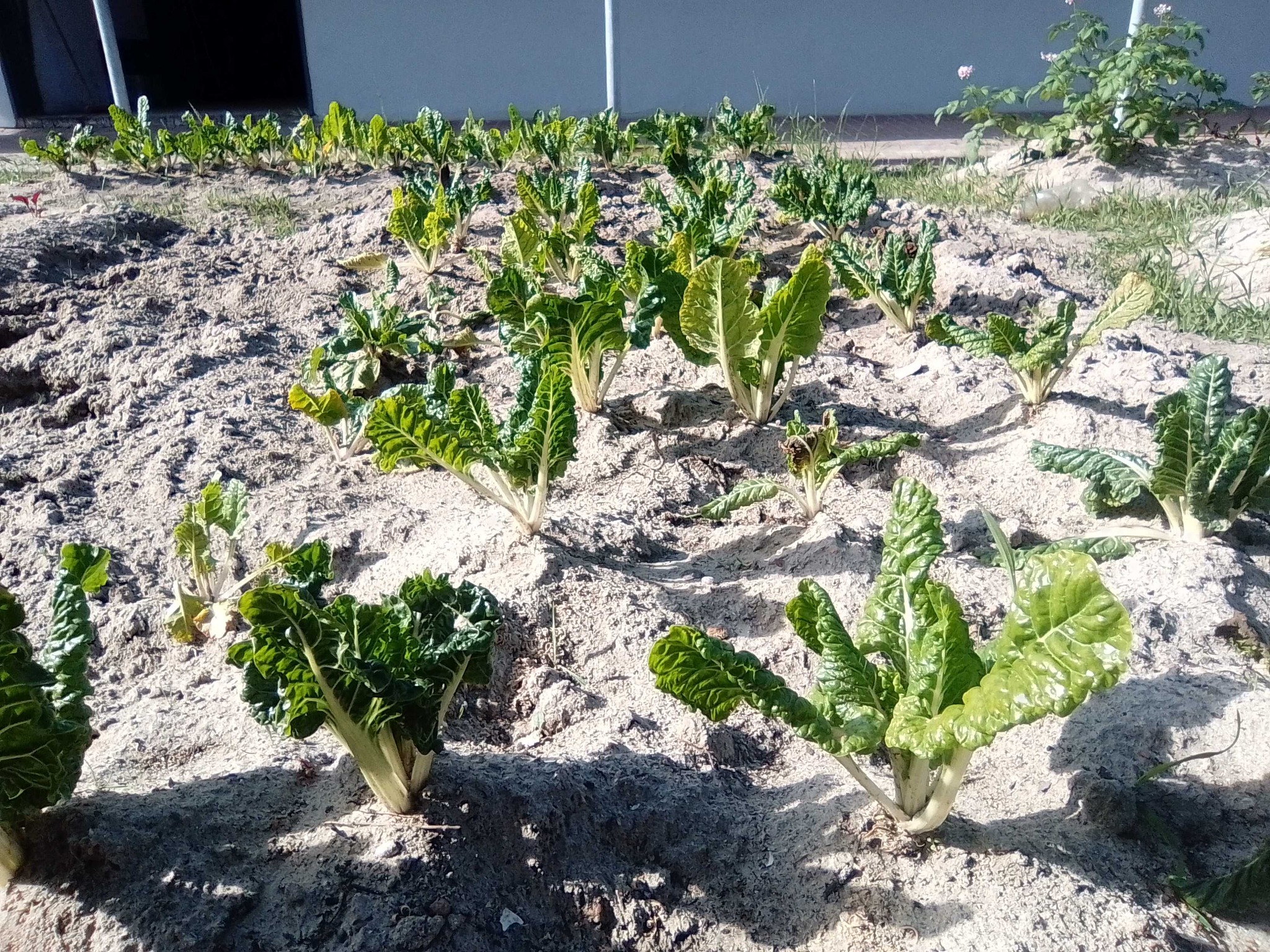
Swiss Chard
Beta vulgaris subsp. vulgaris
Swiss chard is a leafy green herbaceous plant with large, crinkled dark green leaves and thick, fleshy stems (petioles) that can range in color from white to yellow, red, or pink.
- Light
- Full sun to partial shade (4 to 6+ hours of direct sunlight per day)
- Water
- Requires regular watering to keep the soil evenly moist, providing about 1 to 1.5 inches of water per week. Drought stress can cause leaf wilting and early bolting.
- Growth
- Herbaceous biennial grown as an annual rosette. Mature height reaches 1 to 2 feet (30-60 cm) with a spread of 1 to 1.5 feet (30-45 cm).
Care instructions
Plant in a location with full sun to partial shade in fertile, well-draining soil. Keep the soil consistently moist by watering regularly, especially during dry spells. Apply a balanced fertilizer or nitrogen-rich organic amendment periodically throughout the growing season to encourage robust leaf growth.
Growing details
Sunlight
Full sun to partial shade (4 to 6+ hours of direct sunlight per day)
Watering
Requires regular watering to keep the soil evenly moist, providing about 1 to 1.5 inches of water per week. Drought stress can cause leaf wilting and early bolting.
Soil
Rich, loamy, well-drained soil rich in organic matter with a pH range between 6.0 and 7.5.
Hardiness zone
USDA Zones 2 to 11 (grown as a biennial or cool-season annual)
Growth habit
Herbaceous biennial grown as an annual rosette. Mature height reaches 1 to 2 feet (30-60 cm) with a spread of 1 to 1.5 feet (30-45 cm).
Bloom season
Spring of its second year. Produces small, greenish, non-showy flowers clustered on tall flowering stalks.
Propagation
Propagated by seed sown directly into the soil in early spring or late summer, or by starting seeds indoors for transplanting.
Common pests & issues
Susceptible to leaf miners, aphids, and slugs. Fungal diseases like Cercospora leaf spot and powdery mildew can occur in overly humid conditions or with poor air circulation.
Similar species
Spinach (Spinacia oleracea) has smaller, thinner leaves and thinner stems. Beet greens (Beta vulgaris) look identical in leaf form but typically develop a swollen root base.