
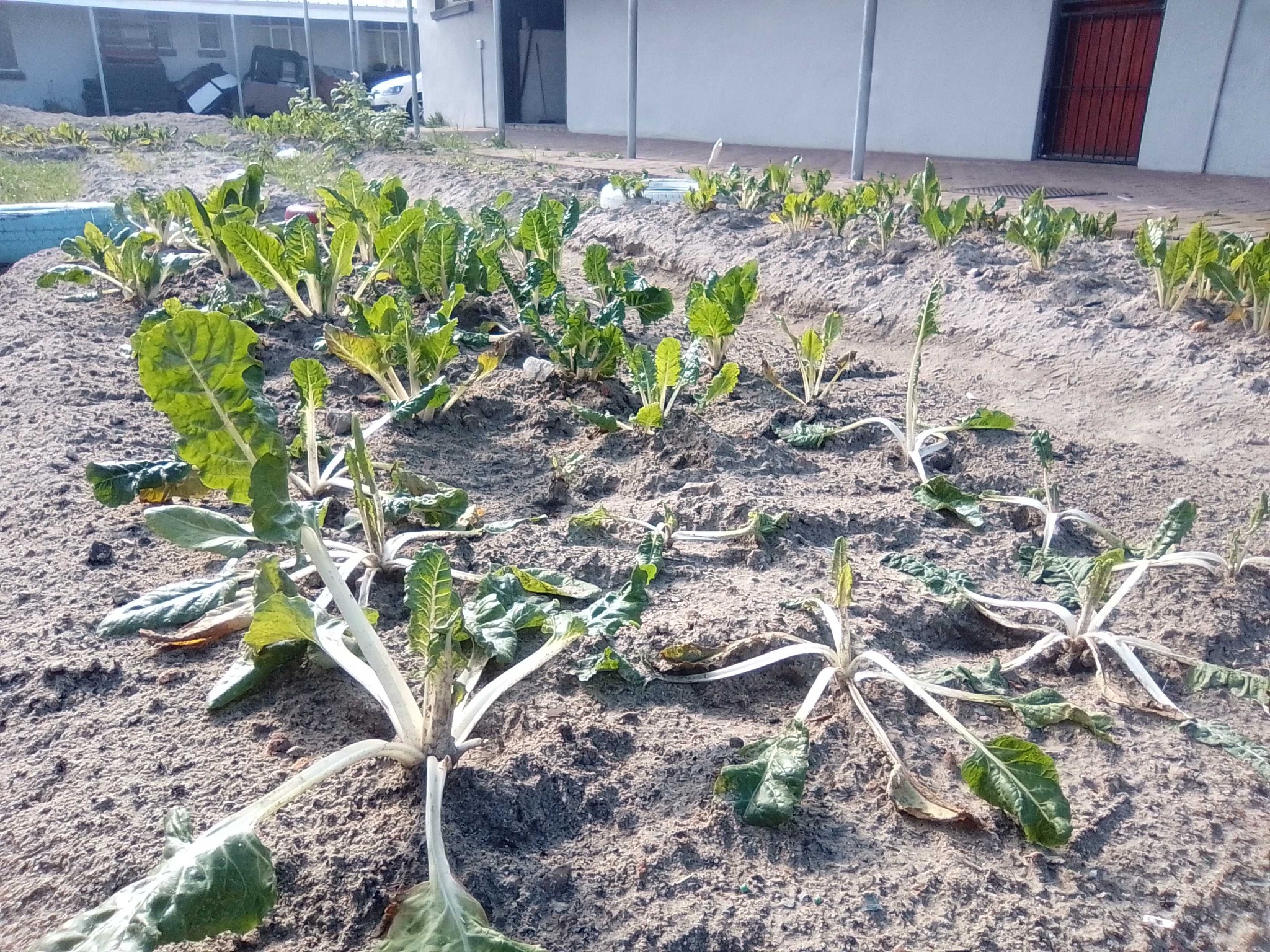
Swiss Chard
Beta vulgaris subsp. vulgaris
A herbaceous biennial plant grown as an annual, characterized by large, dark green leafy blades with prominent, thick, fleshy midribs and stalks that range from white to red or yellow.
- Light
- Full sun to partial shade; grows best with 4 to 6+ hours of direct sunlight daily.
- Water
- Requires regular, consistent watering—about 1 to 1.5 inches per week. Keep soil evenly moist but not waterlogged. Extended dry spells can cause leaves to wilt or become tough.
- Growth
- Upright, leafy rosette form. Typically reaches mature heights of 12 to 24 inches (30 to 60 cm) with a spread of 12 to 18 inches (30 to 45 cm).
Care instructions
Provide full sun to light shade and maintain evenly moist, rich, well-draining soil. Apply a balanced fertilizer monthly during the active growing period. Mulch around the base to retain soil moisture and reduce weed competition.
Growing details
Sunlight
Full sun to partial shade; grows best with 4 to 6+ hours of direct sunlight daily.
Watering
Requires regular, consistent watering—about 1 to 1.5 inches per week. Keep soil evenly moist but not waterlogged. Extended dry spells can cause leaves to wilt or become tough.
Soil
Rich, loamy, organic-matter-heavy soil with good drainage. Prefers a neutral to slightly alkaline pH range between 6.0 and 7.5.
Hardiness zone
USDA zones 2 to 11 (grown as a cool-season or year-round annual depending on climate). Tolerates mild frost.
Growth habit
Upright, leafy rosette form. Typically reaches mature heights of 12 to 24 inches (30 to 60 cm) with a spread of 12 to 18 inches (30 to 45 cm).
Bloom season
Produces small greenish flowers on tall stalks during its second year (or if prematurely induced by heat bolting). Flowers are non-showy and wind-pollinated.
Propagation
Propagated primarily from seed sown directly in early spring or late summer, or started indoors in seed trays.
Common pests & issues
Susceptible to leaf miners, aphids, and flea beetles. Fungal diseases include Cercospora leaf spot and downy mildew, especially in damp, crowded conditions.
Similar species
Beet greens (Beta vulgaris) share identical leaf structure but produce swollen taproots; Spinach (Spinacia oleracea) has smaller, thinner leaves without thick central stalks.