
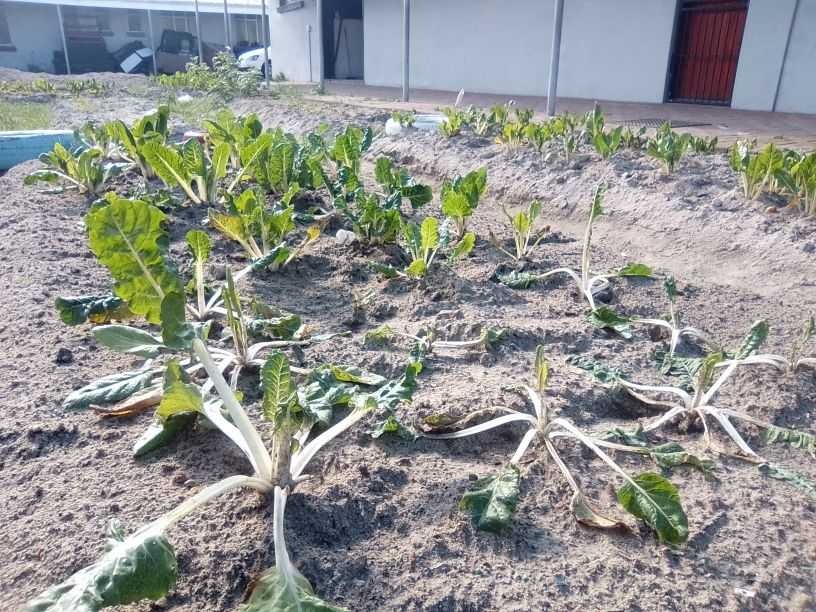
Swiss Chard
Beta vulgaris subsp. vulgaris
A leafy green herbaceous plant with prominent thick stems (petioles) that can be white, red, yellow, or pink, supporting large dark green crinkled or smooth leaves.
- Light
- Full sun to partial shade (4 to 6+ hours of sunlight daily).
- Water
- Requires regular watering (about 1 to 1.5 inches per week) to keep soil evenly moist; drought causes leaves to wilt and stem quality to decline.
- Growth
- Herbaceous biennial grown as an annual, forming a dense basal rosette of leaves reaching 1 to 2 feet in height and 1 to 1.5 feet in spread.
Care instructions
Provide full sun to partial shade in well-drained, fertile soil rich in organic matter. Water consistently to maintain evenly moist soil. Apply balanced organic fertilizer or compost during the growing season.
Growing details
Sunlight
Full sun to partial shade (4 to 6+ hours of sunlight daily).
Watering
Requires regular watering (about 1 to 1.5 inches per week) to keep soil evenly moist; drought causes leaves to wilt and stem quality to decline.
Soil
Rich, well-draining soil with a pH between 6.0 and 6.8.
Hardiness zone
USDA hardiness zones 2 through 11 (grown mostly as a cool-season annual or biennial).
Growth habit
Herbaceous biennial grown as an annual, forming a dense basal rosette of leaves reaching 1 to 2 feet in height and 1 to 1.5 feet in spread.
Bloom season
Second year (if allowed to flower); produces small greenish flowers on tall stalks.
Propagation
Propagated by seed sown directly outdoors in early spring or late summer.
Common pests & issues
Leaf miners, aphids, flea beetles, and fungal diseases like Cercospora leaf spot and powdery mildew.
Similar species
Beet Greens (Beta vulgaris) and Spinach (Spinacia oleracea); Swiss chard is distinguished by its larger size and broader, fleshy leaf stems.