
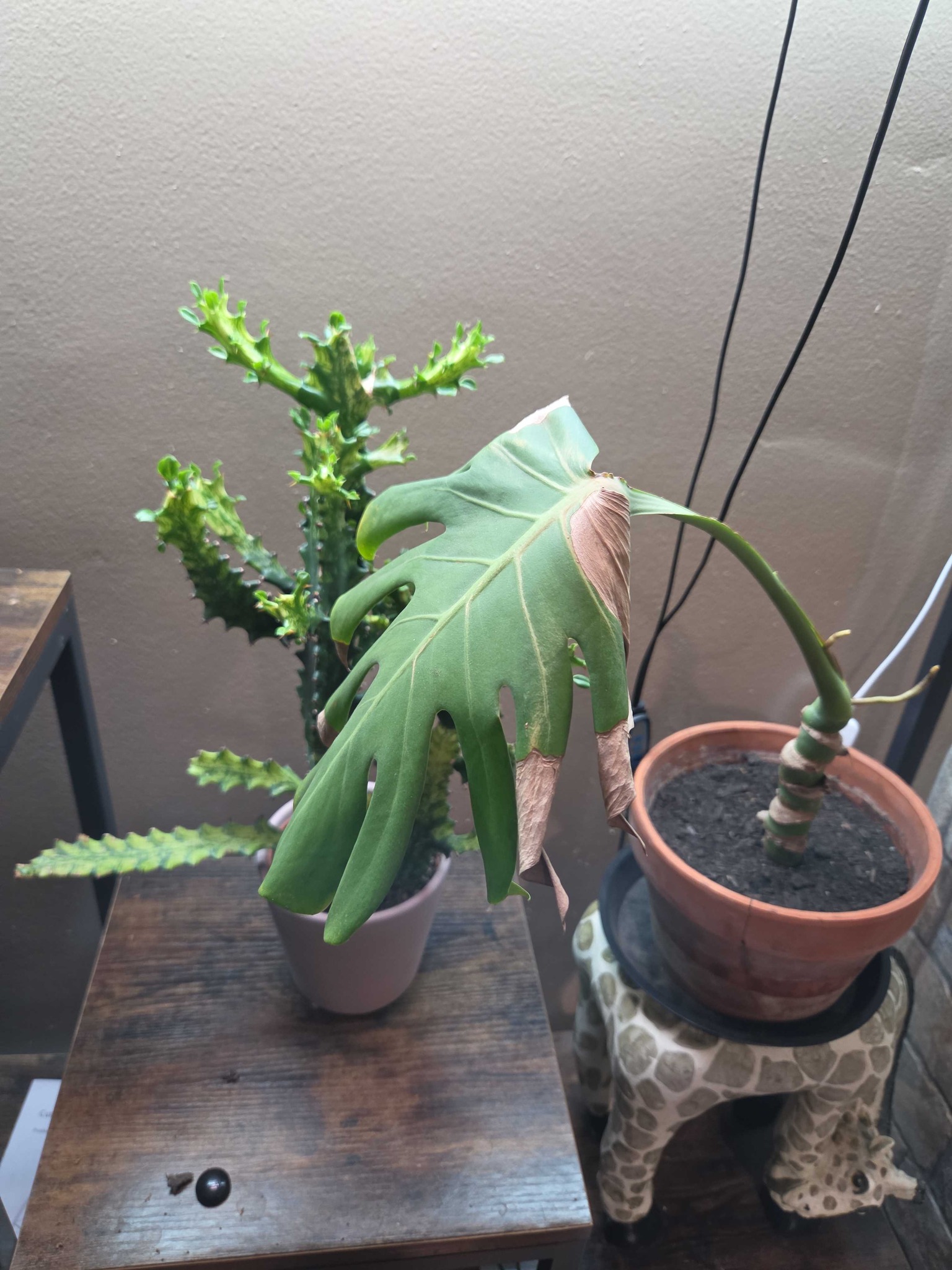
Swiss Cheese Plant (Featured foreground)
Monstera deliciosa
A prominent climbing evergreen with large, glossy, dark green leaves that develop characteristic natural holes and splits as they mature.
- Light
- Bright, indirect light for about 6 to 8 hours per day. Avoid direct harsh sunlight which can burn the leaves.
- Water
- Water every 1 to 2 weeks, allowing the top 2 to 3 inches of soil to dry completely between waterings. Reduce watering frequency during the winter months.
- Growth
- Evergreen climbing epiphyte with aerial roots. Indoors it typically reaches heights of 6 to 9 feet with a spread of 2 to 3 feet, growing at a moderate to fast rate.
Care instructions
Provide bright, indirect light and water thoroughly only when the top few inches of soil have dried out. Use a rich, highly well-draining soil mix and support the climbing stem with a moss pole.
Growing details
Sunlight
Bright, indirect light for about 6 to 8 hours per day. Avoid direct harsh sunlight which can burn the leaves.
Watering
Water every 1 to 2 weeks, allowing the top 2 to 3 inches of soil to dry completely between waterings. Reduce watering frequency during the winter months.
Soil
Chunky, loose, well-draining soil mix containing peat, perlite, and orchid bark, with an ideal pH range between 5.5 and 6.5.
Hardiness zone
USDA zones 10 through 12. Grown primarily as an indoor houseplant in cooler temperate regions.
Growth habit
Evergreen climbing epiphyte with aerial roots. Indoors it typically reaches heights of 6 to 9 feet with a spread of 2 to 3 feet, growing at a moderate to fast rate.
Bloom season
Rarely blooms indoors. When mature and in ideal conditions, it produces a cream-colored spadix enclosed by a white spathe.
Propagation
Propagated easily through stem cuttings taken just below a node, rooted either in water or directly in moist potting mix during the spring or summer.
Common pests & issues
Susceptible to root rot if overwatered or kept in poorly draining soil. Pests such as mealybugs, scale, and spider mites can occasionally affect the foliage.
Similar species
Monstera adansonii, which features smaller, closed leaf holes instead of open marginal splits, and Epipremnum pinnatum, which has narrower leaves.