
Swiss Cheese Plant
Monstera deliciosa
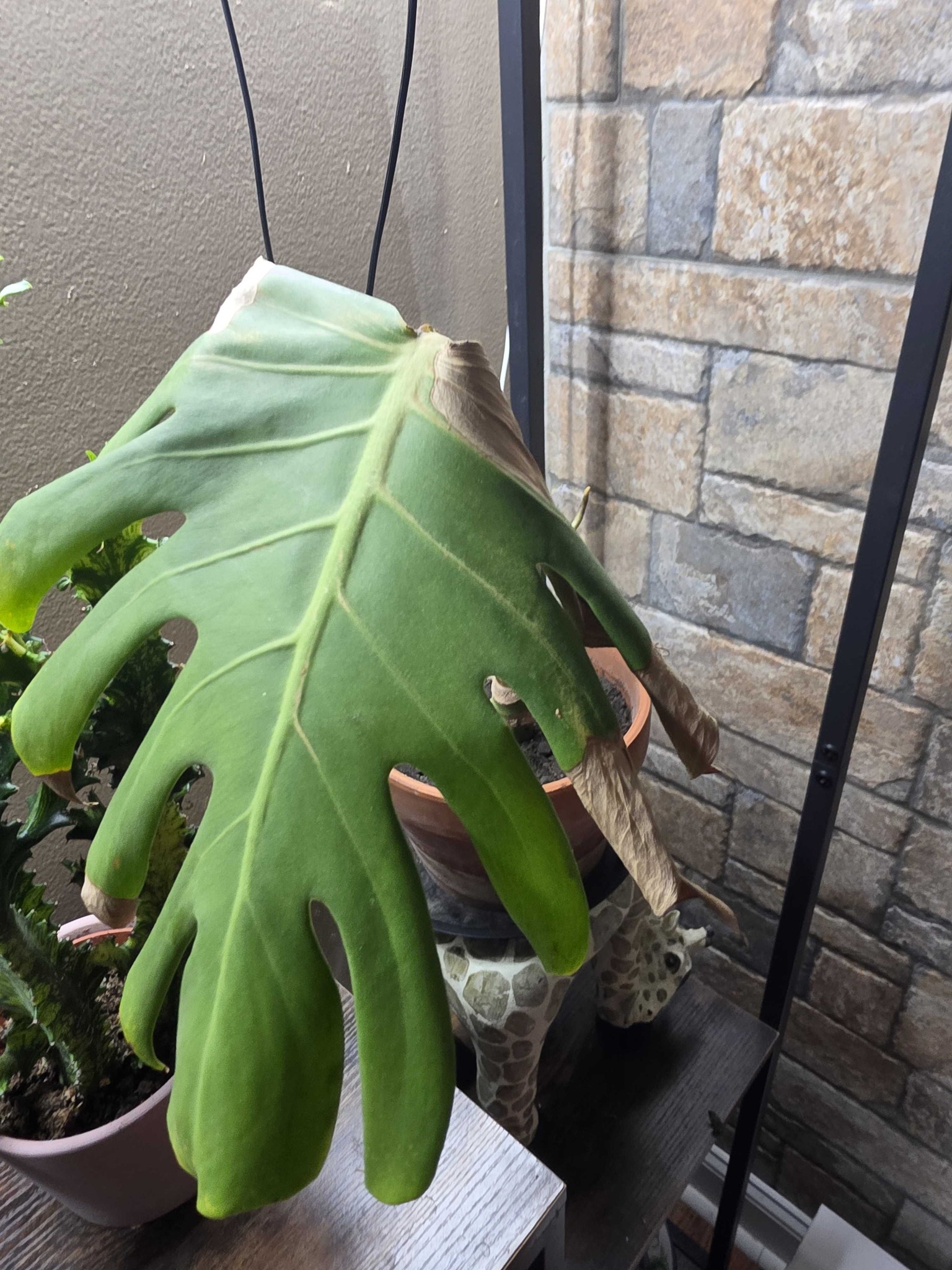
A large tropical epiphyte characterized by its iconic, glossy green leaves that develop natural splits and holes as the plant matures. The visible leaf shows prominent parallel veins and some marginal browning due to environmental stress.
- Light
- Bright, indirect light for about 6 to 8 hours daily; avoid direct harsh sunlight which can scorch the leaves.
- Water
- Water thoroughly when the top 2 to 3 inches of soil feel dry. Reduce watering slightly during the winter months. Prevent standing water in the saucer to avoid root rot.
- Growth
- Evergreen climbing perennial vine that can reach heights of 10 to 20 feet indoors, and significantly larger in its native wild habitat. Features aerial roots used for clinging to supports.
Care instructions
Provide bright, indirect sunlight, allow the top few inches of soil to dry out between waterings, use a well-draining potting mix rich in organic matter, and maintain warm, humid conditions.
Growing details
Sunlight
Bright, indirect light for about 6 to 8 hours daily; avoid direct harsh sunlight which can scorch the leaves.
Watering
Water thoroughly when the top 2 to 3 inches of soil feel dry. Reduce watering slightly during the winter months. Prevent standing water in the saucer to avoid root rot.
Soil
Loamy, well-draining soil mix incorporating perlite, orchid bark, and peat moss with a slightly acidic to neutral pH range of 5.5 to 7.0.
Hardiness zone
USDA zones 10 through 12, sensitive to frost and freezing temperatures.
Growth habit
Evergreen climbing perennial vine that can reach heights of 10 to 20 feet indoors, and significantly larger in its native wild habitat. Features aerial roots used for clinging to supports.
Bloom season
Rarely blooms when grown indoors; produces a creamy-white spadix surrounded by a spathe in mature outdoor specimens, typically in the summer.
Propagation
Propagated easily via stem cuttings taken just below a node, rooted in water or directly in moist potting mix during the spring or summer growing season.
Common pests & issues
Prone to root rot from overwatering, scale insects, spider mites, and thrips. Brown leaf tips or edges can result from low humidity, underwatering, or excessive direct light.
Similar species
Monstera adansonii has smaller, fully enclosed holes (fenestrations) rather than splits reaching the leaf edge, and Philodendron species often lack natural leaf fenestrations or have different stem characteristics.