
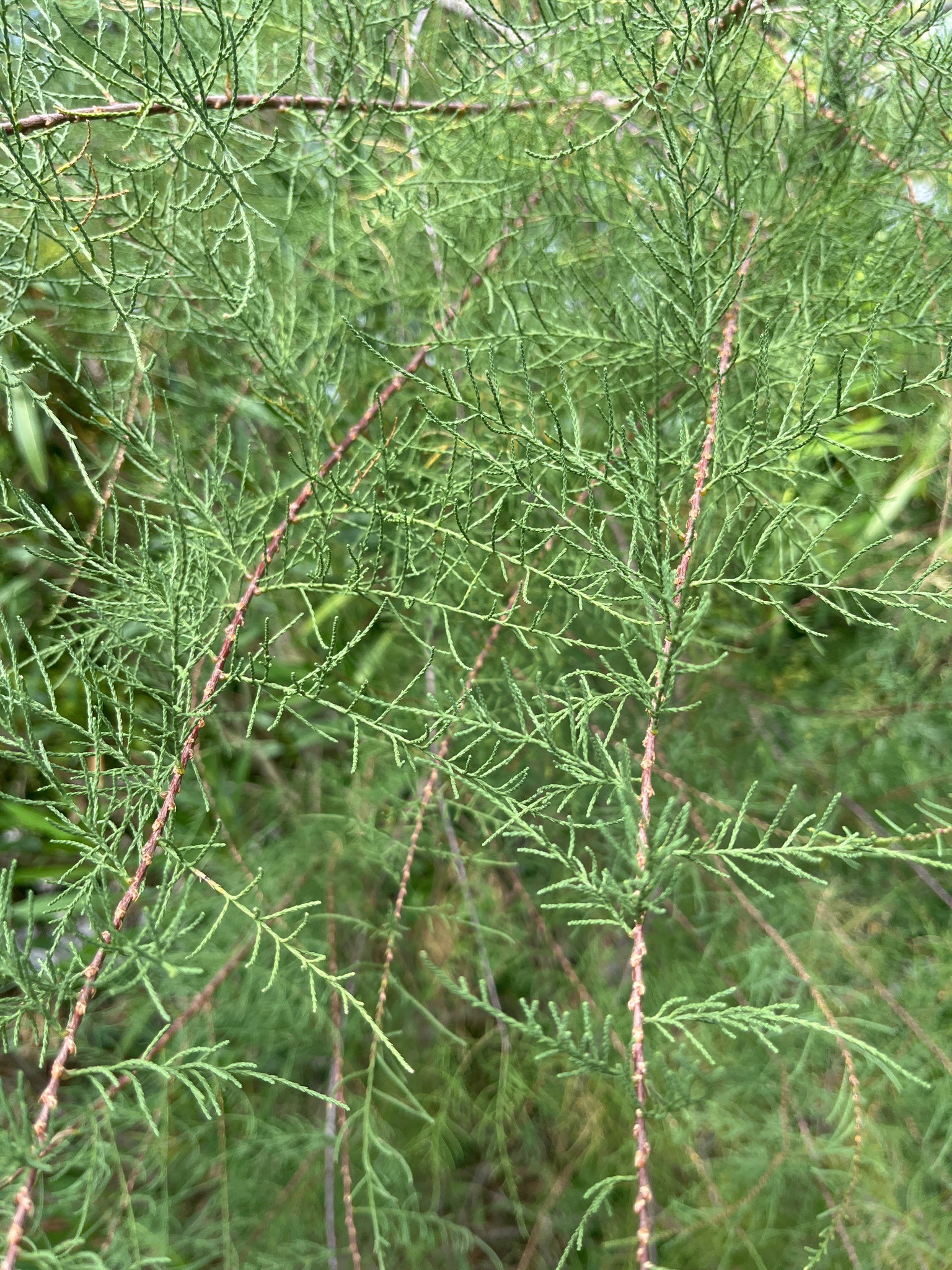
Tamarisk
Tamarix ramosissima
A deciduous shrub or small tree characterized by slender branches and grey-green, scale-like leaves that resemble those of conifers, often producing plumes of tiny pink to white flowers.
- Light
- Full sun, requiring at least 6 to 8 hours of direct sunlight daily.
- Water
- Low water requirements once established. Water deeply but infrequently. Highly drought-tolerant; prone to root rot if soil remains waterlogged.
- Growth
- Perennial shrub or small tree with an upright, multi-stemmed habit, reaching mature heights of 5 to 15 feet with a comparable spread. Growth rate is fast.
Care instructions
Provide full sun and well-draining soil. Water deeply during the establishment period, but once mature, it has high drought tolerance. Minimal fertilization is required as it adapts well to poor soils.
Growing details
Sunlight
Full sun, requiring at least 6 to 8 hours of direct sunlight daily.
Watering
Low water requirements once established. Water deeply but infrequently. Highly drought-tolerant; prone to root rot if soil remains waterlogged.
Soil
Adapts to a wide range of soil types, including sandy, loamy, and clay soils, as long as drainage is adequate. Tolerates high salinity and a broad pH range.
Hardiness zone
USDA Hardiness Zones 3 through 8.
Growth habit
Perennial shrub or small tree with an upright, multi-stemmed habit, reaching mature heights of 5 to 15 feet with a comparable spread. Growth rate is fast.
Bloom season
Spring to late summer, featuring dense racemes of small, pink or white flowers.
Propagation
Propagated easily from stem cuttings taken in spring or summer, or by seed.
Common pests & issues
Generally resistant to major insect pests and diseases, though occasionally affected by scale or root rot in poorly draining soils.
Similar species
Can be confused with various juniper or cypress species due to the scale-like foliage, but can be distinguished by its deciduous habit and more slender, feathery stems.