
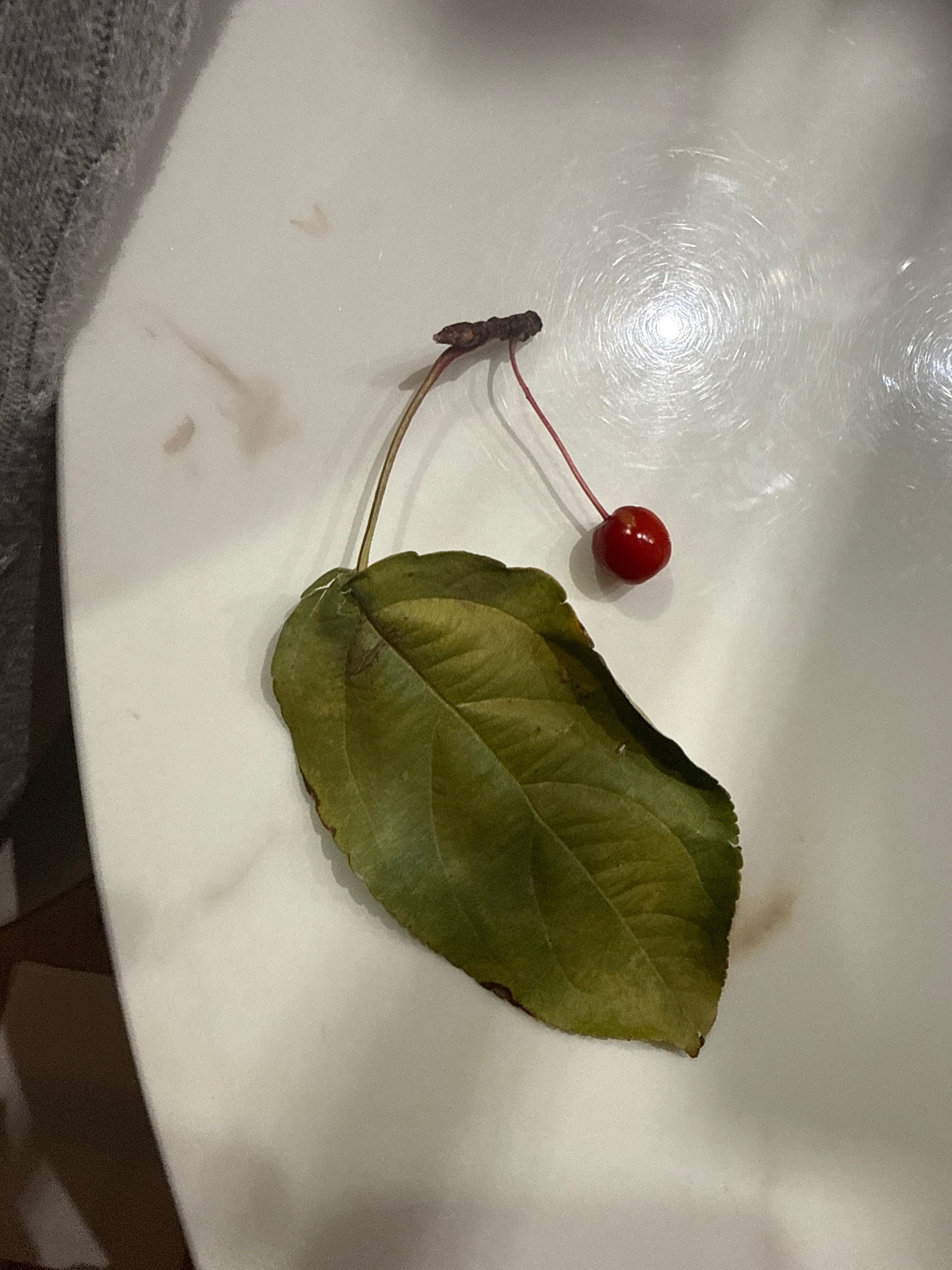
Tart Cherry
Prunus cerasus
A small deciduous tree or large shrub bearing simple, serrated leaves with glands on the petioles and small, globose red drupes borne on slender stalks.
- Light
- Full sun, requiring at least 6 to 8 hours of direct sunlight daily
- Water
- Moderate watering needs. Water deeply and regularly, allowing the soil to dry slightly between waterings. Drought tolerant once established, but adequate moisture ensures better fruit and foliage development.
- Growth
- Perennial deciduous tree or large shrub with an upright, spreading growth habit, typically reaching heights of 15 to 20 feet with a similar spread, exhibiting a moderate growth rate.
Care instructions
Provide full sun and consistently moist, well-draining soil. Water deeply when the top few inches of soil are dry. Apply a balanced fertilizer in early spring before new growth begins.
Growing details
Sunlight
Full sun, requiring at least 6 to 8 hours of direct sunlight daily
Watering
Moderate watering needs. Water deeply and regularly, allowing the soil to dry slightly between waterings. Drought tolerant once established, but adequate moisture ensures better fruit and foliage development.
Soil
Prefers loamy, well-draining soils with a neutral pH between 6.0 and 7.0, though it adapts well to various soil types as long as drainage is good.
Hardiness zone
USDA Hardiness Zones 4 through 6
Growth habit
Perennial deciduous tree or large shrub with an upright, spreading growth habit, typically reaching heights of 15 to 20 feet with a similar spread, exhibiting a moderate growth rate.
Bloom season
Flowers in mid-spring with fragrant, five-petaled white or pale pink blossoms arranged in small clusters.
Propagation
Propagated primarily through grafting or budding onto suitable rootstocks in late winter or early spring, or occasionally via softwood cuttings taken in summer.
Common pests & issues
Susceptible to fungal infections such as brown rot and powdery mildew, as well as pests like aphids and borers. Prevent by ensuring good air circulation, proper spacing, and clearing fallen debris.
Similar species
Sweet Cherry (Prunus avium), which can be distinguished by its larger, glossier leaves, taller mature height, and sweeter-tasting fruit structures.