
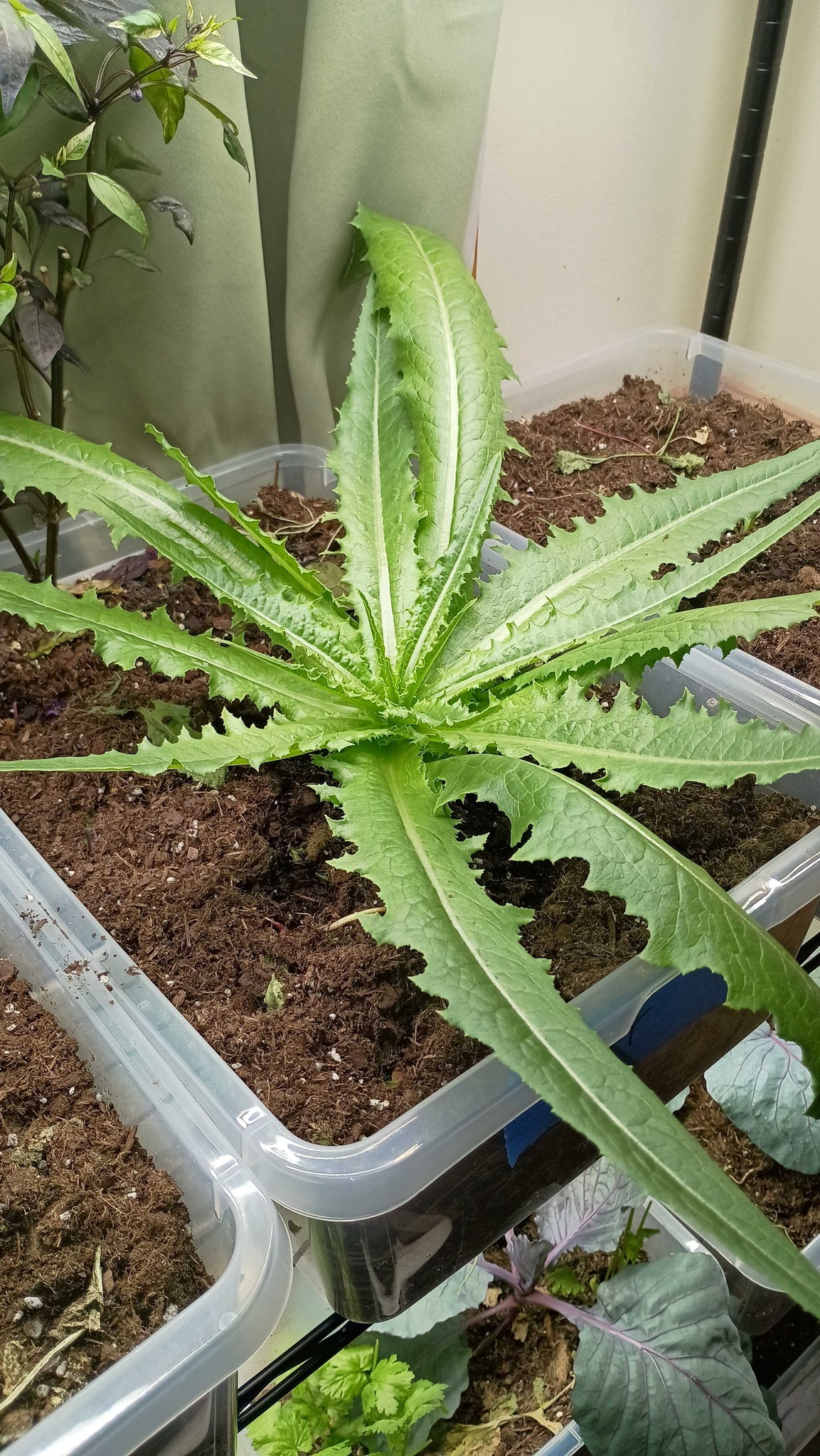
Teasel
Dipsacus fullonum
A biennial plant that forms a large basal rosette of lance-shaped, spiny-margined leaves in its first year, followed by a tall, prickly flowering stem in its second year.
- Light
- Full sun, requiring at least 6 hours of direct sunlight per day.
- Water
- Moderate watering when young. Once established, it tolerates dry periods well. Water deeply when the top few inches of soil become dry.
- Growth
- Biennial growth habit. Forms a low rosette of leaves up to 2 feet across in the first year, and shoots up a flowering stalk reaching heights of 3 to 6 feet in the second year.
Care instructions
Provide full sun exposure and well-draining soil. Water regularly until established, after which it demonstrates strong drought tolerance. Fertilization is generally not necessary.
Growing details
Sunlight
Full sun, requiring at least 6 hours of direct sunlight per day.
Watering
Moderate watering when young. Once established, it tolerates dry periods well. Water deeply when the top few inches of soil become dry.
Soil
Adaptable to a wide range of well-draining soils including clay, loam, or sandy soils, with a neutral to slightly alkaline pH.
Hardiness zone
USDA zones 3 through 9
Growth habit
Biennial growth habit. Forms a low rosette of leaves up to 2 feet across in the first year, and shoots up a flowering stalk reaching heights of 3 to 6 feet in the second year.
Bloom season
Flowers during summer in the second year, producing dense, cone-shaped heads of small purple or lavender flowers.
Propagation
Propagated easily from seeds sown directly into the soil in spring or autumn.
Common pests & issues
Generally resilient against major pests and diseases, though occasionally susceptible to root rot if grown in poorly draining, waterlogged soils.
Similar species
Can be confused with thistles in the genus Cirsium or Carduus, but distinguished by its prominent central stem spines, fused base leaves forming cups that hold water, and distinct cone-shaped flower heads.