
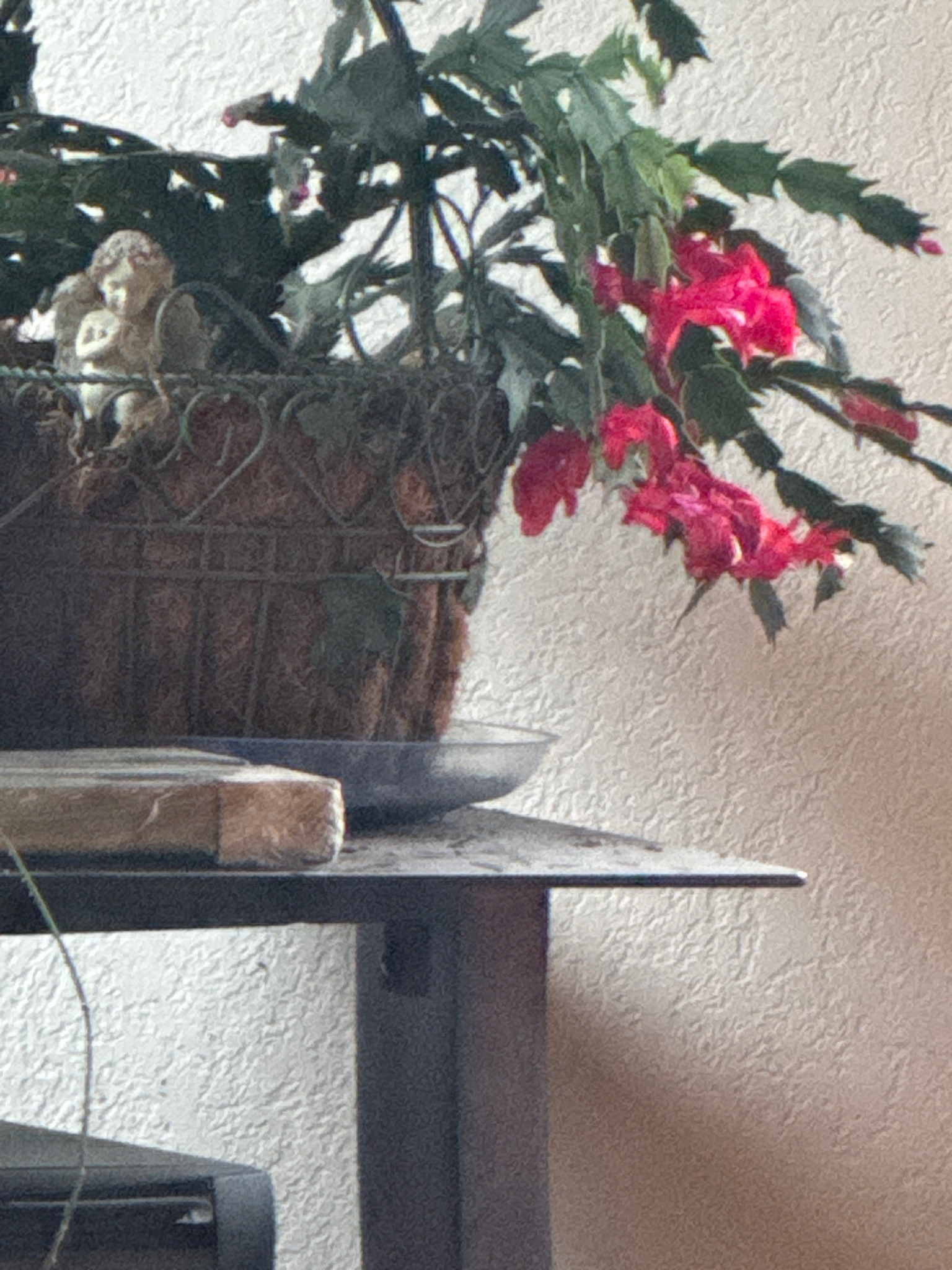
Thanksgiving Cactus
Schlumbergera truncata
An epiphytic succulent featuring flattened, segmented green stems with distinct pointed or claw-like teeth along the margins, producing vibrant tubular flowers at the terminal ends of the stems.
- Light
- Bright, indirect light for 6 to 8 hours daily; protect from harsh direct afternoon sun which can scorch the stems.
- Water
- Water deeply when the top third of the soil is dry to the touch. Reduce watering slightly during the autumn resting period to encourage flower bud development, and avoid letting the pot sit in standing water.
- Growth
- Trailing perennial epiphyte with a branching, segmented growth form, typically reaching 1 to 2 feet in height with a cascading spread of 2 to 3 feet, exhibiting moderate growth rate.
Care instructions
Provide bright, indirect sunlight and water thoroughly only when the top few inches of soil become dry. Use a well-draining potting medium formulated for epiphytic plants or succulents, and maintain moderate indoor humidity with good air circulation.
Growing details
Sunlight
Bright, indirect light for 6 to 8 hours daily; protect from harsh direct afternoon sun which can scorch the stems.
Watering
Water deeply when the top third of the soil is dry to the touch. Reduce watering slightly during the autumn resting period to encourage flower bud development, and avoid letting the pot sit in standing water.
Soil
Rich, highly porous, and well-draining soil mix containing peat moss, perlite, and coarse sand or orchid bark, with a slightly acidic to neutral pH range of 5.5 to 6.5.
Hardiness zone
USDA zones 10 through 12 outdoors; typically grown as an indoor houseplant in cooler regions.
Growth habit
Trailing perennial epiphyte with a branching, segmented growth form, typically reaching 1 to 2 feet in height with a cascading spread of 2 to 3 feet, exhibiting moderate growth rate.
Bloom season
Late autumn to early winter, featuring bilateral, tubular flowers in shades of pink, red, orange, purple, or white with contrasting stamens.
Propagation
Easily propagated through stem cuttings consisting of two to three segments, allowed to callus for a day before planting in moist, well-draining propagation medium.
Common pests & issues
Susceptible to root rot if overwatered or kept in poorly draining soil. Common pests include mealybugs, fungus gnats, and spider mites, which can be treated with insecticidal soaps or horticultural oils.
Similar species
Christmas Cactus (Schlumbergera x buckleyi), which can be distinguished by its rounded, scalloped stem segments rather than the sharply pointed, claw-like teeth found on the Thanksgiving cactus.