
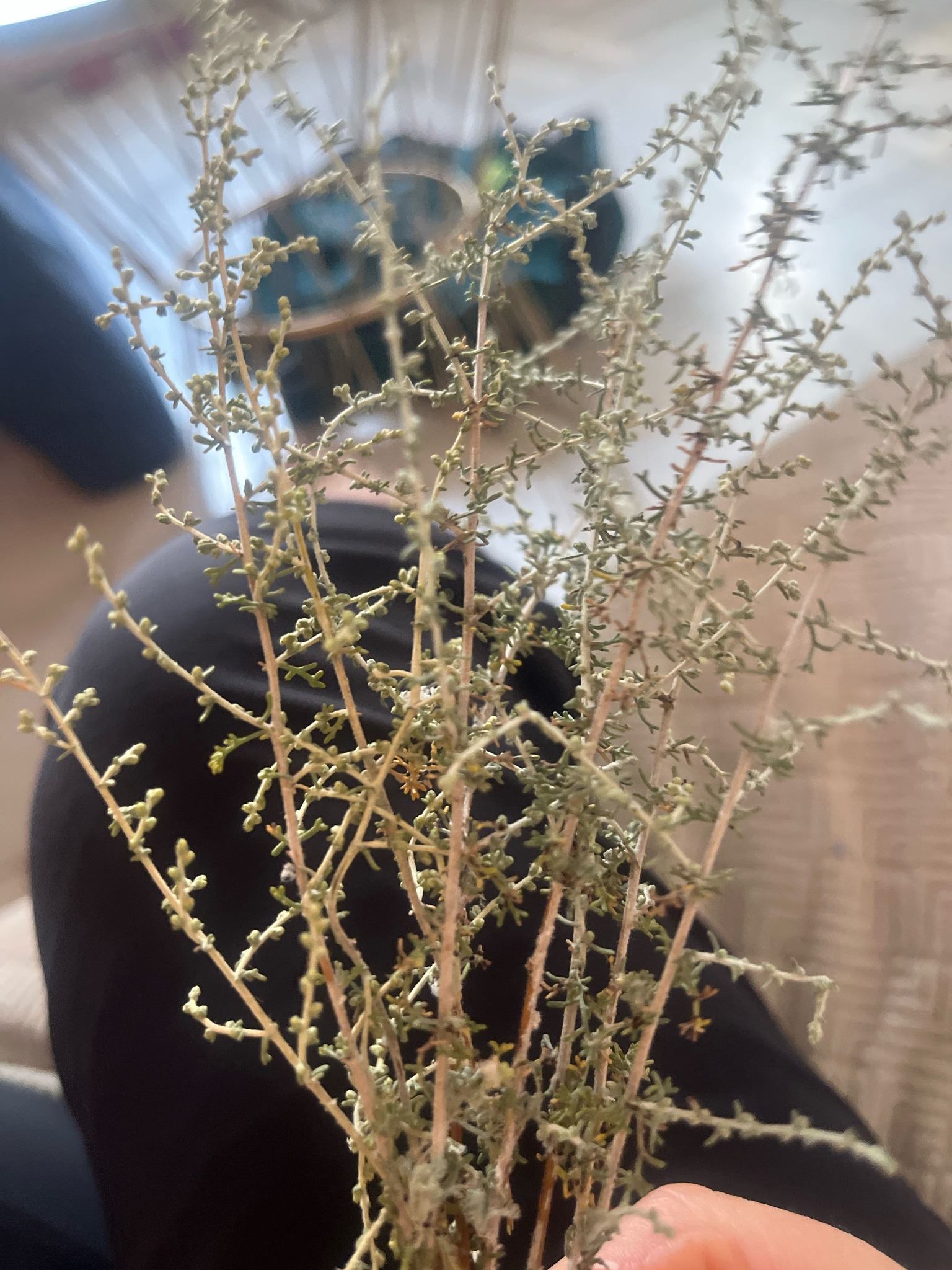
Thyme
Thymus vulgaris
Thyme is a low-growing, woody perennial subshrub with small, aromatic, grey-green leaves arranged oppositely along thin, wiry stems.
- Light
- Full sun, requiring at least 6 to 8 hours of direct light daily.
- Water
- Low watering needs; allow soil to dry out fully before watering. Highly drought-tolerant once established; vulnerable to root rot if overwatered.
- Growth
- Perennial subshrub with a mounding or spreading growth habit, reaching 6 to 12 inches (15-30 cm) in height and up to 16 inches (40 cm) in spread.
Care instructions
Provide full sun and exceptionally well-draining soil. Allow soil to dry completely between waterings. Apply balanced, diluted fertilizer sparingly in early spring.
Growing details
Sunlight
Full sun, requiring at least 6 to 8 hours of direct light daily.
Watering
Low watering needs; allow soil to dry out fully before watering. Highly drought-tolerant once established; vulnerable to root rot if overwatered.
Soil
Light, gritty, or sandy well-draining soil with neutral to slightly alkaline pH (6.0-8.0).
Hardiness zone
USDA Zones 5 through 9
Growth habit
Perennial subshrub with a mounding or spreading growth habit, reaching 6 to 12 inches (15-30 cm) in height and up to 16 inches (40 cm) in spread.
Bloom season
Late spring to early summer, producing small, tubular pink, lavender, or white flowers in dense clusters.
Propagation
Propagate by stem cuttings in late spring or summer, division in early spring, or from seed sown indoors.
Common pests & issues
Susceptible to root rot and fungal diseases in poorly drained soil or excessively humid conditions. Pests include spider mites and aphids in hot, dry environments.
Similar species
Thymus serpyllum (Creeping Thyme), which has a flatter, ground-covering habit rather than the upright, woody subshrub form of Thymus vulgaris.