
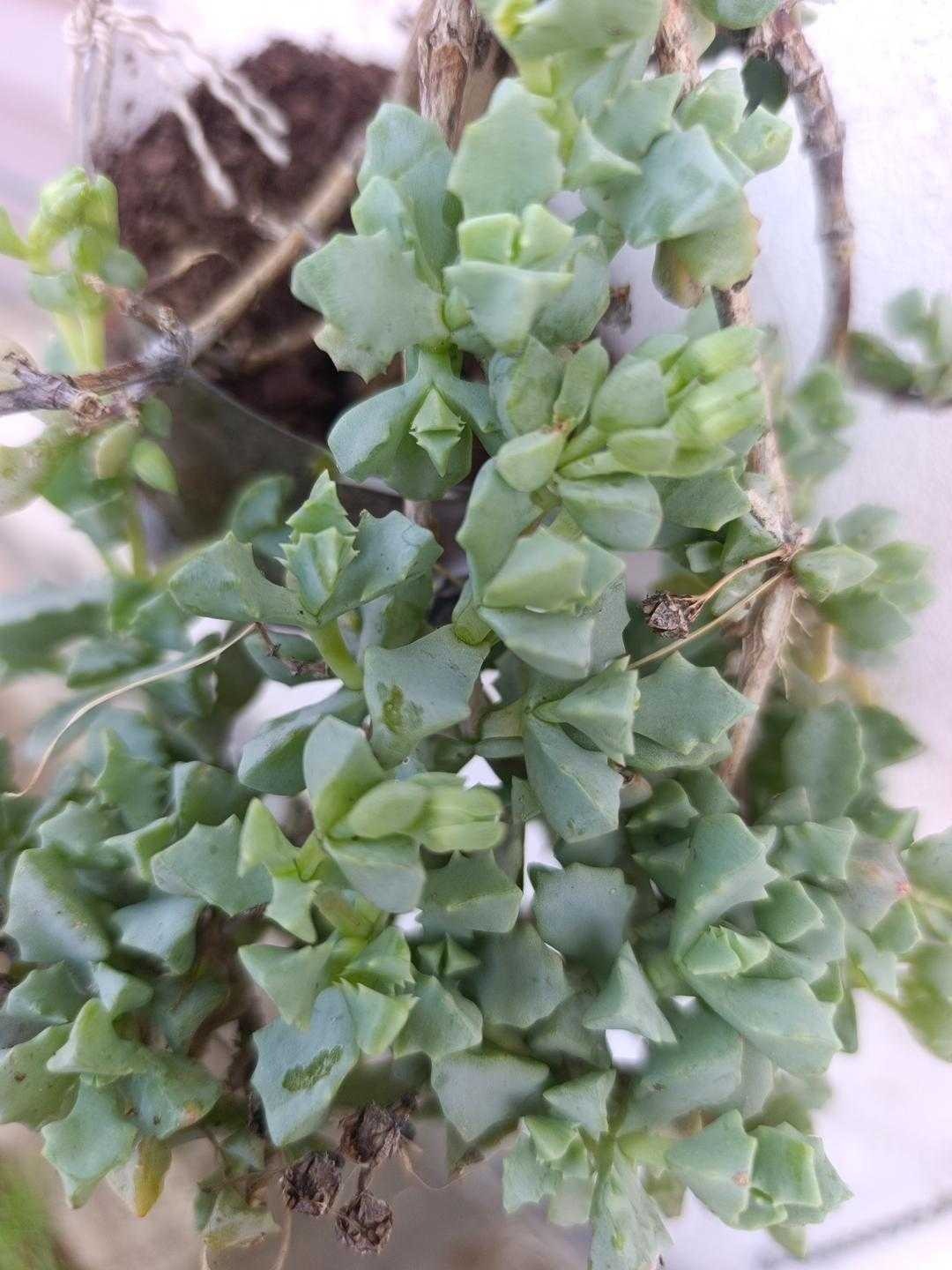
Tiger Jaws
Faucaria tigrina
A low-growing, clump-forming succulent featuring fleshy, triangular green leaves with prominent white, soft, tooth-like marginal bristles that resemble gaping animal jaws.
- Light
- Full sun to bright indirect light, requiring about 4 to 6 hours of sunlight daily.
- Water
- Water deeply when the soil is completely dry, typically every 2 to 3 weeks during the growing season and much less frequently in winter. Avoid getting water trapped between the leaves to prevent rot.
- Growth
- Perennial succulent with a compact, clumping growth habit. Grows to about 3 to 6 inches in height and spreads up to 6 to 12 inches wide with a slow growth rate.
Care instructions
Provide bright, direct light for several hours daily. Water thoroughly only when the soil has completely dried out, reducing water in winter. Plant in very well-draining succulent or cactus potting mix, and feed sparingly with diluted liquid fertilizer during the active spring and summer growing season.
Growing details
Sunlight
Full sun to bright indirect light, requiring about 4 to 6 hours of sunlight daily.
Watering
Water deeply when the soil is completely dry, typically every 2 to 3 weeks during the growing season and much less frequently in winter. Avoid getting water trapped between the leaves to prevent rot.
Soil
Highly porous, gritty soil mix with excellent drainage, such as standard cactus and succulent potting mix amended with perlite or pumice. Optimal pH ranges from 6.0 to 7.5.
Hardiness zone
USDA Hardiness Zones 9b to 11. It is sensitive to frost and freezing temperatures.
Growth habit
Perennial succulent with a compact, clumping growth habit. Grows to about 3 to 6 inches in height and spreads up to 6 to 12 inches wide with a slow growth rate.
Bloom season
Blooms in autumn to early winter, producing bright yellow, daisy-like flowers that open in the afternoon.
Propagation
Propagated easily through stem cuttings or by carefully dividing mature clumps during the spring growing season. Seeds can also be sown in well-draining soil under warm conditions.
Common pests & issues
Prone to root rot if overwatered or kept in poorly draining soil. May occasionally attract mealybugs or scale insects, which can be treated with rubbing alcohol or insecticidal soap.
Similar species
Faucaria felina, which has smoother leaf margins with fewer or less pronounced teeth, and Faucaria tuberculata, which features bumpy warts on the leaf surfaces rather than smooth planes.