
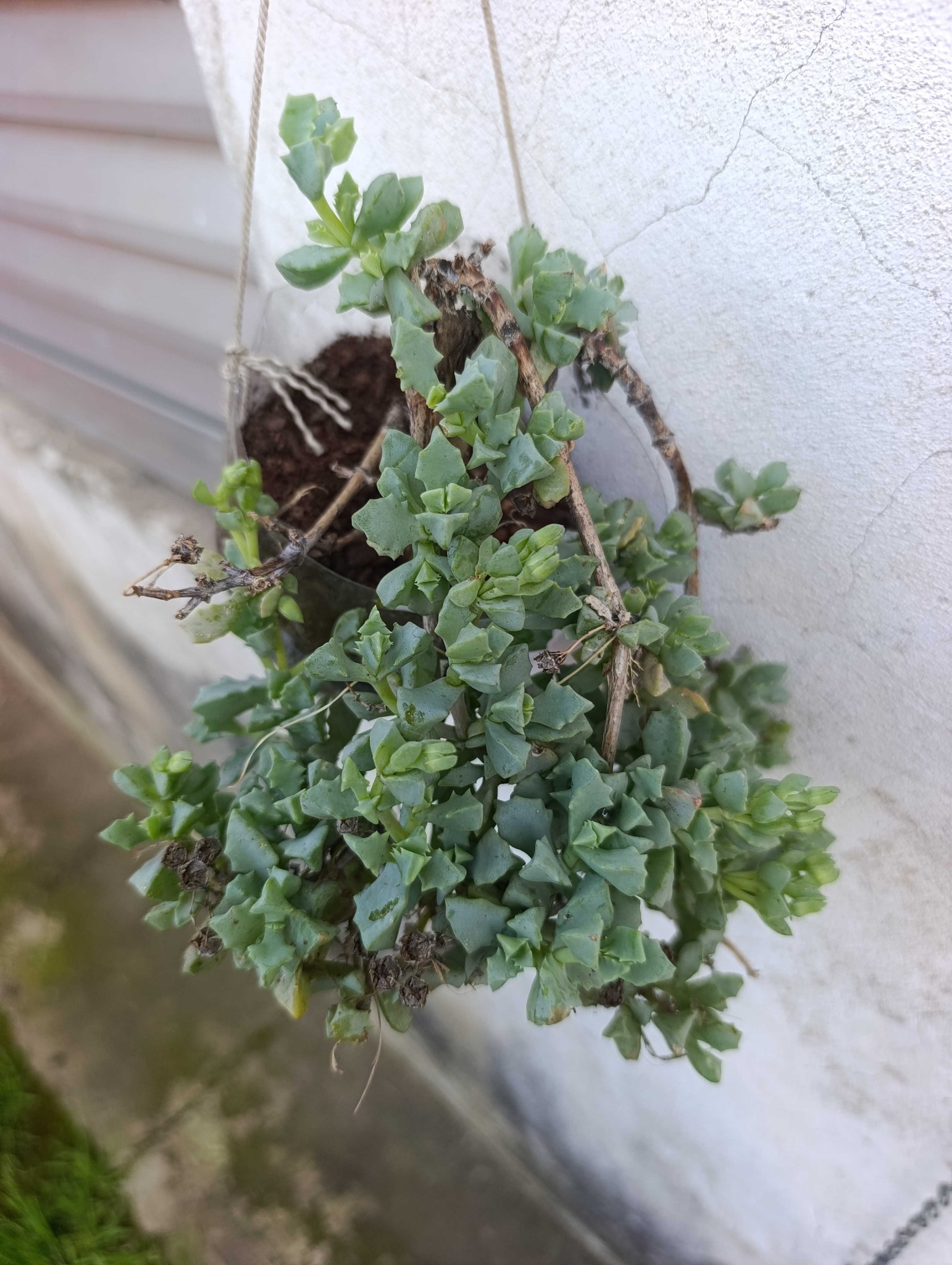
Tiger's Jaw
Aizoaceae
A small, clump-forming succulent featuring fleshy, triangular leaves with distinct tooth-like marginal projections resembling an open jaw.
- Light
- Full sun to partial shade, requiring about 4 to 6 hours of bright light daily.
- Water
- Low water requirements. Allow soil to dry out completely between waterings. Drought tolerant, and prone to root rot if overwatered.
- Growth
- Perennial succulent with a low-growing, clumping form, reaching a mature height of 3 to 6 inches and a spread of 6 to 12 inches with a slow growth rate.
Care instructions
Provide bright, indirect to direct sunlight for several hours a day. Water thoroughly only when the soil is completely dry, typically every 2 to 3 weeks, reducing water in winter. Use a well-draining succulent or cactus potting mix.
Growing details
Sunlight
Full sun to partial shade, requiring about 4 to 6 hours of bright light daily.
Watering
Low water requirements. Allow soil to dry out completely between waterings. Drought tolerant, and prone to root rot if overwatered.
Soil
Fast-draining sandy or gravelly soil mix designed for succulents and cacti, with a neutral to slightly acidic pH range of 6.0 to 7.0.
Hardiness zone
USDA zones 9 through 11, cultivated indoors in colder climates.
Growth habit
Perennial succulent with a low-growing, clumping form, reaching a mature height of 3 to 6 inches and a spread of 6 to 12 inches with a slow growth rate.
Bloom season
Autumn to early winter, producing bright yellow, daisy-like flowers that open in the afternoon.
Propagation
Easily propagated through stem cuttings left to callous for a few days before planting, or by careful division of established clumps during the spring.
Common pests & issues
Susceptible to mealybugs and root rot caused by excessive moisture or poor drainage. Prevent by ensuring adequate airflow and allowing the soil to dry fully.
Similar species
Faucaria felina and other Faucaria species, which can be distinguished primarily by subtle variations in leaf shape, texture, and marginal tooth structure.