
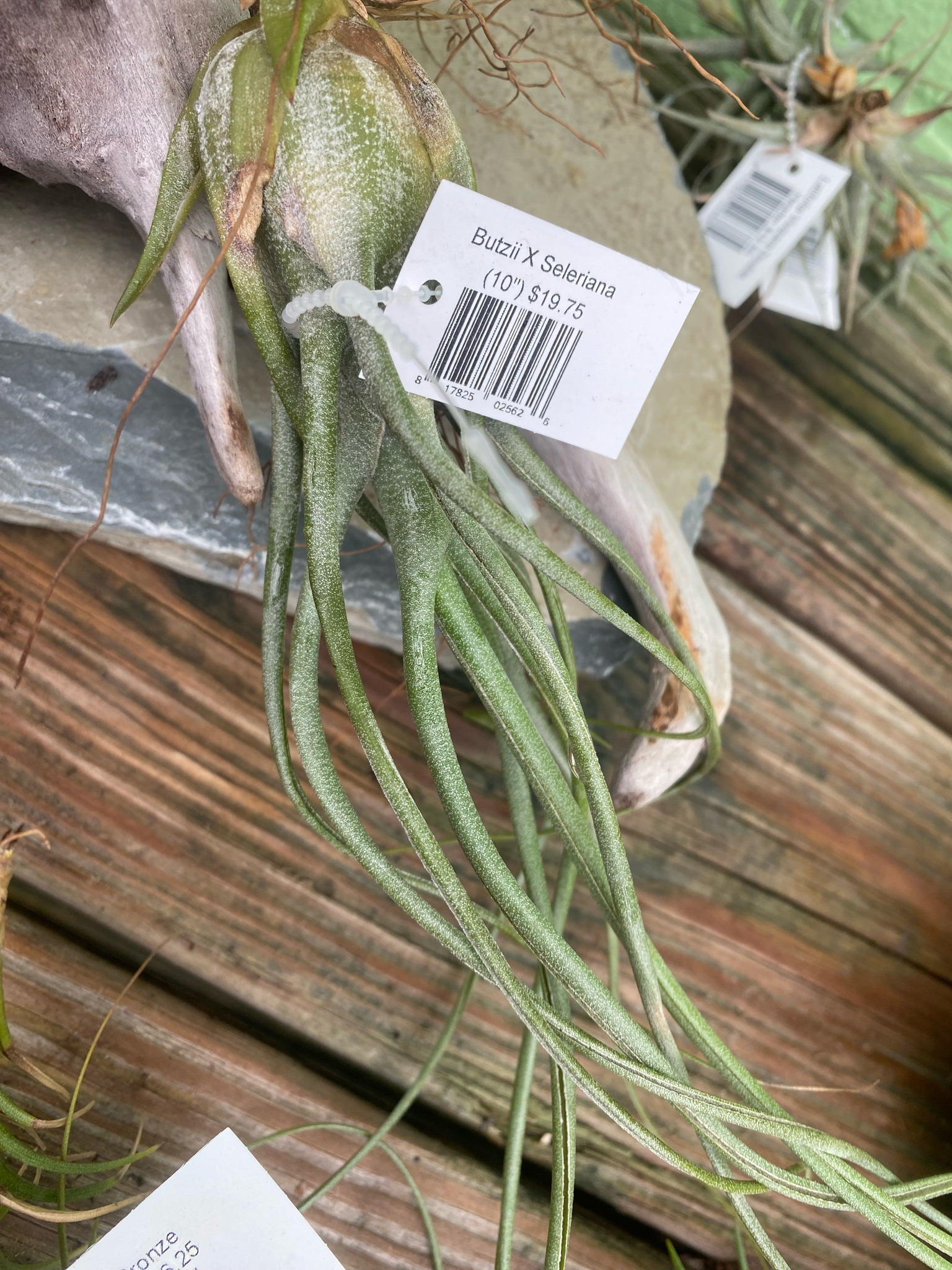
Tillandsia Butzii X Seleriana
Tillandsia butzii x Tillandsia seleriana
An epiphytic air plant hybrid featuring a swollen, bulbous base with silvery-green, speckled leaves that extend into long, twisting, grass-like structures. It absorbs moisture and nutrients through specialized trichomes on its leaves.
- Light
- Bright, indirect light for several hours daily, or strong indoor fluorescent lighting. Avoid harsh, direct afternoon sun.
- Water
- Mist 2-3 times per week or soak in room temperature water weekly. Allow to dry completely within 4 hours of watering.
- Growth
- Epiphytic perennial growing up to 10 inches or more, featuring a slow growth rate and clustering via offsets (pups) over time.
Care instructions
Provide bright, indirect sunlight and submerge the plant in water for 20-30 minutes every 1-2 weeks, ensuring it is shaken dry and upside down to prevent rot in the bulbous base. No soil is required as it is an epiphyte.
Growing details
Sunlight
Bright, indirect light for several hours daily, or strong indoor fluorescent lighting. Avoid harsh, direct afternoon sun.
Watering
Mist 2-3 times per week or soak in room temperature water weekly. Allow to dry completely within 4 hours of watering.
Soil
Grows without soil mounted on wood, cork, or stone, or placed in decorative containers with porous, well-aerated setups.
Hardiness zone
USDA Zones 9-11, grown primarily indoors or in shaded outdoor tropical gardens.
Growth habit
Epiphytic perennial growing up to 10 inches or more, featuring a slow growth rate and clustering via offsets (pups) over time.
Bloom season
Blooms sporadically with colorful floral bracts emerging from the center, producing small tubular purple or violet flowers.
Propagation
Propagated by separating offsets (pups) that grow from the base of the parent plant once they reach about one-third the size of the mother plant.
Common pests & issues
Susceptible to center rot if water becomes trapped in the bulbous base after watering. Prevent by drying the plant upside down.
Similar species
Tillandsia butzii and Tillandsia seleriana, but distinguished by the distinct intermediate traits combining the heavily speckled base of one and the larger swollen pseudobulb of the other.