
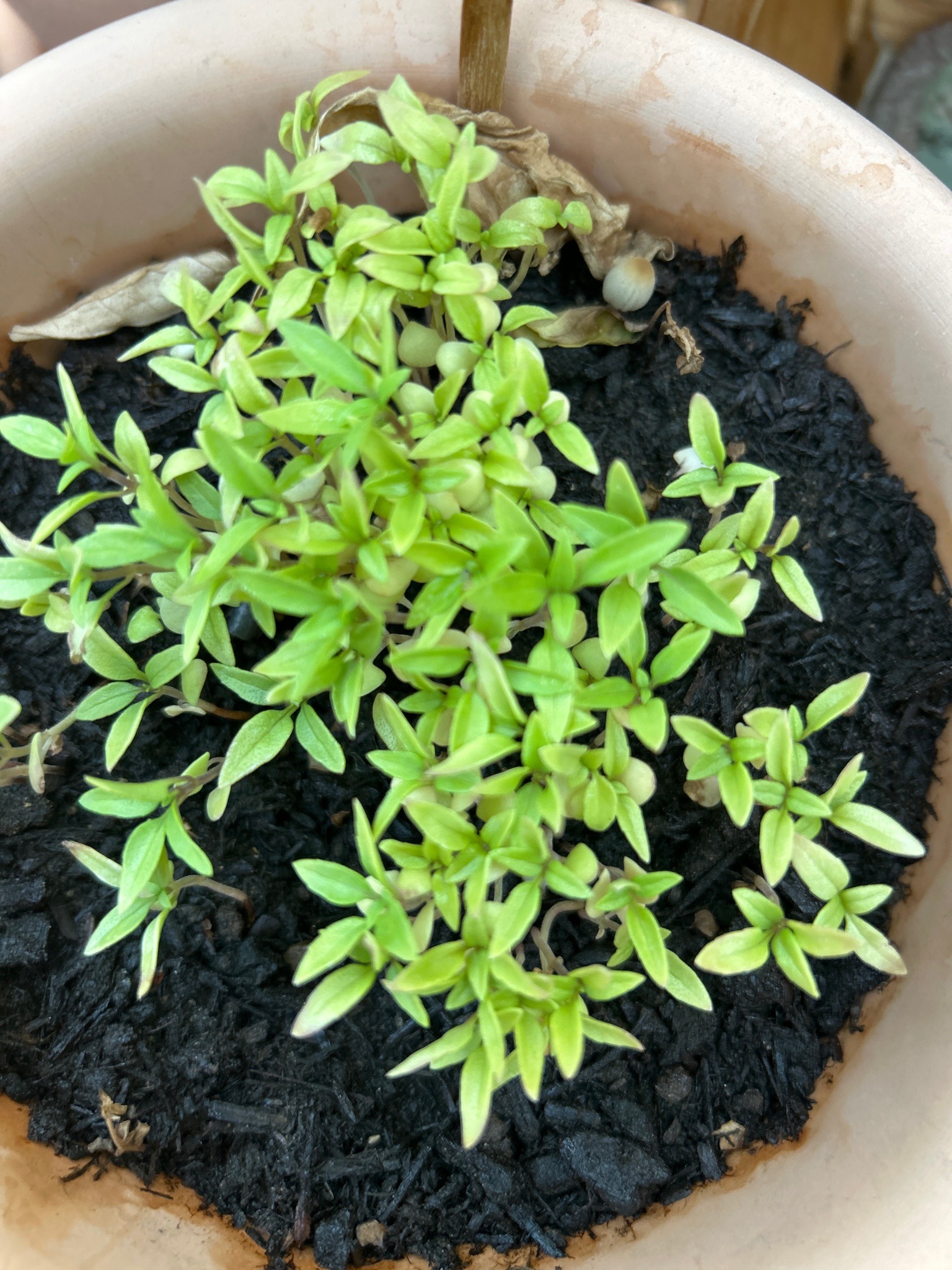
Tomato Seedling
Solanum lycopersicum
A cluster of young tomato seedlings showing bright green cotyledons followed by the first true leaves with characteristic serrated margins and a soft, fuzzy texture.
- Light
- Full sun, requiring at least 6 to 8 hours of direct sunlight daily.
- Water
- Water consistently when the top inch of soil feels dry. Avoid overhead watering to keep foliage dry, and prevent waterlogged conditions.
- Growth
- Herbaceous annual with a branching or upright growth form, typically reaching mature heights between 2 to 6 feet depending on the cultivar.
Care instructions
Provide bright, direct light for 6 to 8 hours daily. Keep the growing medium consistently moist but not saturated. Apply a weak, balanced liquid fertilizer once the first true leaves have fully developed.
Growing details
Sunlight
Full sun, requiring at least 6 to 8 hours of direct sunlight daily.
Watering
Water consistently when the top inch of soil feels dry. Avoid overhead watering to keep foliage dry, and prevent waterlogged conditions.
Soil
Rich, well-draining loamy soil with a slightly acidic pH ranging from 6.0 to 6.8.
Hardiness zone
Generally grown as an annual, suitable for USDA hardiness zones 2 through 11 during the warm growing season.
Growth habit
Herbaceous annual with a branching or upright growth form, typically reaching mature heights between 2 to 6 feet depending on the cultivar.
Bloom season
Flowers appear during the summer months, producing small, yellow, star-shaped blossoms.
Propagation
Propagated primarily from seeds sown indoors 6 to 8 weeks before the last expected spring frost, or via stem cuttings.
Common pests & issues
Susceptible to damping-off in overly wet conditions, aphids, whiteflies, and fungal leaf spot diseases. Ensure good air circulation and avoid overwatering to prevent issues.
Similar species
Other members of the Solanaceae family such as peppers (Capsicum annuum) and eggplants (Solanum melongena), which can be distinguished at the seedling stage by slightly different leaf shapes and textures.