
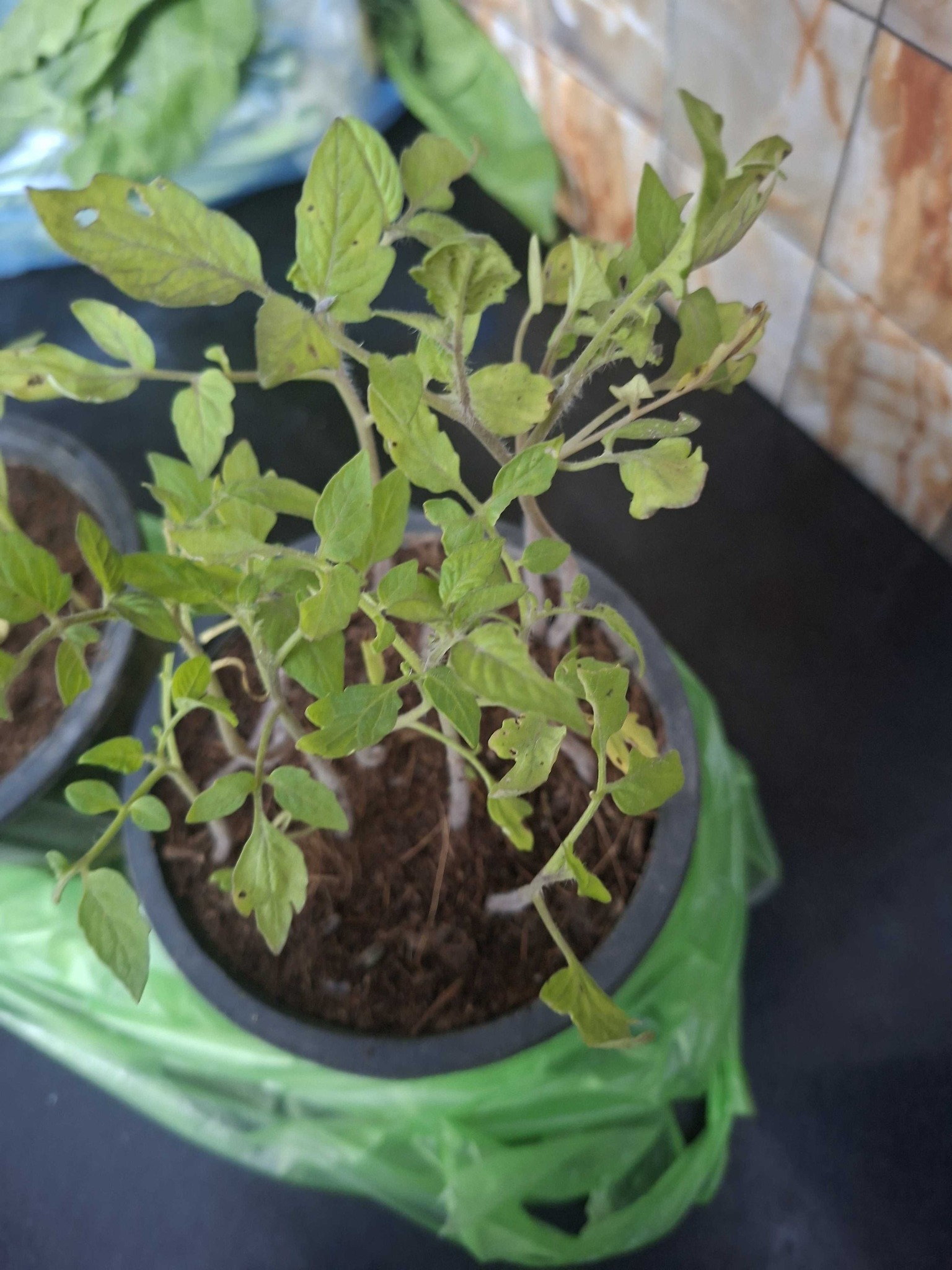
Tomato
Solanum lycopersicum
An herbaceous annual or short-lived perennial plant featuring pinnately compound leaves with serrated margins, covered in fine glandular hairs that produce a distinct scent. The stems are branched, somewhat angular, and become woody at the base over time.
- Light
- Full sun, requiring 6 to 8 hours of direct sunlight per day.
- Water
- Water deeply and regularly, allowing the top inch of soil to dry out between waterings. Avoid overhead watering to prevent moisture-related foliage issues. Signs of underwatering include wilting and crispy leaf edges, while overwatering can cause yellowing lower leaves and root rot.
- Growth
- Herbaceous perennial typically grown as an annual. Features a branching growth form that can be upright (determinate) or sprawling/vining (indeterminate), reaching heights of 2 to 10 feet depending on the specific variety.
Care instructions
Provide full sunlight for at least 6 to 8 hours daily. Water consistently to keep the soil evenly moist without becoming waterlogged. Feed with a balanced fertilizer formulated for flowering plants during the active growing season. Ensure proper spacing and airflow around the stems.
Growing details
Sunlight
Full sun, requiring 6 to 8 hours of direct sunlight per day.
Watering
Water deeply and regularly, allowing the top inch of soil to dry out between waterings. Avoid overhead watering to prevent moisture-related foliage issues. Signs of underwatering include wilting and crispy leaf edges, while overwatering can cause yellowing lower leaves and root rot.
Soil
Rich, well-draining loamy soil with high organic matter. Prefers a slightly acidic pH range between 6.0 and 6.8.
Hardiness zone
Typically grown as an annual across USDA zones 2 through 11; functions as a tender perennial in zones 10 to 11.
Growth habit
Herbaceous perennial typically grown as an annual. Features a branching growth form that can be upright (determinate) or sprawling/vining (indeterminate), reaching heights of 2 to 10 feet depending on the specific variety.
Bloom season
Blooms from late spring through summer, producing small, yellow, star-shaped flowers that appear in clusters along the stems.
Propagation
Easily propagated via seeds sown indoors 6 to 8 weeks before the last frost, or through stem cuttings placed in water or moist propagation mix.
Common pests & issues
Susceptible to fungal infections such as early blight and powdery mildew, as well as common pests like aphids, whiteflies, and hornworms. Prevent issues by ensuring good air circulation, watering at the base of the plant, and applying appropriate organic or chemical treatments at the first sign of pests or disease.
Similar species
Potato (Solanum tuberosum) and nightshades (Solanum species). Distinguished by the distinct compound leaf structure and the strong scent produced by the glandular hairs of the foliage.