
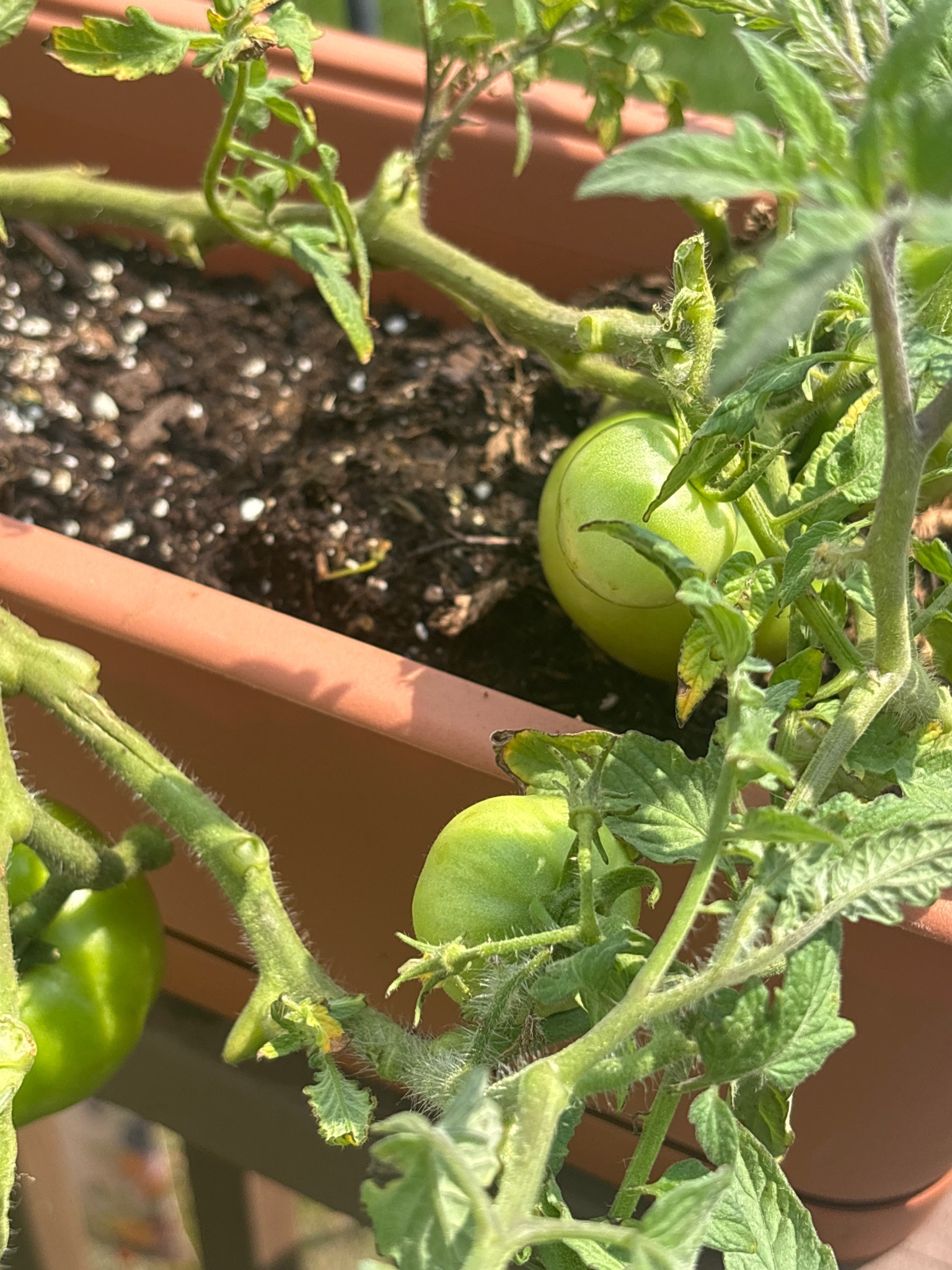
Tomato
Solanum lycopersicum
An herbaceous annual or short-lived perennial with compound, lobed leaves covered in fine glandular hairs that produce a distinct aroma. Stems are branching and often vine-like, supporting smooth, spherical green structures that develop and change color as they mature.
- Light
- Full sun, requiring 6 to 8 hours of direct sunlight per day.
- Water
- Requires regular, even watering to keep the soil consistently moist but not waterlogged. Deep watering every few days is preferred over frequent shallow watering. Avoid drought stress to prevent issues like blossom-end rot.
- Growth
- Herbaceous plant with determinate (bush) or indeterminate (vining) growth habits. Depending on the variety, mature height can range from 2 to 10 feet with a spread of 2 to 3 feet. Growth rate is fast during warm weather.
Care instructions
Provide full sun with at least six to eight hours of direct light daily. Maintain consistently moist soil by watering deeply at the base rather than overhead to prevent fungal issues. Use well-draining, nutrient-rich soil amended with organic matter, and feed regularly with a balanced, slow-release fertilizer or water-soluble formulation throughout the growing season.
Growing details
Sunlight
Full sun, requiring 6 to 8 hours of direct sunlight per day.
Watering
Requires regular, even watering to keep the soil consistently moist but not waterlogged. Deep watering every few days is preferred over frequent shallow watering. Avoid drought stress to prevent issues like blossom-end rot.
Soil
Prefers loamy, well-draining soil rich in organic matter with a slightly acidic to neutral pH range of 6.0 to 6.8.
Hardiness zone
Typically grown as an annual in USDA hardiness zones 2 through 11, surviving only as a tender perennial in frost-free climates (zones 10-11).
Growth habit
Herbaceous plant with determinate (bush) or indeterminate (vining) growth habits. Depending on the variety, mature height can range from 2 to 10 feet with a spread of 2 to 3 feet. Growth rate is fast during warm weather.
Bloom season
Blooms from late spring through summer, producing small, star-shaped yellow flowers with five petals clustered along the stems.
Propagation
Easily propagated from seeds sown indoors 6 to 8 weeks before the last expected spring frost, or via stem cuttings rooted in water or moist potting mix.
Common pests & issues
Vulnerable to pests such as hornworms, aphids, and whiteflies. Common diseases include early blight, late blight, and powdery mildew. Prevent issues by ensuring good air circulation, adequate spacing, and avoiding overhead watering.
Similar species
Look-alike plants include ground cherries (Physalis spp.) and husk tomatoes (Physalis alkekengi), which can be distinguished by their papery husks enclosing the fruits and distinct floral structures.