
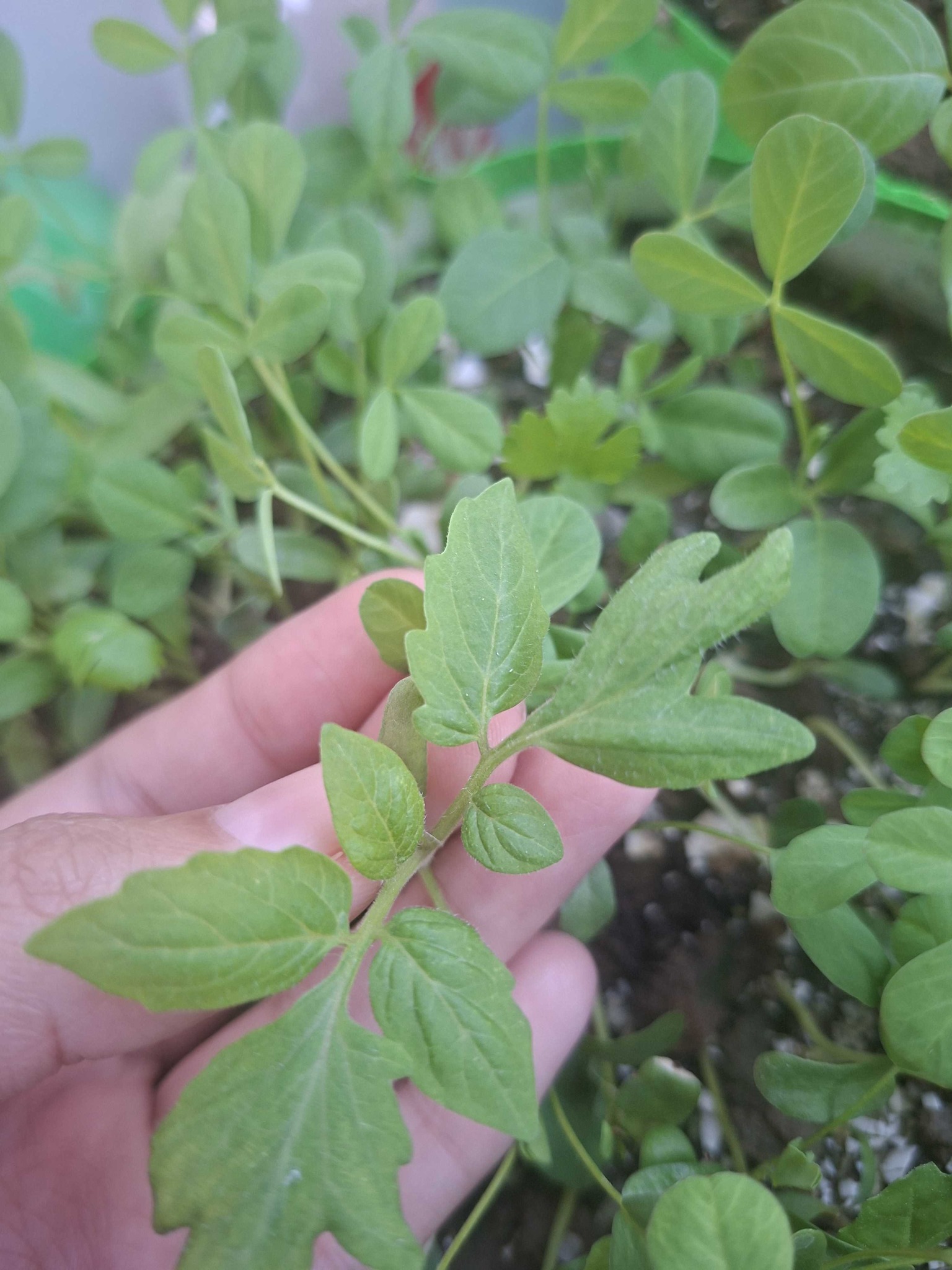
Tomato
Solanum lycopersicum
A tender herbaceous plant with compound pinnate leaves that have dentate margins and glandular hairs, emitting a distinct aroma when crushed.
- Light
- Full sun, requiring 6 to 8 hours of direct sunlight per day.
- Water
- Requires regular watering to keep the soil evenly moist. Water deeply at the base when the top inch of soil feels dry. Avoid overhead watering to reduce moisture on foliage.
- Growth
- Herbaceous perennial grown as an annual, exhibiting either a determinate (bushy, compact) or indeterminate (vining, climbing) growth habit, reaching heights of 2 to 10 feet depending on the variety.
Care instructions
Provide full sun exposure for at least six to eight hours daily. Maintain consistent moisture in well-draining soil rich in organic matter. Apply a balanced fertilizer during the growing season to support continuous development.
Growing details
Sunlight
Full sun, requiring 6 to 8 hours of direct sunlight per day.
Watering
Requires regular watering to keep the soil evenly moist. Water deeply at the base when the top inch of soil feels dry. Avoid overhead watering to reduce moisture on foliage.
Soil
Prefers loamy, well-draining soil rich in organic matter with a slightly acidic pH range of 6.0 to 6.8.
Hardiness zone
Typically grown as an annual in USDA zones 2 through 11.
Growth habit
Herbaceous perennial grown as an annual, exhibiting either a determinate (bushy, compact) or indeterminate (vining, climbing) growth habit, reaching heights of 2 to 10 feet depending on the variety.
Bloom season
Blooms from spring through autumn, producing small, yellow, star-shaped flowers with five petals.
Propagation
Propagated primarily from seeds sown indoors 6 to 8 weeks before the last spring frost, or through stem cuttings rooted in water or moist propagation mix.
Common pests & issues
Susceptible to fungal problems such as early blight and powdery mildew, as well as pests like aphids and hornworms. Prevent issues by ensuring good air circulation, proper spacing, and avoiding overhead watering.
Similar species
Potato (Solanum tuberosum) and nightshades, which share similar compound leaves and floral structures but differ in tuber formation and growth patterns.