
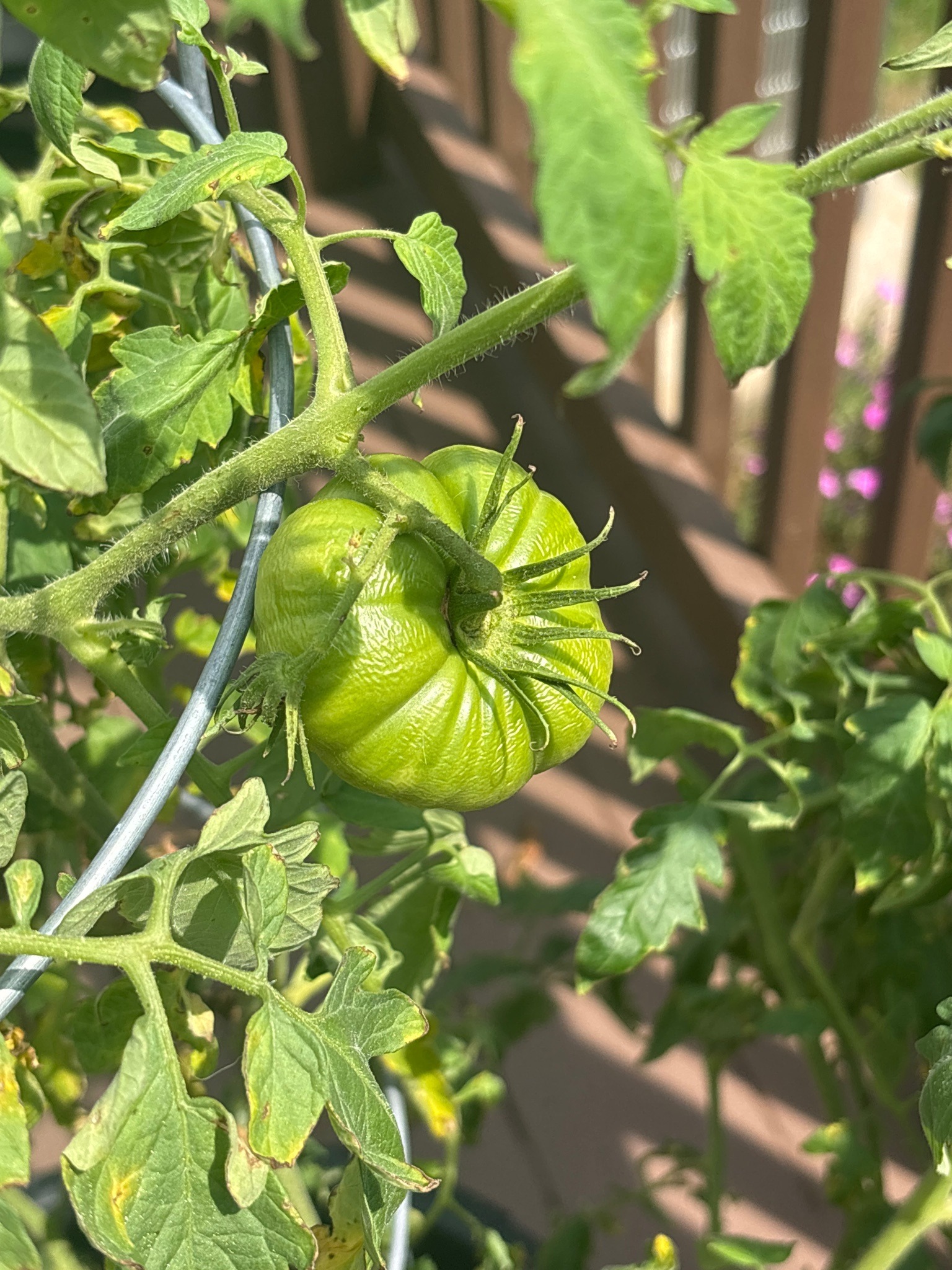
Tomato
Solanum lycopersicum
An herbaceous annual plant featuring compound leaves with serrated leaflets, branching stems covered in fine glandular hairs, and developing ribbed or globose green botanical fruits attached to a distinct calyx.
- Light
- Full sun, requiring a minimum of 6 to 8 hours of direct sunlight daily
- Water
- Requires regular, deep watering to keep the soil evenly moist. Avoid overhead watering to reduce foliage moisture, and let the top inch of soil dry slightly between waterings.
- Growth
- Herbaceous annual with a vining or bushy growth habit, reaching heights of 2 to 6 feet or more depending on the cultivar, with a moderate to fast growth rate requiring structural support like cages or stakes.
Care instructions
Provide full sun exposure for at least six to eight hours daily, maintain consistently moist soil with regular watering at the base to prevent splashing, and apply a balanced fertilizer during the growing season to support continuous flowering and fruit development.
Growing details
Sunlight
Full sun, requiring a minimum of 6 to 8 hours of direct sunlight daily
Watering
Requires regular, deep watering to keep the soil evenly moist. Avoid overhead watering to reduce foliage moisture, and let the top inch of soil dry slightly between waterings.
Soil
Rich, well-draining loamy soil with high organic matter content and an optimal pH range between 6.0 and 6.8
Hardiness zone
Typically grown as an annual in USDA zones 2 through 11
Growth habit
Herbaceous annual with a vining or bushy growth habit, reaching heights of 2 to 6 feet or more depending on the cultivar, with a moderate to fast growth rate requiring structural support like cages or stakes.
Bloom season
Flowers appear from late spring through summer, producing small yellow five-petaled blossoms clustered along the stems.
Propagation
Propagated primarily from seeds sown indoors 6 to 8 weeks before the final spring frost, or through stem cuttings rooted in water or moist soil.
Common pests & issues
Vulnerable to fungal infections such as early blight and powdery mildew, as well as pests like aphids and hornworms. Prevent issues by ensuring good air circulation, proper spacing, and consistent watering.
Similar species
Tomatillo (Physalis philadelphica), which is distinguished by its papery husk enclosing the fruit, and ground cherry (Physalis pruinosa), which also features a distinctive husk covering.