
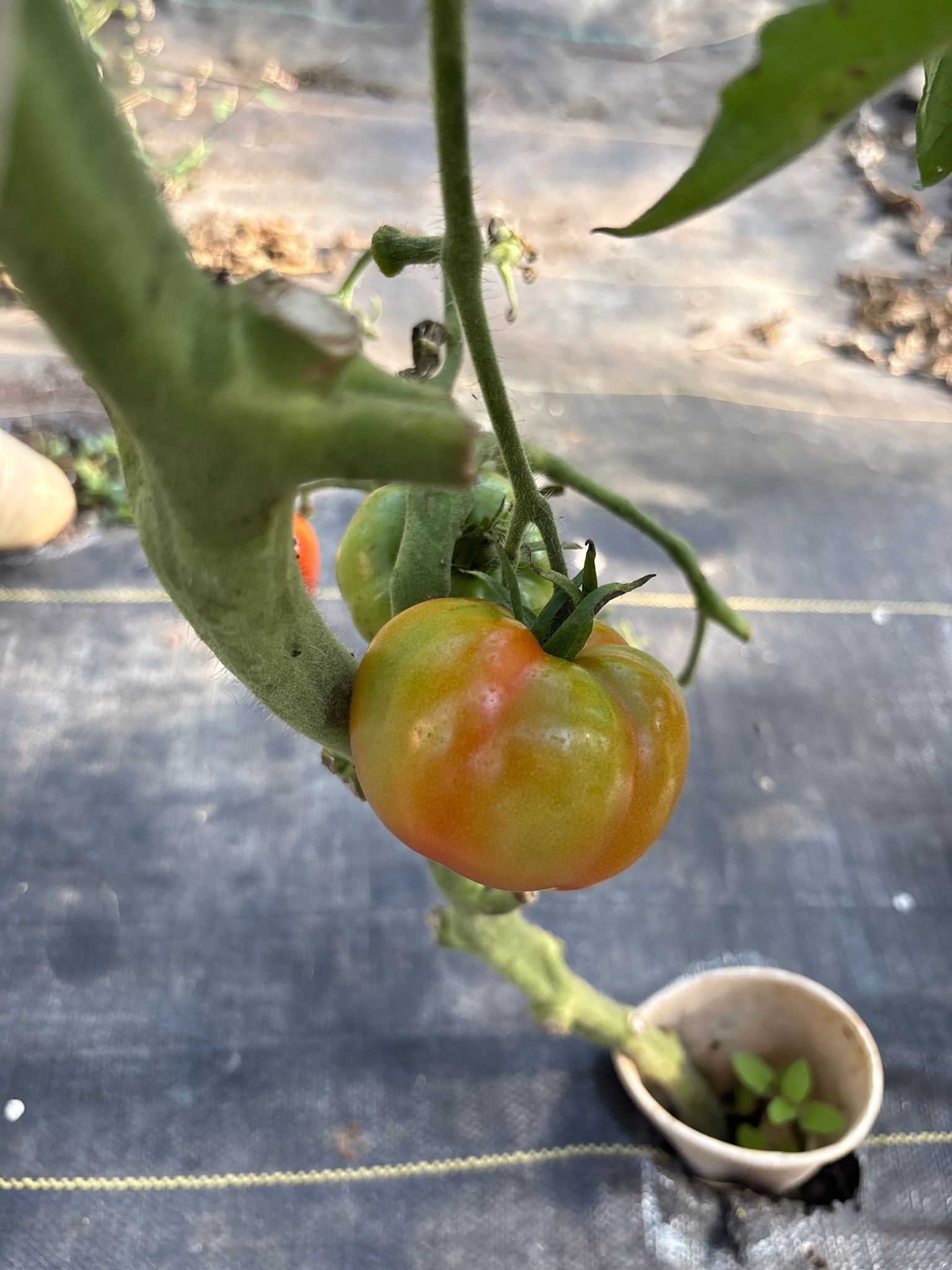
Tomato
Solanum lycopersicum
An herbaceous plant characterized by hairy, branching stems, pinnately divided leaves with a distinct aroma, and fleshy globose structures that transition from green to orange-red upon maturation.
- Light
- Full sun, requiring 6 to 8 hours of direct sunlight per day.
- Water
- Requires regular and consistent watering, approximately 1 to 2 inches of water per week. Keep the soil evenly moist to avoid drought stress, and water at the base of the plant to keep foliage dry.
- Growth
- Usually grown as an annual herbaceous plant with either a determinate (bushy, compact) or indeterminate (vining, climbing) growth habit. Depending on the variety, it can reach heights from 2 to 10 feet with a spread of 2 to 3 feet.
Care instructions
Provide full sunlight for at least 6 to 8 hours daily. Maintain consistent soil moisture by watering deeply at the base to prevent water stress. Plant in rich, well-draining soil with a neutral pH and apply a balanced fertilizer regularly during the growing season.
Growing details
Sunlight
Full sun, requiring 6 to 8 hours of direct sunlight per day.
Watering
Requires regular and consistent watering, approximately 1 to 2 inches of water per week. Keep the soil evenly moist to avoid drought stress, and water at the base of the plant to keep foliage dry.
Soil
Prefers loamy, rich, well-draining soil with a pH between 6.0 and 6.8.
Hardiness zone
Typically grown as an annual in USDA zones 2 through 11, as it is sensitive to frost and cold temperatures.
Growth habit
Usually grown as an annual herbaceous plant with either a determinate (bushy, compact) or indeterminate (vining, climbing) growth habit. Depending on the variety, it can reach heights from 2 to 10 feet with a spread of 2 to 3 feet.
Bloom season
Blooms continuously from late spring through autumn, producing small, yellow, star-shaped flowers with five petals.
Propagation
Easily propagated from seeds started indoors 6 to 8 weeks before the last spring frost, or through stem cuttings rooted in water or moist potting medium.
Common pests & issues
Vulnerable to fungal diseases such as early blight and powdery mildew, as well as pests like hornworms, aphids, and whiteflies. Prevent issues by ensuring proper air circulation, avoiding overhead watering, and using crop rotation.
Similar species
Potato (Solanum tuberosum) and eggplant (Solanum melongena), which belong to the same family and share similar foliage characteristics during early growth stages, but can be distinguished by their distinct floral structures, growth forms, and specialized storage organs.