
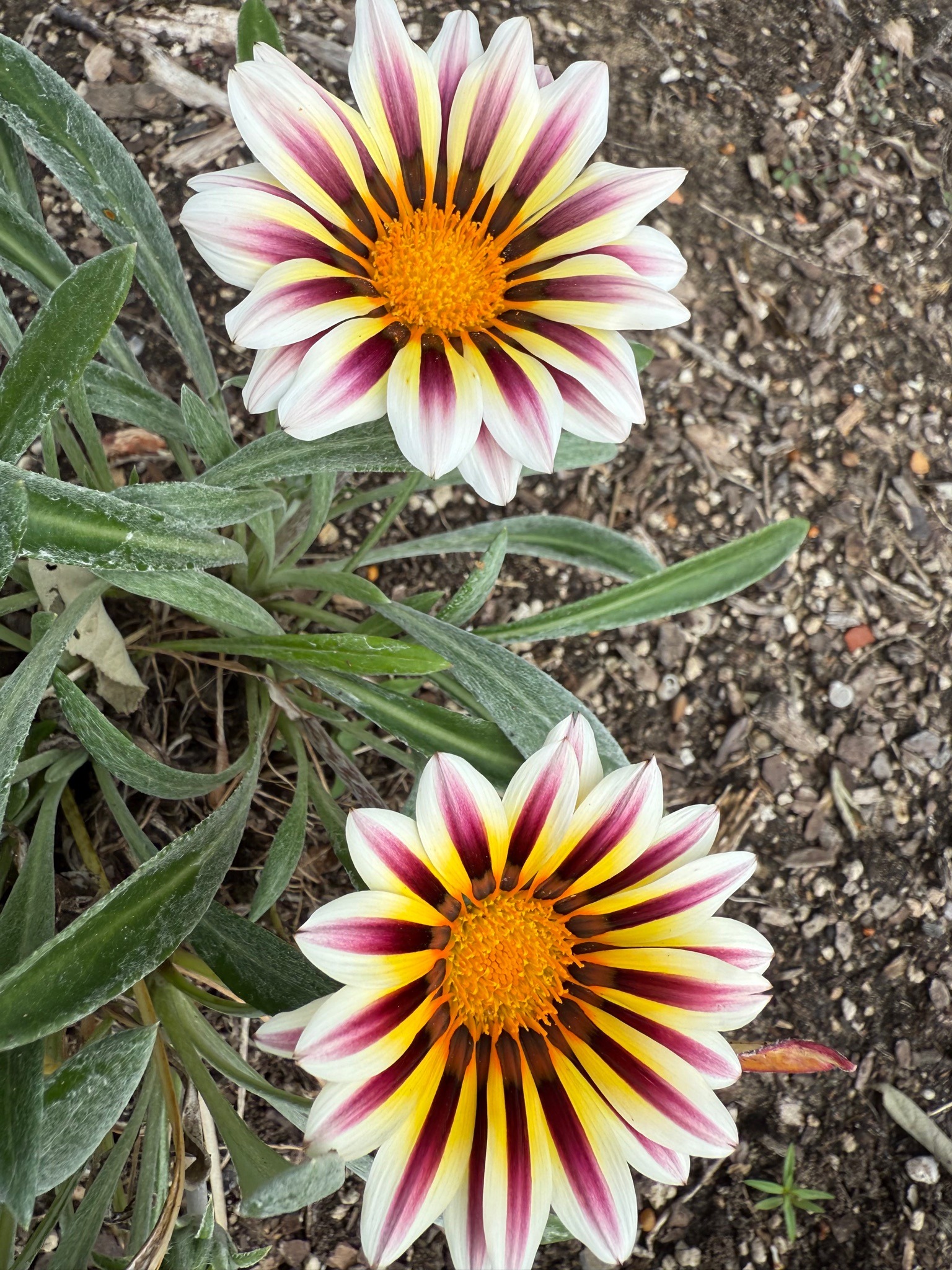
Treasure Flower
Gazania rigens
A low-growing perennial with striking, multi-colored daisy-like flower heads featuring vibrant concentric bands of yellow, white, and deep pink or purple, complemented by narrow, silvery-green leaves.
- Light
- Full sun, requiring at least 6 hours of direct sunlight daily to encourage optimal flowering.
- Water
- Low water requirements once established. Highly drought tolerant; water only when the soil is completely dry. Avoid waterlogged conditions.
- Growth
- Low-growing, clumping herbaceous perennial that spreads via runners, reaching a mature height of 6 to 12 inches and a spread of 10 to 18 inches with a moderate growth rate.
Care instructions
Provide full sun and exceptionally well-draining soil. Water deeply but infrequently, allowing the soil to dry out completely between watering sessions. Fertilization is rarely needed and light feeding in spring is sufficient.
Growing details
Sunlight
Full sun, requiring at least 6 hours of direct sunlight daily to encourage optimal flowering.
Watering
Low water requirements once established. Highly drought tolerant; water only when the soil is completely dry. Avoid waterlogged conditions.
Soil
Prefers sandy or loamy soils with excellent drainage and a neutral to slightly acidic pH range of 6.0 to 7.0.
Hardiness zone
USDA Hardiness Zones 9 through 11, treated as an annual in cooler climates.
Growth habit
Low-growing, clumping herbaceous perennial that spreads via runners, reaching a mature height of 6 to 12 inches and a spread of 10 to 18 inches with a moderate growth rate.
Bloom season
Blooms from late spring through autumn, producing large, brightly colored composite flowers that open with the sun and close at night or on cloudy days.
Propagation
Propagated easily by division of established clumps in spring or through stem cuttings taken during active growth phases.
Common pests & issues
Prusceptible to root rot if grown in poorly draining soils. Aphids and mealybugs can occasionally appear; manage through improved air circulation and targeted horticultural soaps.
Similar species
Can be confused with other Asteraceae family members such as African Daisies (Osteospermum), but distinguished by Gazania's distinct basal leaf rosette, silvery-green undersides of leaves, and characteristic dark ring at the base of the ray florets.