
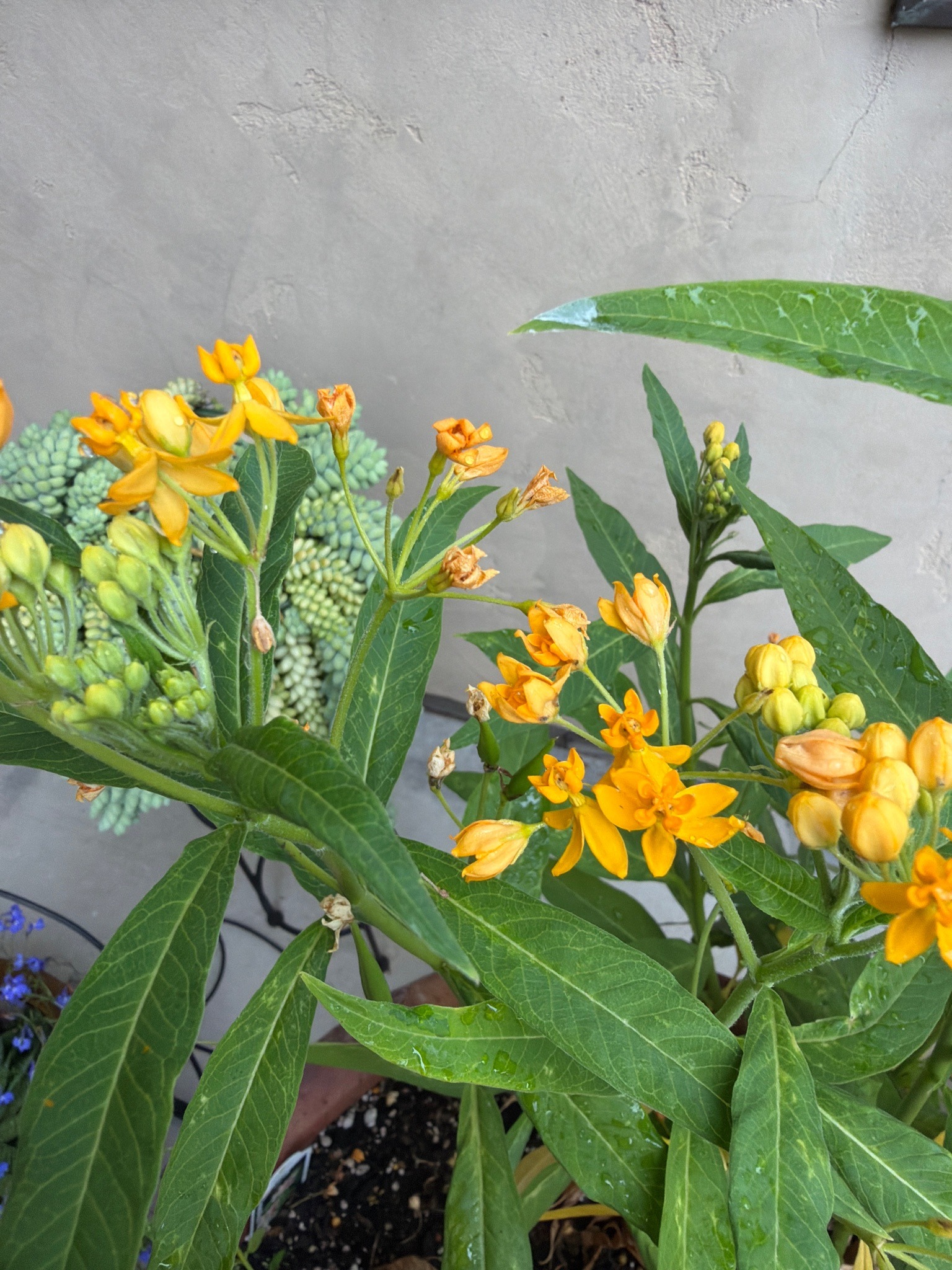
Tropical Milkweed
Asclepias curassavica
An upright, evergreen subshrub featuring narrow, lance-shaped green leaves and clusters of brightly colored flowers with reddish-orange sepals and yellow to bright orange corollas.
- Light
- Full sun, requiring 6 to 8 hours of direct sunlight daily.
- Water
- Moderate watering. Allow the soil to dry slightly between waterings; establish regular irrigation while avoiding prolonged waterlogging.
- Growth
- An upright, branching subshrub typically growing to a mature height of 2 to 3 feet with a spread of 1 to 2 feet, exhibiting moderate to fast growth.
Care instructions
Provide full sun exposure for at least six hours daily. Water moderately during the growing season, allowing the top inch of soil to dry out between waterings. Use well-draining potting mix and apply a balanced, slow-release fertilizer during the active spring growth period.
Growing details
Sunlight
Full sun, requiring 6 to 8 hours of direct sunlight daily.
Watering
Moderate watering. Allow the soil to dry slightly between waterings; establish regular irrigation while avoiding prolonged waterlogging.
Soil
Well-draining, loamy to sandy soil with a neutral to slightly acidic pH range of 6.0 to 7.0.
Hardiness zone
USDA Hardiness Zones 9 through 11, treated as an annual or patio container plant in cooler climates.
Growth habit
An upright, branching subshrub typically growing to a mature height of 2 to 3 feet with a spread of 1 to 2 feet, exhibiting moderate to fast growth.
Bloom season
Blooms continuously from late spring through autumn, producing striking clusters of yellow-orange and red flowers.
Propagation
Easily propagated from seeds sown in warm conditions or through stem cuttings taken during the active growing season.
Common pests & issues
Susceptible to aphids and whiteflies. Prevent infestations with regular inspection and treat using insecticidal soap if necessary; ensure good air circulation to avoid fungal leaf spots.
Similar species
Other milkweed species such as Asclepias tuberosa (Butterfly Weed), which typically features bright orange flowers without reddish sepals and has narrower, hairy stems.
User notes
in my northern California patio.