
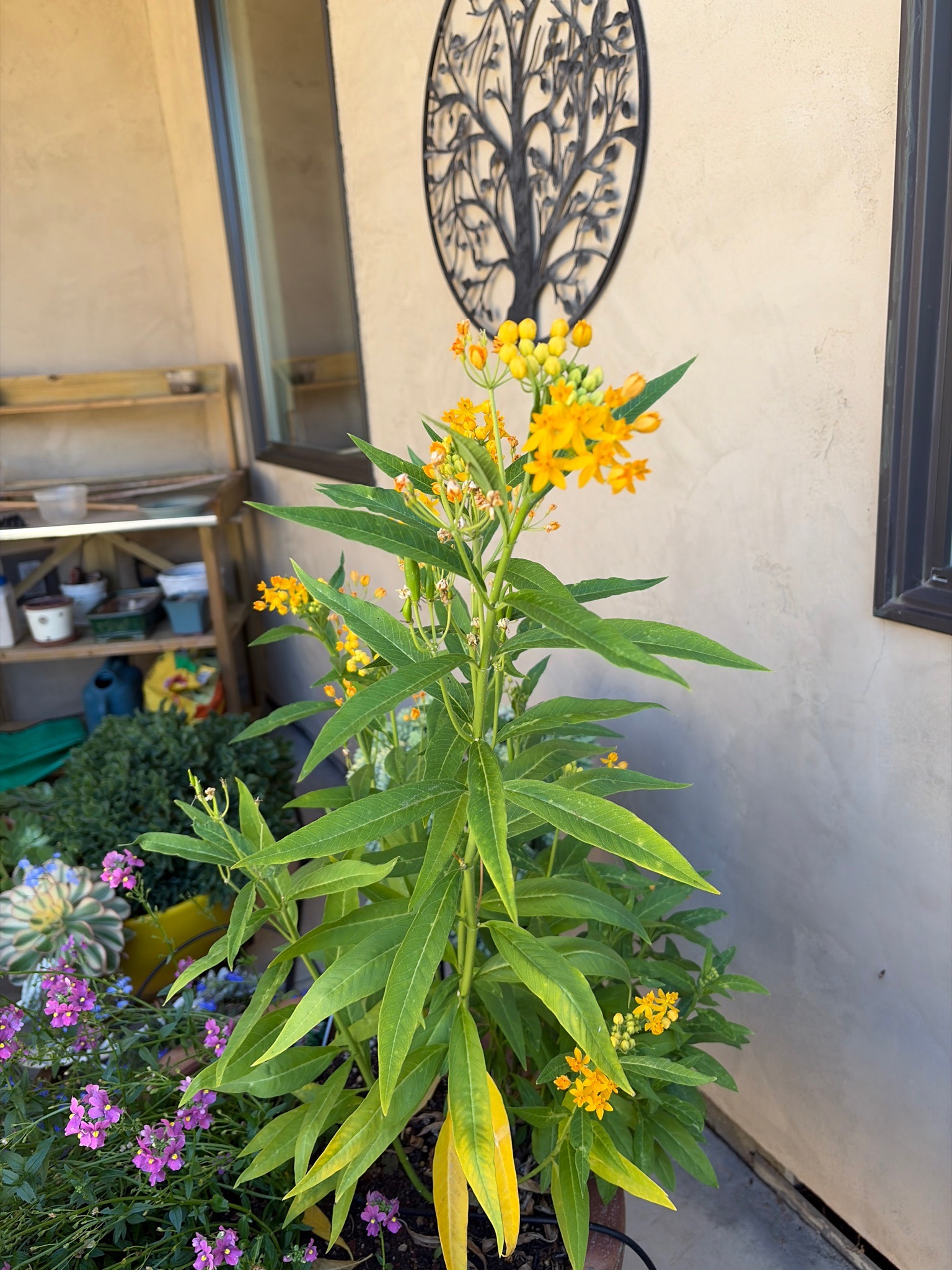
Tropical Milkweed
Asclepias curassavica
An upright, evergreen subshrub featuring narrow, lance-shaped green leaves arranged in opposite pairs and striking clusters of vibrant yellow, orange, and red flowers.
- Light
- Full sun, requiring 6 to 8 hours of direct sunlight per day.
- Water
- Moderate watering needs. Water deeply when the top inch of soil feels dry. Drought tolerant once established, but avoid prolonged dryness. Ensure good drainage to prevent root rot.
- Growth
- Perennial subshrub grown as an annual in temperate regions. Features an upright growth habit, reaching a mature height of 2 to 3 feet and a spread of 1 to 2 feet with a moderate growth rate.
Care instructions
Provide full sun exposure for at least six hours daily. Water moderately, allowing the soil to dry out slightly between waterings, and use well-draining soil with a balanced organic content.
Growing details
Sunlight
Full sun, requiring 6 to 8 hours of direct sunlight per day.
Watering
Moderate watering needs. Water deeply when the top inch of soil feels dry. Drought tolerant once established, but avoid prolonged dryness. Ensure good drainage to prevent root rot.
Soil
Prefers loose, well-draining loamy or sandy soils with a neutral to slightly acidic pH range of 6.0 to 7.0.
Hardiness zone
USDA Hardiness Zones 9 through 11, grown as an annual in cooler climates.
Growth habit
Perennial subshrub grown as an annual in temperate regions. Features an upright growth habit, reaching a mature height of 2 to 3 feet and a spread of 1 to 2 feet with a moderate growth rate.
Bloom season
Blooms continuously from summer through the first autumn frosts, producing clusters of small, brightly colored flowers in shades of yellow, orange, and red.
Propagation
Easily propagated from seeds sown in spring or through stem cuttings taken during the active growing season.
Common pests & issues
Susceptible to aphids, spider mites, and scale insects. Prevent by ensuring good air circulation and avoid overwatering to minimize fungal disease risks.
Similar species
Asclepias tuberosa (Butterfly Weed), which typically has narrower leaves and solid bright orange flowers without the reddish tones common in Tropical Milkweed.