
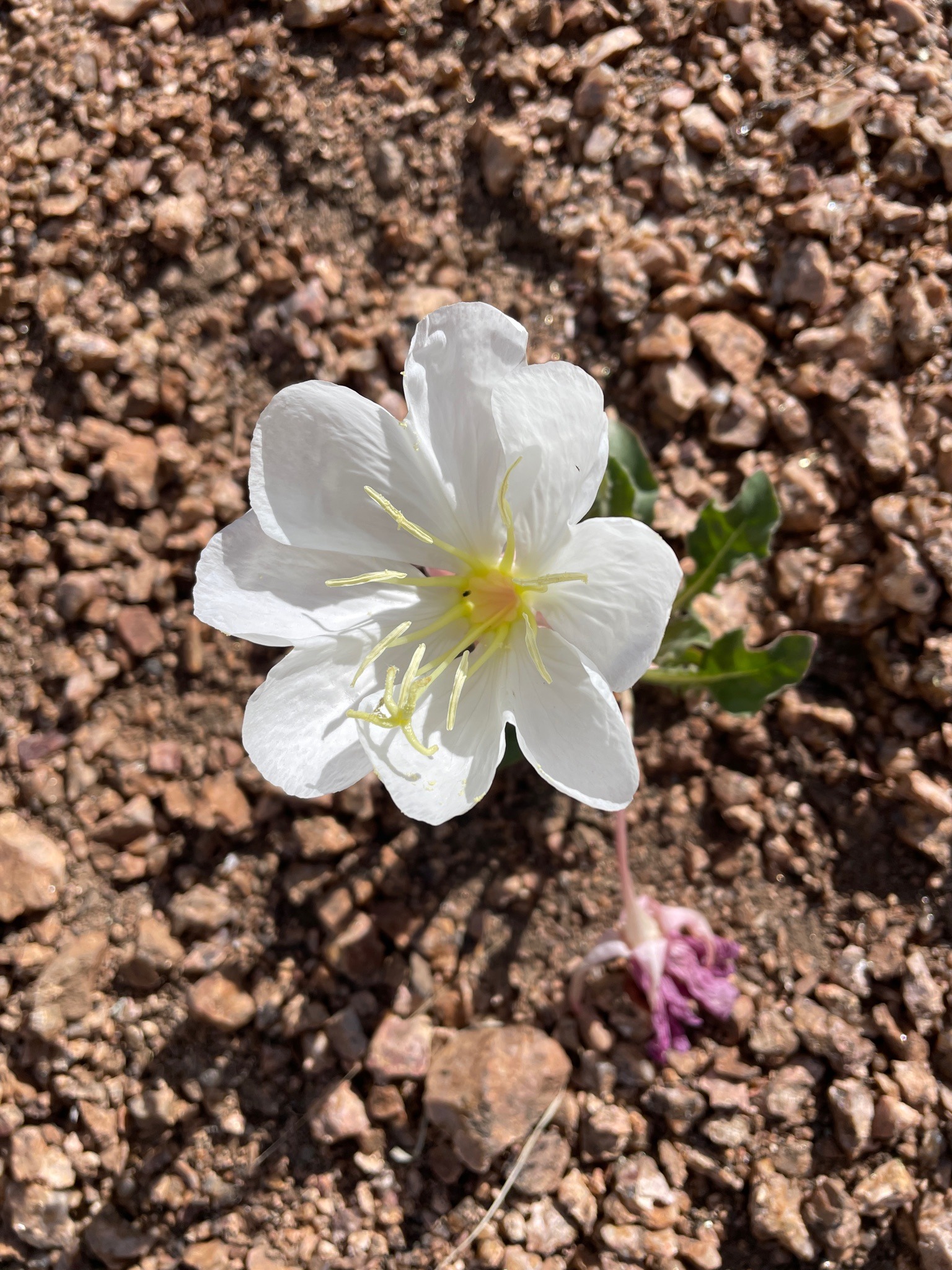
Tufted Evening Primrose
Oenothera caespitosa
A low-growing, acaulescent perennial forming rosettes of lobed leaves, producing large, fragrant white flowers that open in the evening and age to pink.
- Light
- Full sun, requiring at least 6 hours of direct sunlight daily
- Water
- Low watering needs; highly drought tolerant once established. Water deeply but infrequently, ensuring soil drains rapidly to prevent root rot.
- Growth
- Low-growing herbaceous perennial forming a basal rosette, reaching heights of 4 to 10 inches and spreading up to 12 inches with a moderate growth rate.
Care instructions
Grow in full sun with extremely well-draining, gritty soil. Water sparingly once established, allowing the soil to dry completely between waterings. Avoid excessive moisture or rich organic matter.
Growing details
Sunlight
Full sun, requiring at least 6 hours of direct sunlight daily
Watering
Low watering needs; highly drought tolerant once established. Water deeply but infrequently, ensuring soil drains rapidly to prevent root rot.
Soil
Requires very well-draining, sandy, gravelly, or rocky soil with a neutral to slightly alkaline pH.
Hardiness zone
USDA zones 4 through 8
Growth habit
Low-growing herbaceous perennial forming a basal rosette, reaching heights of 4 to 10 inches and spreading up to 12 inches with a moderate growth rate.
Bloom season
Blooms from late spring through mid-summer. The flowers are large, cup-shaped, pure white turning pink as they age, with prominent yellow stamens and a sweet fragrance.
Propagation
Propagated primarily by seeds sown in autumn or early spring, or by careful division of established clumps during the dormant season.
Common pests & issues
Generally trouble-free when grown in proper arid or rocky conditions. Susceptible to root rot if subjected to standing water or overly damp, heavy clay soils. Pests are rarely a significant concern.
Similar species
Oenothera pallida (Pale Evening Primrose), which has a more rhizomatous, spreading habit and slightly narrower foliage compared to the tightly clumped rosette of Oenothera caespitosa.