
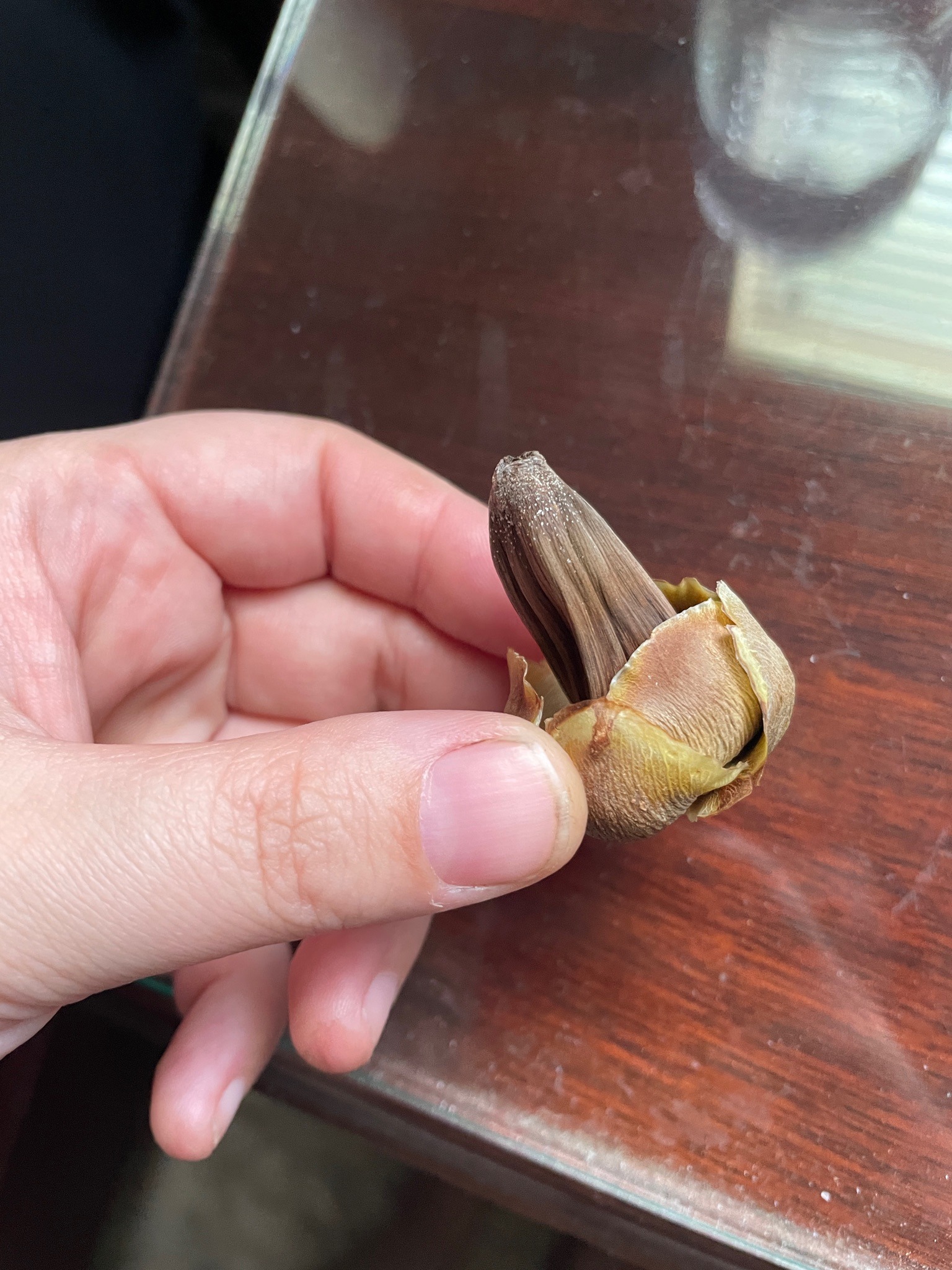
Tulip Tree
Liriodendron tulipifera
The image shows the central seed cone or 'fruit' of a Tulip Tree. These are cone-like aggregates of winged seeds (samaras). The tree is a large deciduous hardwood with distinct tulip-shaped leaves and yellow-green flowers.
- Light
- Full sun, requiring at least 6 hours of direct sunlight per day for optimal growth.
- Water
- Requires moderate to high moisture. It has low drought tolerance and may drop leaves prematurely during hot, dry summers if not watered.
- Growth
- Deciduous perennial tree. It is one of the tallest native hardwoods in North America, reaching 70 to 150 feet in height with a fast growth rate.
Care instructions
Tulip trees need plenty of room to grow. Plant in deep, moist, well-draining soil in a spot with full sun. Provide regular water during dry spells when young, and fertilize in early spring.
Growing details
Sunlight
Full sun, requiring at least 6 hours of direct sunlight per day for optimal growth.
Watering
Requires moderate to high moisture. It has low drought tolerance and may drop leaves prematurely during hot, dry summers if not watered.
Soil
Prefers deep, rich, moist, and well-drained acidic soil. pH range 5.0 to 6.5 is ideal.
Hardiness zone
USDA zones 4 through 9.
Growth habit
Deciduous perennial tree. It is one of the tallest native hardwoods in North America, reaching 70 to 150 feet in height with a fast growth rate.
Bloom season
Late spring to early summer (May-June). Flowers are cup-shaped, yellow-green with an orange band at the base, resembling tulips.
Propagation
Propagated primarily by seed, though germination rates are often low (around 10-20%). Can also be grown from stem cuttings or grafting.
Common pests & issues
Susceptible to aphids (which produce sticky honeydew), scales, and verticillium wilt. Leaf scorch can occur in periods of drought.
Similar species
Chinese Tulip Tree (Liriodendron chinense), which has more deeply lobed leaves and smaller flowers, and the Magnolia species, though they lack the tulip-shaped leaf.