
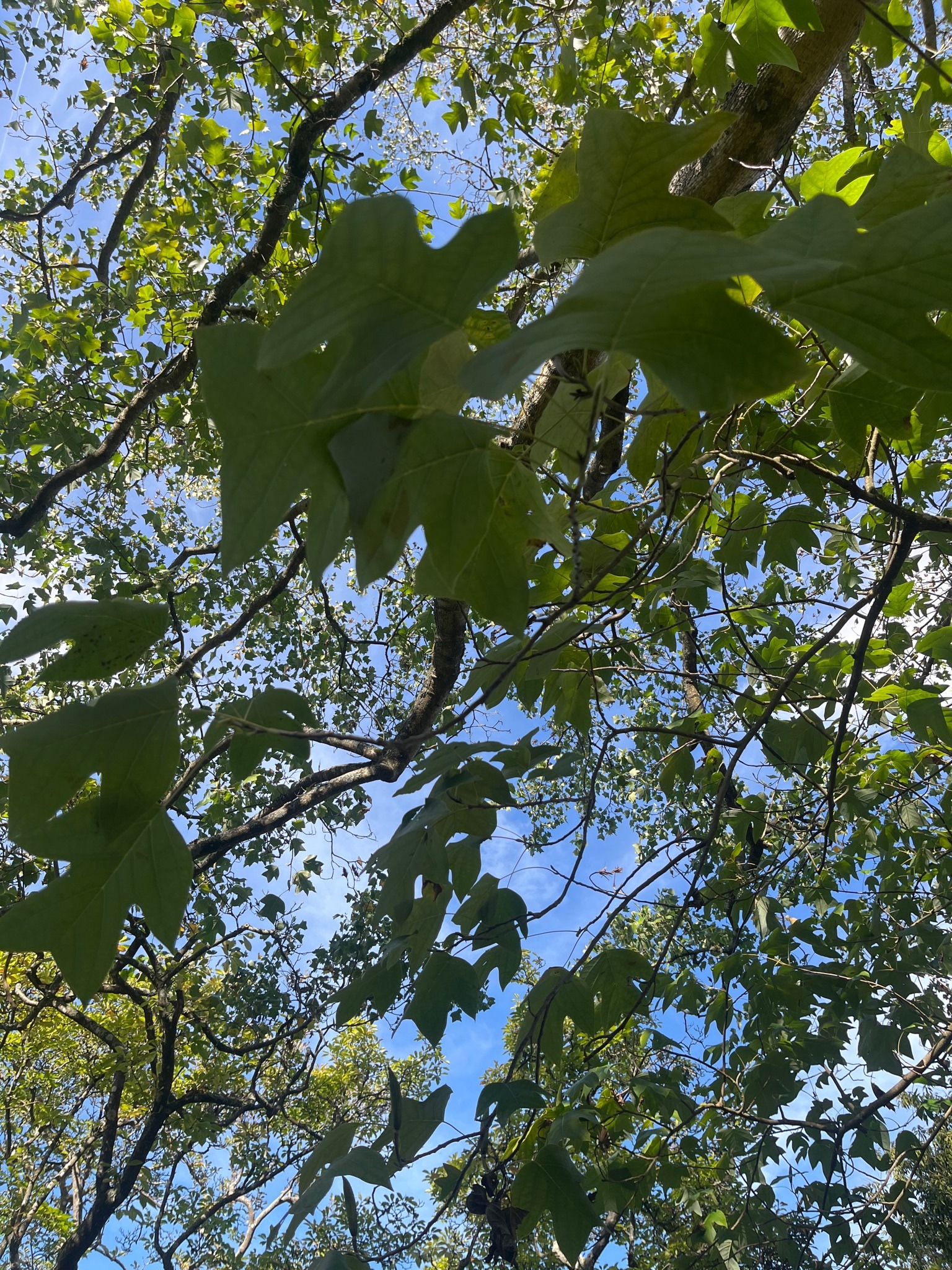
Tulip Tree
Liriodendron tulipifera
A large deciduous tree known for its distinctively shaped, four-lobed leaves resembling the outline of a tulip and straight, towering trunk.
- Light
- Full sun, requiring at least 6 hours of direct sunlight daily
- Water
- Moderate watering needs. Prefers consistently moist soil and does not tolerate prolonged drought conditions.
- Growth
- Large deciduous perennial tree with an upright, pyramidal to oval growth form, reaching heights of 70 to 100 feet and a spread of 35 to 50 feet with a fast growth rate.
Care instructions
Provide full sun and deep, rich, moist, well-draining soil. Water regularly during dry spells while establishing. Apply a balanced fertilizer in early spring if soil lacks nutrients.
Growing details
Sunlight
Full sun, requiring at least 6 hours of direct sunlight daily
Watering
Moderate watering needs. Prefers consistently moist soil and does not tolerate prolonged drought conditions.
Soil
Deep, rich, moist, well-drained loamy soils with a slightly acidic to neutral pH range of 5.5 to 7.0
Hardiness zone
USDA zones 4 through 9
Growth habit
Large deciduous perennial tree with an upright, pyramidal to oval growth form, reaching heights of 70 to 100 feet and a spread of 35 to 50 feet with a fast growth rate.
Bloom season
Late spring to early summer, producing cup-shaped flowers featuring greenish-yellow petals with a distinct orange band at the base.
Propagation
Propagated primarily through seeds sown in autumn or stratified for spring planting, as well as by softwood cuttings in early summer.
Common pests & issues
Susceptible to aphid infestations that can produce sticky honeydew residue, scale insects, and occasionally verticillium wilt or leaf spot diseases.
Similar species
Chinese Tulip Tree (Liriodendron chinense), which features smaller leaves with deeper sinuses and smaller flowers compared to the native American species.